
Clarify who pays, who ships, who clears, and when risk transfers—before you confirm price, lead time, and launch dates.
Uniomy’s quote system Includes a simple term-by-term checklist (EXW/FOB/CIF/DDP) + what we need from you to confirm a safe option.
A complete map prevents missing-term mistakes and scope confusion.
Incoterms 2020 includes 11 terms. Seven apply to any transport mode and four are sea/inland-waterway only. Use this table to quickly see who controls freight, where risk transfers, and what each term is best used for in real plush programs.
Incoterms 2020 — Full Term Coverage Table
| Incoterm | Transport Mode | Best For (Plush Use Cases) | Who Controls Main Freight Booking? | Risk Transfers (Simple) | Buyer Should Watch For |
|---|---|---|---|---|---|
| EXW (Ex Works) | Any mode | You want maximum buyer control and can handle pickup/export workflow | Buyer | When goods are made available at seller’s premises | Export clearance responsibility can become messy; often not ideal for first-time importers |
| FCA (Free Carrier) | Any mode | Most practical “buyer-controlled” option for containers / multimodal / 3PL | Buyer | When handed to carrier at named place (terminal/forwarder) | Confirm named place precisely (factory vs terminal); define who handles export clearance |
| CPT (Carriage Paid To) | Any mode | Seller arranges freight to named place, buyer manages insurance/destination details | Seller | When handed to first carrier (even if seller pays carriage) | Buyers assume risk transfers at destination—it transfers earlier; confirm insurance approach |
| CIP (Carriage & Insurance Paid To) | Any mode | CPT + seller provides insurance (useful for higher-value programs) | Seller | When handed to first carrier | Insurance scope and claim process must be clear; confirm coverage limits and exclusions |
| DAP (Delivered At Place) | Any mode | “Delivered to door/DC” coordination, buyer handles duties/taxes (common for small teams) | Seller | At named destination place (not unloaded) | Confirm delivery endpoint + appointment rules + last-mile exclusions; duties/taxes usually buyer-side |
| DPU (Delivered at Place Unloaded) | Any mode | Similar to DAP but includes unloading (useful if unloading scope must be arranged) | Seller | After unloading at destination place | Unloading scope can create extra fees/constraints; confirm equipment/site responsibility |
| DDP (Delivered Duty Paid) | Any mode | “Delivered with duty” experience (only when scope is explicit) | Seller | At named destination place | Confirm Importer of Record, taxes/duties, remote area, storage/redelivery, appointment rules |
| FAS (Free Alongside Ship) | Sea/inland only | Bulk/port operations where goods are delivered alongside vessel (rare for plush) | Buyer | When alongside vessel at port | Rare for containerized plush; only use if your forwarder specifically requires it |
| FOB (Free On Board) | Sea/inland only | Classic sea port-to-port term; buyer controls ocean freight | Buyer | When on board vessel at port of shipment | Sea-only; not ideal for air/express; containerized shipments often fit FCA better |
| CFR (Cost & Freight) | Sea/inland only | Seller arranges ocean freight to destination port; buyer handles insurance + destination | Seller | When on board vessel at origin port | Buyers assume “delivered”—it’s port-to-port; destination charges + clearance + delivery are extra |
| CIF (Cost, Insurance & Freight) | Sea/inland only | CFR + seller provides insurance to destination port (common for sea budgeting) | Seller | When on board vessel at origin port | Insurance is to port (contract-defined); does not include last-mile/clearance by default |
Quick grouping
For plush shipment, volume pricing, cartons, and compression limits, the packing plan controls cost more than the product weight.
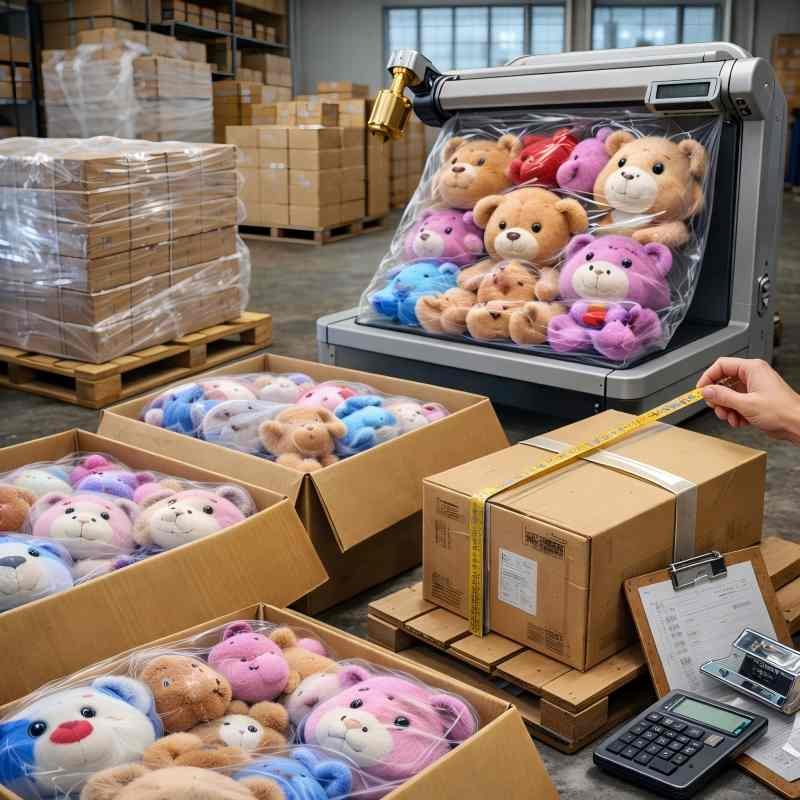
What makes plush shipping expensive?
What should be locked before you choose a shipment term?
Pick who should own the controls—then lock the endpoint.
Don’t pick by “cheapest.” Pick by control: choose FCA/FOB when you want your forwarder to control routing and destination handling; choose CFR/CIF when you only want supplier-arranged ocean to port; choose DAP/DDP when you need door delivery—scope must be written.
Step 1 — Choose your control model for plush
Recommended when you have a forwarder/broker.
Choose FCA (most practical) or FOB (sea-only classic).
Best when you need control over: consolidation, cut-offs, routing, and destination appointments.
Simple sea budgeting
Choose CFR/CIF (sea-only).
Best when you can cleanly manage: destination charges, clearance, and last-mile delivery.
Fewer handoffs.
Choose DAP (duty/tax buyer-side) or DDP (duty included, scope must be explicit).
Best when your team is small and you want fewer coordination steps.
Step 2 — Match to your channel reality
Most “cost surprises” are endpoint gaps, not freight rate changes.
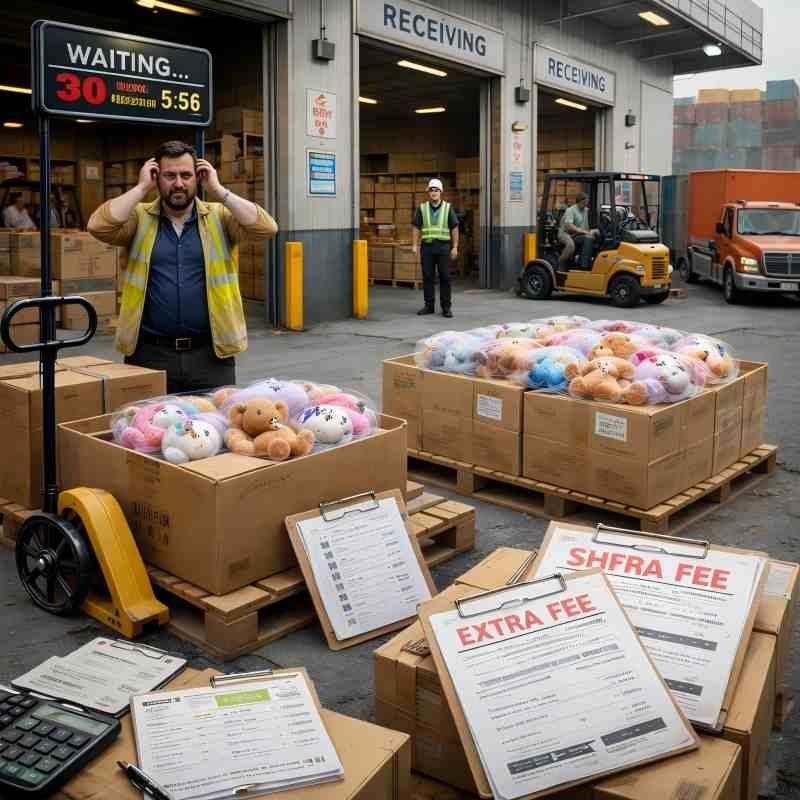
Delivered terms fail when the “place” is vague. For plush cartons, the named place must match your real receiving flow: port vs yard vs 3PL dock vs retail DC appointment. Ambiguity triggers storage, redelivery, waiting-time, and appointment penalties.
What must be written explicitly on PI/PO?
Simple rule that prevents disputes
If your destination is a 3PL or retail DC, treat the “named place” like a contract deliverable:
write the endpoint + appointment method + what’s excluded. Otherwise, “delivered” becomes “delivered-ish.”
Plush shipment specific checklist that prevents extra cost and delays
Smooth shipping is “inputs-first.” Provide cartonization, marks, contact chain, and receiving rules early. We then align booking cut-offs, export documents, and destination handling—so bulky cartons don’t get stuck at pickup, at port, or at warehouse receiving.
Booking file inputs
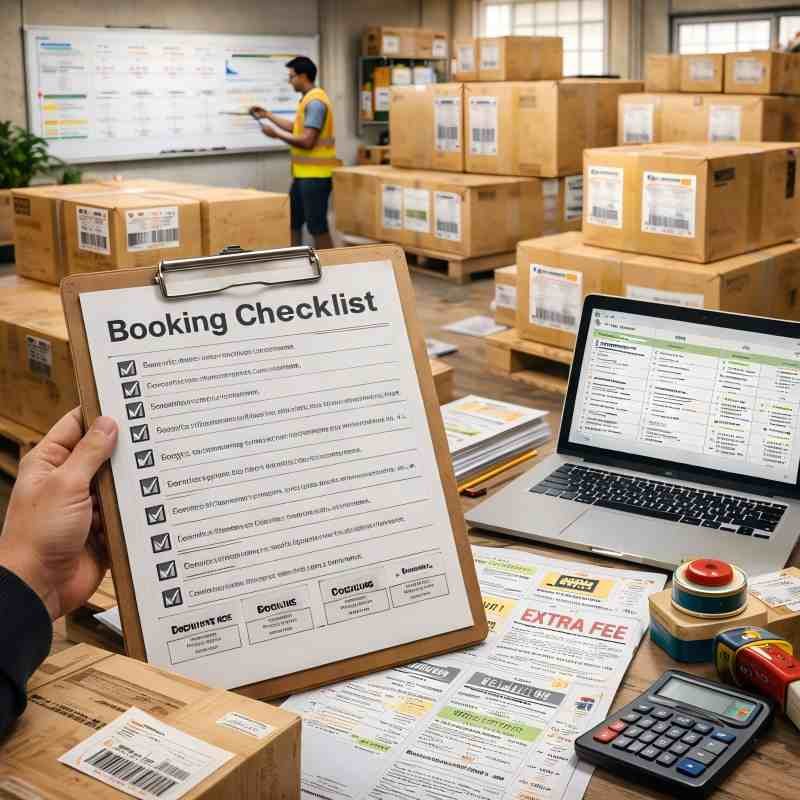
Incoterms decides who can control cut-offs, routing, and last-mile failure risk.
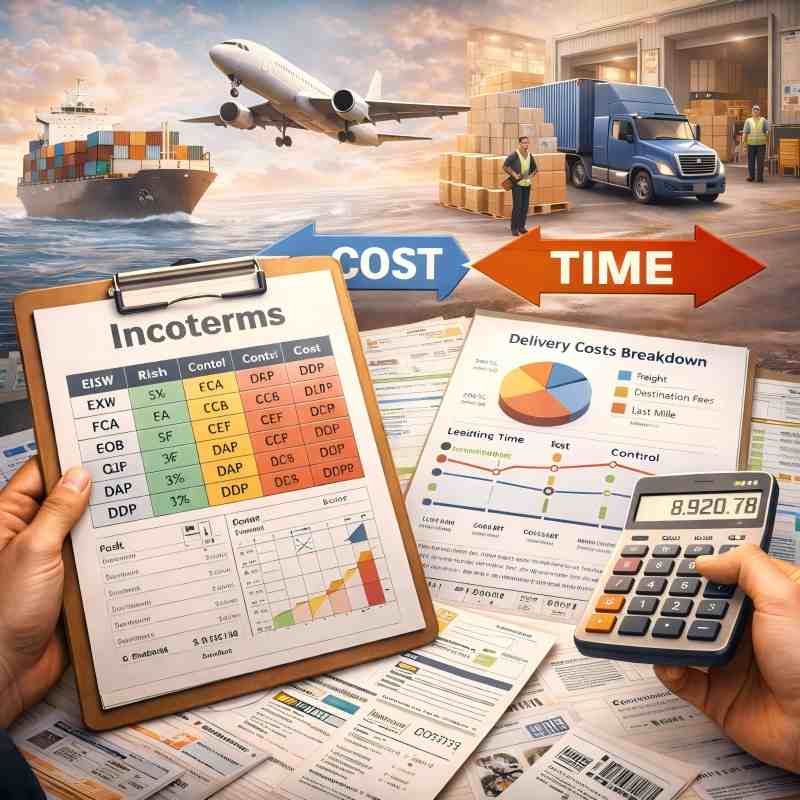
For plush, total cost is shaped by CBM, destination handling, and delivery execution—not just the freight rate. Your Incoterms choice decides who controls booking, documents, and appointments. Pick the term that matches your team capability and your launch deadline.
Simple rules buyers actually use
Links
Q1: Which term is “cheapest” for plush?
There’s no universal cheapest. For plush, total cost is driven by CBM/DIM, destination handling, and last-mile execution. The “best” term is the one you can run without re-measurement, appointment failure, storage, or redelivery fees.
Q2: Why did the forwarder re-measure our cartons and change CBM cost?
Because carton size and stack strength vary by packing method. If cartonization is not locked (pcs/ctn, inner packing, compression), CBM changes. Lock carton outer size range and confirm measurement rules before booking.
Q3: Should we vacuum-pack plush to reduce CBM?
Sometimes, yes—but only within a safe deformation range. Over-compression can cause crease lines, face distortion, and “not as approved” appearance issues. Define compression allowance and recovery expectation in the packing plan.
Q4: If we choose DDP, do we still need to provide information?
Yes. You still must provide correct consignee details, confirm carton marks/mixed-SKU rules, and cooperate on customs requests. DDP reduces steps, but document accuracy and endpoint clarity still matter.
Most Incoterms problems aren’t legal—they’re operational: the named place is vague, freight ownership is unclear, or import/receiving rules are confirmed too late. Send your shipment basics and we’ll return a risk-locked recommendation.
What to send
What you get back (risk action checklist)
If you have questions or need a quote, leave us a message. We’ll reply within 12 hours with the best-fit solution for your requirements.
This form is built for accurate quoting—size, quantity, materials, accessories, and compliance needs. The more complete your brief, the fewer revisions and the faster your sample can start.

I am Lumi, our team would be happy to meet you and help to build your brand plush.