
Most shipping delays are caused by missing fields or inconsistent documents.
To build a correct shipping documents pack, please you share:
So you will get:
Last updated: [Feb. 8th, 2026] · Applies to: Ocean / Air · Channels: 3PL / Retail DC / E-commerce · Built for: custom plush shipments
A “standard document set” doesn’t exist. Your checklist depends on who controls freight, where inventory is received, and which mode (ocean/air) is used.
If you control the forwarder or booking, this is your stack.
Always needed (Core Stack)
Commercial Invoice (CI)
Packing List (PL)
Carton Marks
Packing Data Summary (ctn count / dims / weights)
Usually needed (Ops Stack)
Shipping Instructions (SI) for your forwarder
BL/AWB draft check (parties + carton totals + description line)
Only when triggered (Requirement Stack)
Certificate of Origin (COO) (if required)
Third-party inspection evidence (if used)
Compliance/testing references (if required)
ISF / EORI (market/broker-driven)
If your forwarder books, and we support document control, this is your stack.
Always needed (Core Stack)
Commercial Invoice (CI)
Packing List (PL)
Carton Marks
Packing Data Summary (ctn count / dims / weights)
Usually needed (Ops Stack)
SI + booking cut-off handoff pack (estimate → final packing data)
BL/AWB draft consistency check (cross-document must-match fields)
Only when triggered (Requirement Stack)
Same as above (COO / inspection / compliance refs / ISF/EORI as required)
If the shipment is arranged to destination, the stack depends on destination and broker/channel rules.
Always needed (Core Stack)
Commercial Invoice (CI)
Packing List (PL)
Carton Marks
Packing Data Summary (ctn count / dims / weights)
Usually needed (Ops Stack)
Carrier/forwarder coordination pack (draft fields + release workflow alignment)
Only when triggered (Requirement Stack)
Add-ons depend on destination + broker + channel (COO / inspection / compliance refs / local filing needs)
Document ownership is not enough. Smooth clearance requires field ownership: who supplies, who drafts, who confirms, and who is the final approver.
Shipping documents come from multiple parties. Buyers confirm consignee and import requirements; the factory prepares commercial documents and packing data; the forwarder/carrier issues transport documents; and brokers file entry based on those documents. This matrix prevents gaps and delays.
A) Buyer-Readable Document Ownership Matrix
| Document / Item | Buyer Confirms | Factory Drafts / Finalizes | Forwarder/Carrier Issues | Broker / Import Team Uses | Lock Point |
|---|---|---|---|---|---|
| Consignee / Ship-to / Notify Party | ✅ (legal name) | Inserts into CI/PL | Inserts into BL/AWB | ✅ | Before booking |
| Incoterms + delivery location line | ✅ | ✅ (reflects on CI) | Uses for scope | ✅ | Before production ends |
| PO / Program ID / SKU list | ✅ | ✅ | Uses for booking notes | Often | Before packing rules |
| Commercial Invoice (CI) | Approves draft | ✅ | — | ✅ | Pre-dispatch |
| Packing List (PL) | Approves logic | ✅ | — | ✅ | Pre-dispatch |
| Carton marks template | ✅ (format) | ✅ (apply) | — | Sometimes | Before packing starts |
| Carton totals (ctn count / units / weights / dims) | Approves rules | ✅ (estimate → final) | Rates freight | ✅ | Before booking + final pre-dispatch |
| BL / AWB draft | Confirms parties | Supports SI | ✅ | ✅ | Pre-dispatch draft check |
| HS code / item description | Confirms with broker | Provides product info | — | ✅ | Before CI draft |
| COO / origin statements | Requests | Supports | — | ✅ | Plan early |
| Inspection report (if used) | Defines standard | Supports on-site | — | Sometimes | Before dispatch |
| Compliance/testing references (if required) | Defines scope | Organizes pack | — | Sometimes | Plan early, finalize pre-dispatch |
B) High-Risk Field Owners (This Prevents 80% of Delays)
| High-risk field | Owner of Source Data | Owner of Draft Entry | Final Approver | What triggers re-check |
|---|---|---|---|---|
| Consignee legal name + address | Buyer / Import team | Factory (CI/PL) + Forwarder (BL/AWB) | Buyer | Any party change, any BL draft update |
| HS code / item description | Buyer + Broker | Factory provides product info | Buyer/Broker | Any material/function change; any new SKU |
| Carton totals (ctn count / dims / weights) | Factory | Factory + Forwarder for rating | Buyer (rules) | Any packing rule change; any SKU mix change |
If these fields don’t match exactly, your shipment can stall at booking, release, clearance, or receiving. This table is designed to be copied into your internal checklist.
Must-Match 12 Fields Table
| Field (must match exactly) | Appears in | Common mismatch | Typical impact | Control action |
|---|---|---|---|---|
| Consignee legal name | CI / BL(AWB) / SI | spelling, punctuation, entity suffix | BL draft hold, clearance delay | lock from buyer once; reuse everywhere |
| Notify party | BL(AWB) / SI | missing / wrong contact | release delay | confirm early; approve BL draft |
| Shipper name | CI / BL(AWB) / SI | factory legal name variation | doc rejection | use one legal template |
| Incoterms line + location | CI / booking notes | missing location | duty scope confusion | lock responsibility + location |
| PO / Program ID | CI / PL / carton marks | different PO reference | receiving disputes | one program ID everywhere |
| SKU naming / variant logic | CI / PL | SKU aliasing | claims / inventory mismatch | create “SKU mapping” once |
| Total cartons | PL / SI / BL(AWB) | estimate vs final not updated | booking rework | two-step: estimate + final lock |
| Units/carton rule | PL | remainder carton missing | receiving counts off | include remainder logic in PL |
| Carton numbering (1/xx) | carton marks / PL | gaps / wrong denominator | chargebacks | lock numbering rule before packing |
| Weights (GW/NW) | PL / SI / BL(AWB) | rounding differences | re-rating, disputes | define rounding rule (kg, 1 decimal) |
| Carton dimensions | PL / SI | cm/in conversion errors | chargeable weight spikes | lock units + conversion once |
| Item description | CI / BL(AWB) | too vague or inconsistent | clearance questions | use one approved description line |
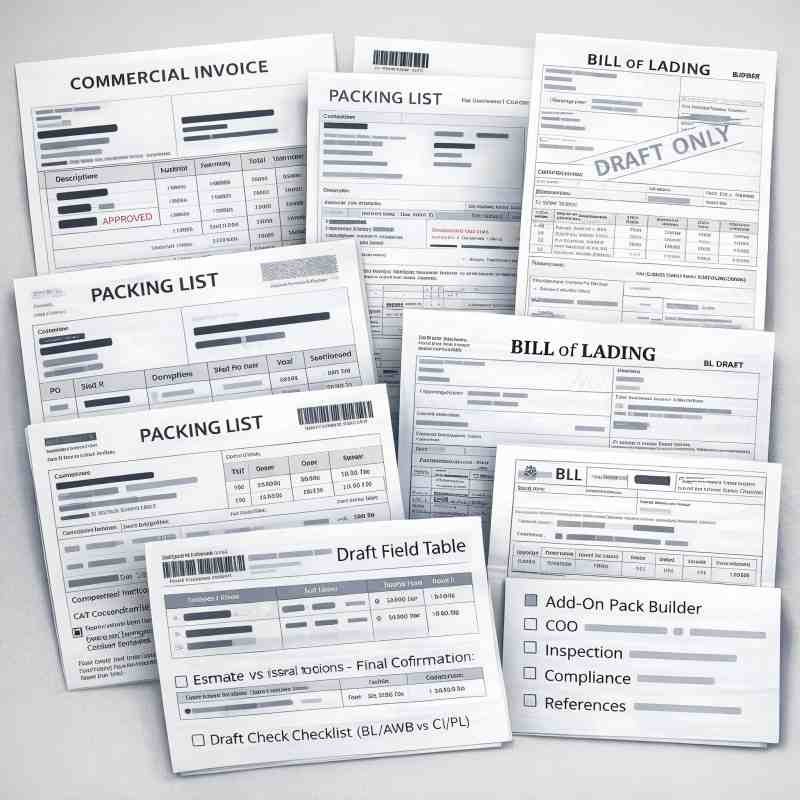
High-performing programs don’t “explain” document control—they show it. Use these redacted examples and templates to align your team in one pass.
A) Redacted Example Previews
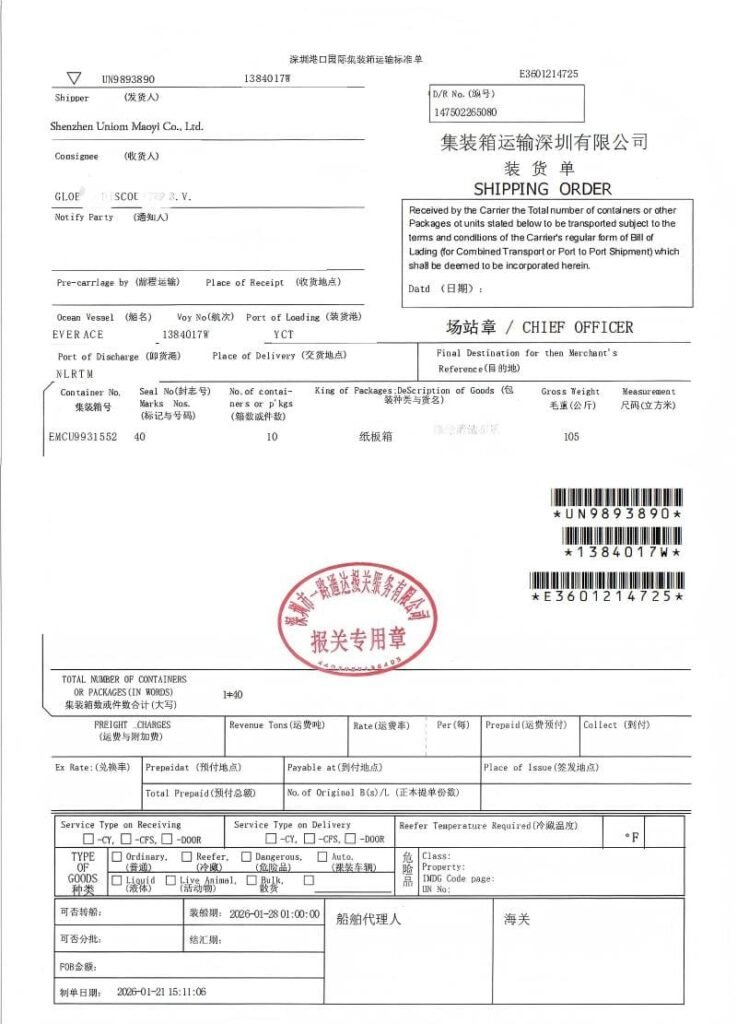
Example Preview #1 — Cross-Document Consistency (CI ↔ PL ↔ Carton Marks ↔ BL Draft)
consignee block, PO/SKU summary, carton totals, weight/dims line, approved description line.
Example Preview #2 — Forwarder Handoff Pack (SI + Packing Estimate + Lock Notes)
SI fields, estimate vs final confirmation, cut-off time note, contact chain.
B) Template Pack Contents
High-performing programs don’t “explain” document control—they show it. Use these redacted examples and templates to align your team in one pass.
Customs Valuation + Classification Anchor
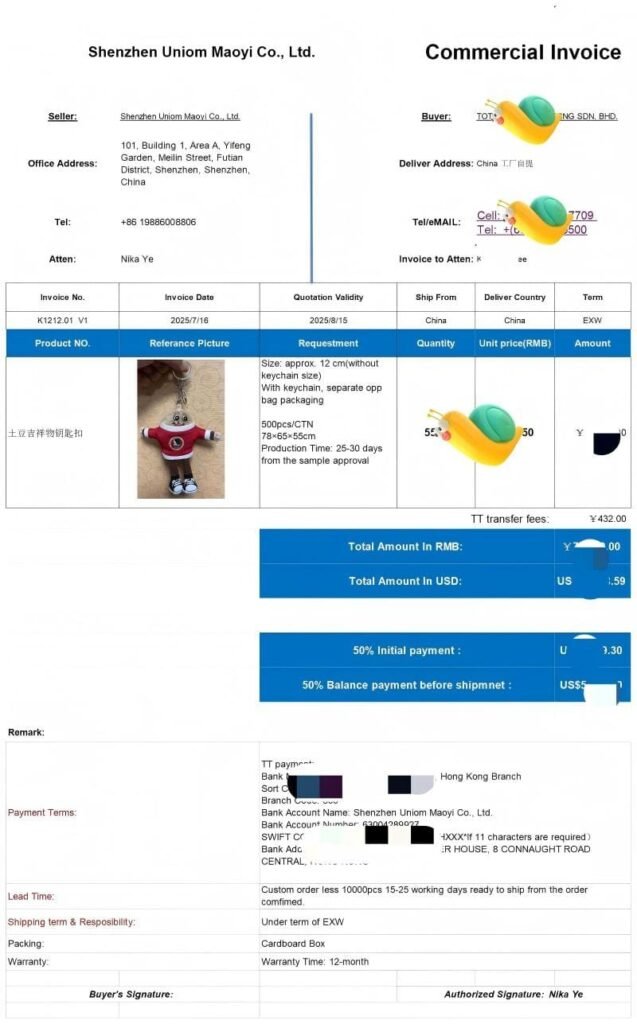
The CI is the primary reference for customs value and declared item description. Drafting it early prevents last-minute rework and keeps the BL/AWB draft consistent.
CI minimum draft fields (buyer-approval required):
Non-negotiables (system boundary):
Receiving Map + Claims Boundary
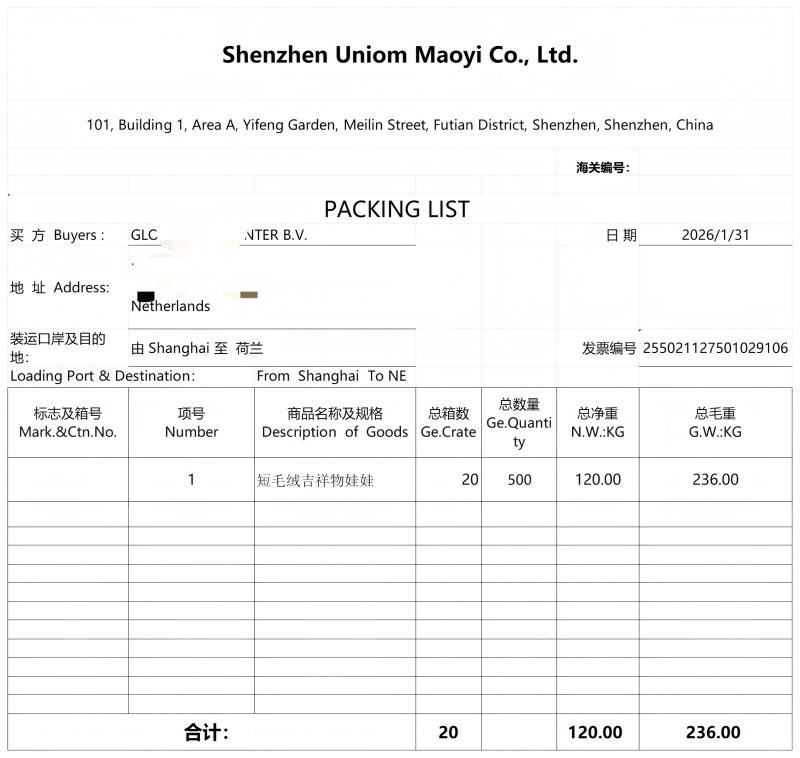
The PL is the receiving “map” that determines what a warehouse accepts and what can be claimed. A receiving-grade PL prevents chargebacks and post-delivery disputes.
Receiving-grade PL minimum :
Common failure points (and the fix):
Warehouse Compliance, Not Optional Labels
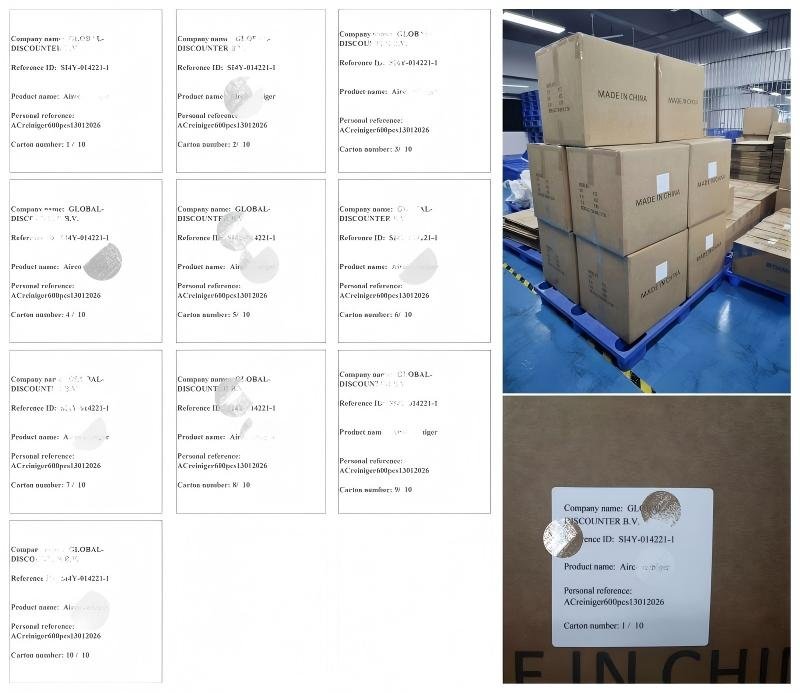
Carton marks are the warehouse’s operational truth. They must match the PL logic, carton numbering, and any scanning/label placement rules.
Carton mark template:
Placement rules (keep it consistent):
Ensure repeat orders feel the same every time
Draft Control Before Release
BL/AWB is issued by the carrier/forwarder, but it only stays correct when SI is built from locked fields. SI is where most draft errors start.
What you should control (system deliverable):
Shipping Instructions (SI) Field Table (Copy/Paste)
| SI Field | Source | Must match with | Lock point |
|---|---|---|---|
| Shipper legal name | Factory | CI | Pre-dispatch draft |
| Consignee + notify | Buyer | CI + BL/AWB | Before booking |
| Cargo description line | Buyer approves | CI + BL/AWB | Before CI draft |
| Total cartons | Factory | PL + BL/AWB | Before booking estimate; final pre-dispatch |
| Total GW / dims | Factory | PL + BL/AWB | Before booking / final |
| Freight terms | Buyer | CI | Order kickoff |
| Release instruction | Buyer/Forwarder | BL workflow | Pre-dispatch |
BL/AWB draft check (1-minute checklist):
Some holds happen even when CI/PL are perfect—because an importer-side filing or ID is missing. This section tells you what to confirm early without turning this page into legal advice.
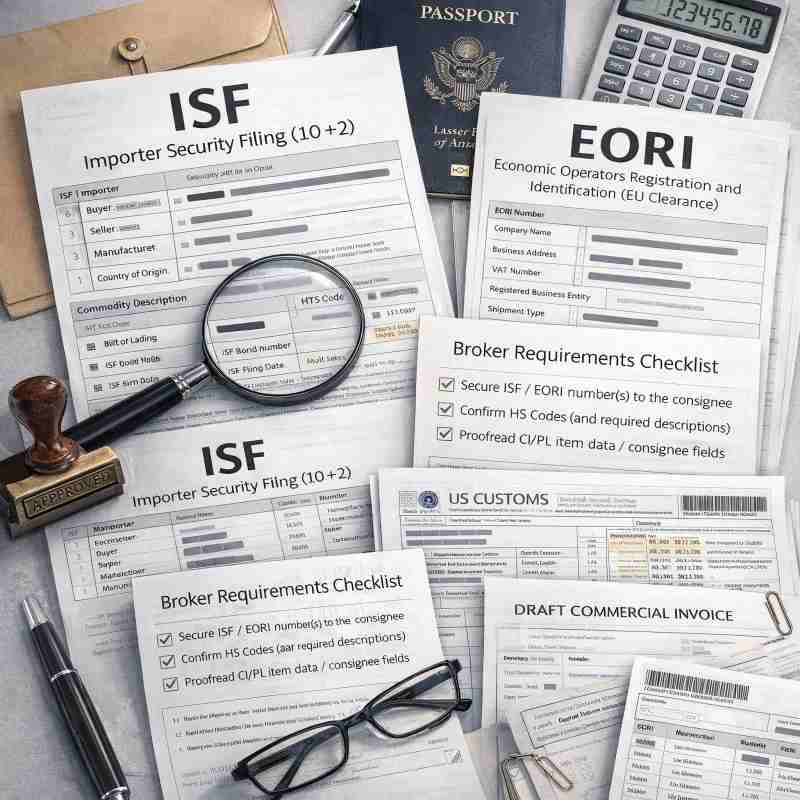
What You Must Confirm Early (ISF / EORI / Broker Checklist)
Confirm early with your broker/import team (examples):
What we provide to support filings (factory-side):
Add-on documents aren’t “extra certificates.” They are requirement-driven packs triggered by destination rules, channel rules, or internal QA policy.
| Trigger | Add-on pack | Who defines requirement | What we can support | Lock point |
|---|---|---|---|---|
| Destination/broker requests origin proof | COO / origin statement | Buyer + broker | prepare/support documents | plan early |
| Buyer requires third-party inspection | Inspection report | Buyer | align scope + timing + packing readiness | before dispatch |
| Market/channel requires compliance references | Compliance/testing references pack | Buyer | organize version-linked references | plan early, finalize pre-dispatch |
Related internal links :
Timing is the difference between clean dispatch and rebooking fees. This timeline shows what must be locked early and what changes trigger re-check.
| Milestone | What must be locked | Why it matters | If late |
|---|---|---|---|
| M1: Order kickoff | destination type + Incoterms | defines responsibility | wrong scope assumptions |
| M2: Packing rules set | carton marks + mixed-SKU rules + numbering | receiving compliance | relabel/repack/chargebacks |
| M3: Before booking | estimate carton totals + dims/weights | rates + cut-offs | missed cut-offs / rebooking |
| M4: Pre-dispatch drafts | CI/PL drafts + SI fields | BL/AWB draft accuracy | draft mismatch hold |
| M5: Dispatch | final CI/PL/carton marks | clearance-ready | clearance delay / disputes |
| M6: After dispatch | BL/AWB release workflow | prevents storage risk | demurrage/storage exposure |
Change control (high-end rule):
Drafts move fastest when inputs arrive as one consolidated pack. This handoff list is designed so your team can approve internally without re-quoting or re-drafting loops.
Q1: What’s the difference between CI and PL?
CI anchors customs value and declaration wording; PL anchors receiving counts and carton reconciliation. They must share the same must-match fields.
Q2: What causes the most BL/AWB draft mistakes?
Incorrect consignee block, outdated carton totals, and description wording that doesn’t match the approved CI line.
Q3: Who decides the HS code?
The importer/broker is the final approver. We provide product material/function info and keep descriptions consistent with the approved declaration line.
Q4: Can you provide a “standard doc set” for every country?
We provide the core commercial stack and draft-control system. Requirement-driven filings and add-ons depend on destination, broker, and channel rules.
Q5: When should carton marks be finalized?
Before packing starts. Late carton mark changes often trigger relabel/repack and can break warehouse receiving rules.
Share your shipping essentials once. We return a reviewable document pack that keeps CI/PL/SI/BL(AWB) consistent—so booking, clearance, and receiving don’t stall.
Step 1 — Share Inputs (5 items)
Consignee block, Incoterms + destination/channel, PO/SKU list, carton mark rules, and forwarder/broker contact (SI format if buyer-managed).
Step 2 — We Build the Draft Core
We align Commercial Invoice + Packing List fields and packing logic (mixed-SKU, carton numbering, units, rounding rules).
Step 3 — We Run Draft Consistency Checks
We apply the Must-Match 12 Fields check across CI/PL/carton marks/SI and flag any conflicts before BL/AWB drafting.
Step 4 — Handoff + Lock Plan
You receive a draft-ready handoff pack for your forwarder and a document lock plan showing when estimate→final happens and what changes trigger re-checks.
What you’ll receive (deliverables)
If you have questions or need a quote, leave us a message. We’ll reply within 12 hours with the best-fit solution for your requirements.
This form is built for accurate quoting—size, quantity, materials, accessories, and compliance needs. The more complete your brief, the fewer revisions and the faster your sample can start.

I am Lumi, our team would be happy to meet you and help to build your brand plush.