Sampling approvals follow a roadmap: Prototype → Structure Validation → Photo-Ready (optional) → PP (Pre-Production) → Golden Sample. Approve the right fields at each milestone—then lock specs for bulk. See how we help on the following:
You save cost and time by validating the right risk at the right milestone.
Not every plush sample is meant to be production-ready. When sample types are unclear, teams approve the wrong milestone and trigger costly revisions later. This guide defines each sample type (prototype, structure validation, photo-ready, PP sample, golden sample), what it proves, and what approval should cover—so bulk production starts clean.
Clear sample types prevent
A good sampling roadmap gives
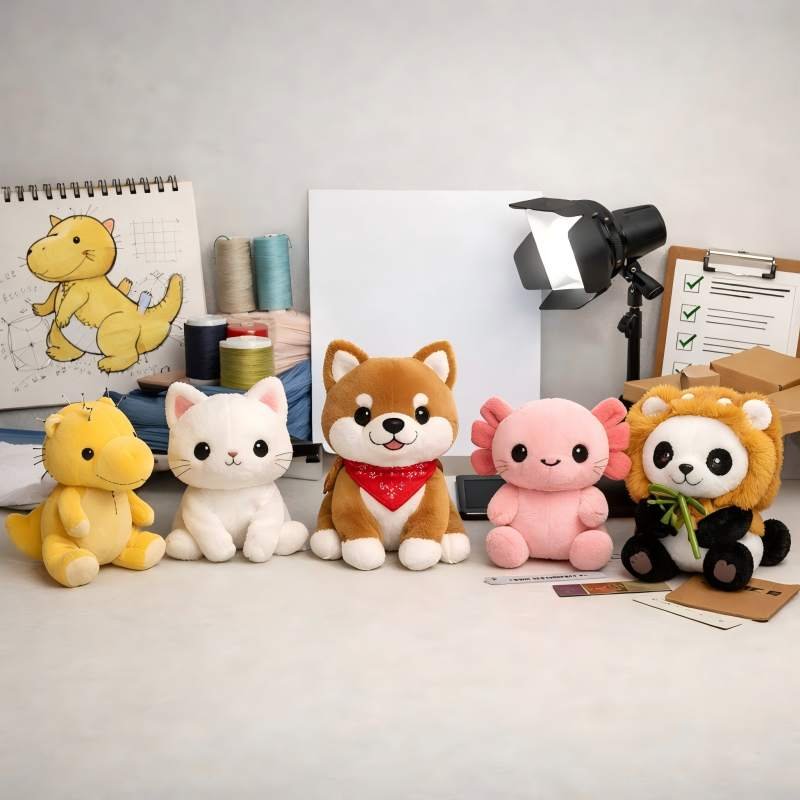
5 plush sample types and what is each for
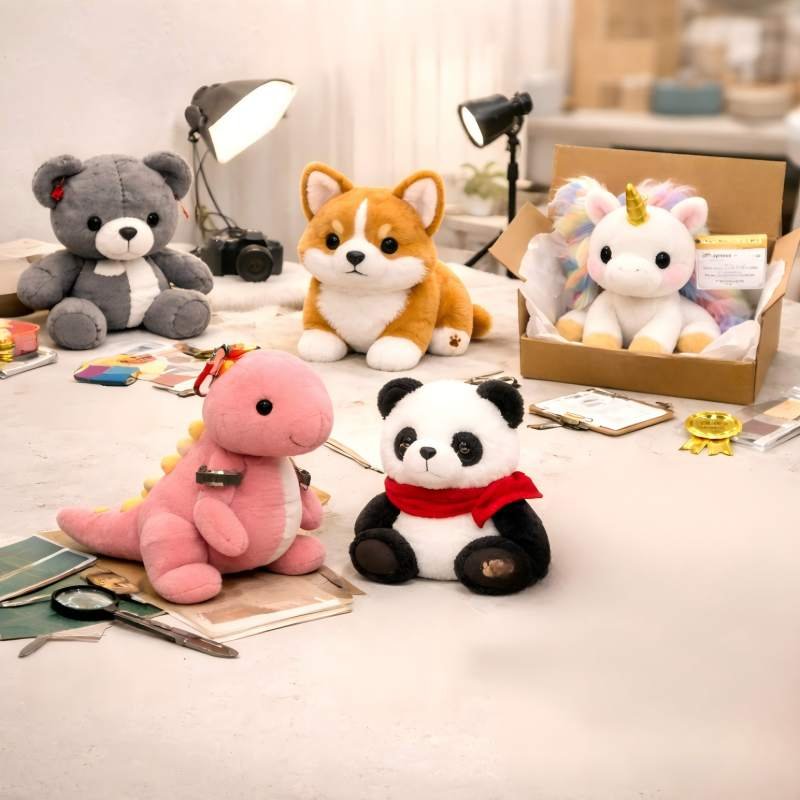
Most projects follow the same logic: prototype/concept direction → structure validation → photo readiness (if needed) → photo-ready sample (optional) → PP sample (pre-production approval)→ golden sample (final reference). Your project may skip steps, but the core rule stays: prove what matters before scaling mass production.
It confirms direction and character feel before you pay for precision.
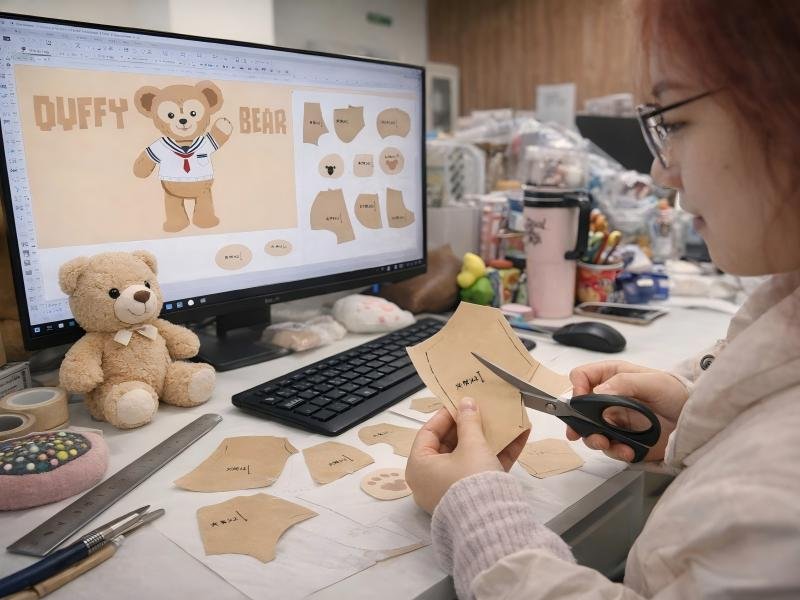
A prototype (concept) sample confirms the overall look: silhouette, proportions, face expression, and key features. It’s the fastest way to align design direction before investing in strict measurements, production-level stitching, or accessory engineering. This is often the first plush toy prototype milestone for new characters.
What it proves
What you should approve
What you should NOT approve yet
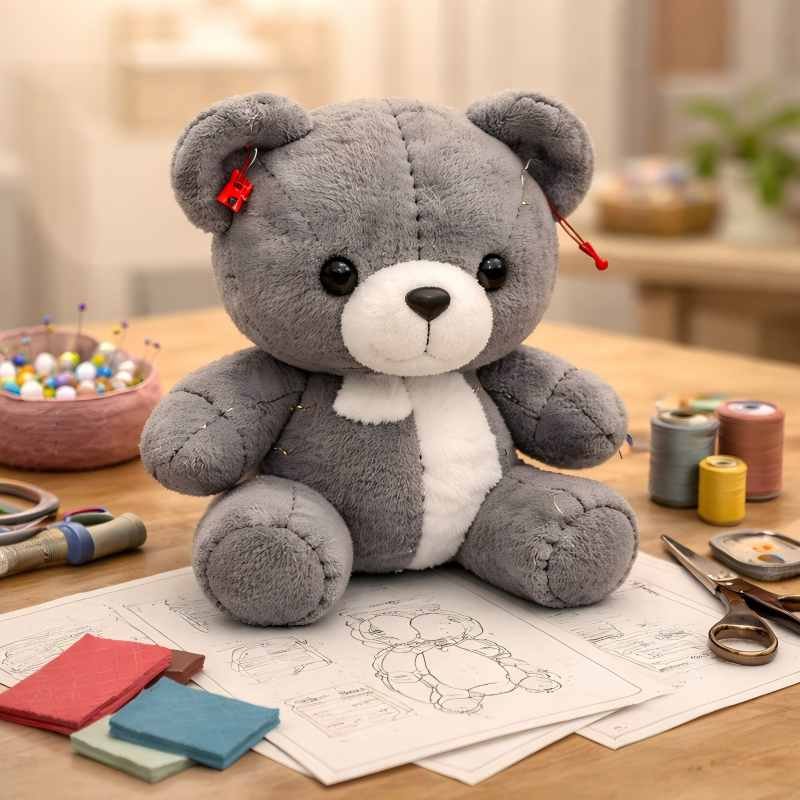
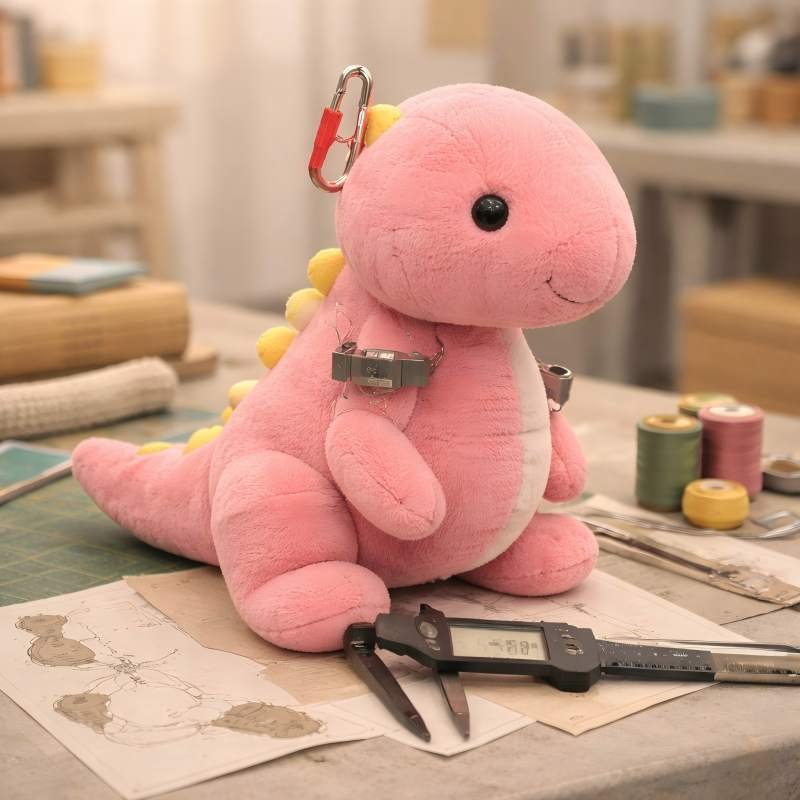
Structure Validation Sample (Feasibility & Stability)
A structure validation sample tests feasibility: whether the plush can stand/sit as intended, hold shape, and carry attachments securely. It’s recommended for complex silhouettes, keychain/hanging points, hard accessories, electronics modules, or multi-material builds—so risks are found early instead of during PP or bulk.
Best for
Approval focus
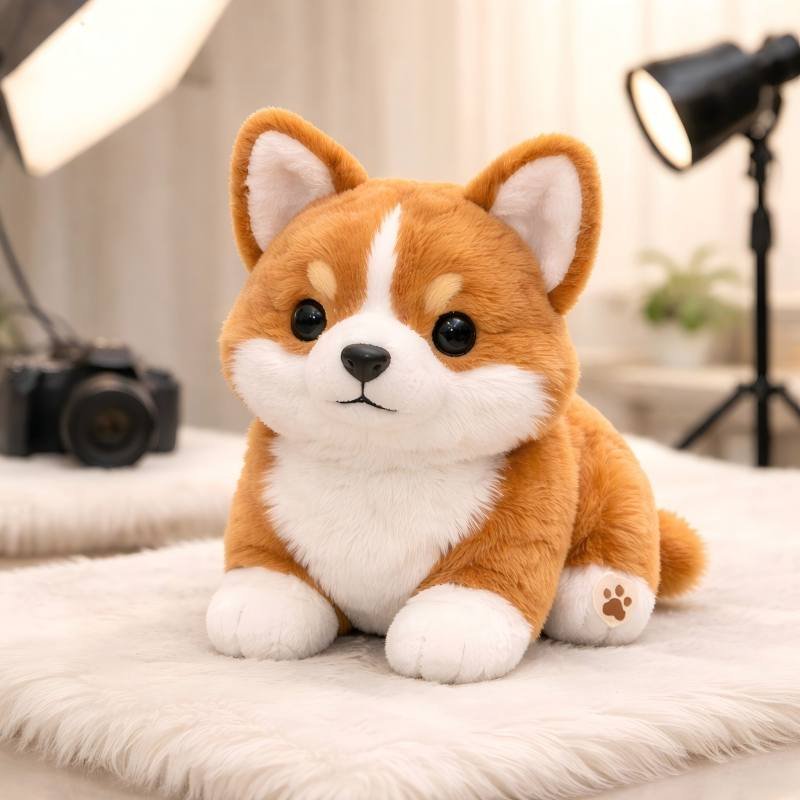
It’s built for listing photos and pitches, not as the bulk production standard.
A photo-ready prototype focuses on camera impact: clean finishing, accurate branding placement, and consistent visible details for close-ups. It’s optional, but valuable when your launch timeline depends on product photos—Amazon/Shopify listings, Kickstarter/pre-order pages, retail pitch decks, or influencer seeding.
Best for
Approval focus
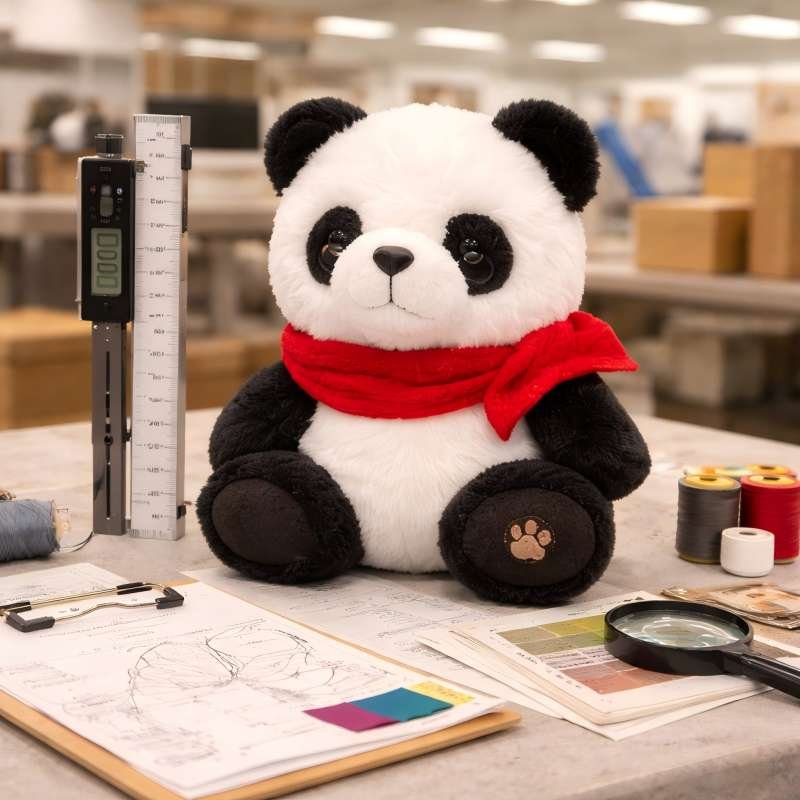
This is the real go/no-go approval that locks mass production standards.
A PP sample (pre-production sample) is the production baseline. “Approval” here means materials, measurements, branding placement, construction method, and finishing standards are locked for bulk production. If you formalize only one approval, make it PP—because it defines how the factory will reproduce the plush at scale, not just how one unit looks.
You should approve
You should NOT change after PP approval
PP vs Golden (one-line clarity)
It’s the master reference that keeps batches consistent across time and reorders.
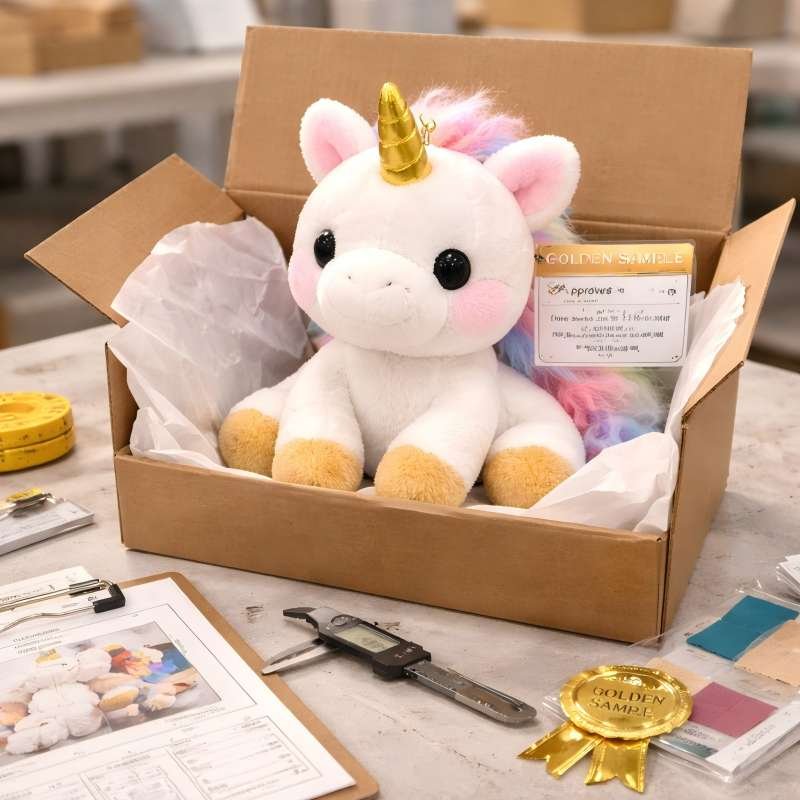
A golden sample is the master reference used to control consistency in mass production and repeat orders. It locks not only the look, but also the feel, finishing expectations, and the approved version identity. Golden samples are ideal for evergreen SKUs, reorder programs, and any project with strict brand consistency requirements.
Best for
What a golden sample pack includes
A simple selector helps you choose the right sample types without overpaying.
Use this quick selector to choose the right sampling milestones. If your team is unsure, start with feasibility review and we’ll recommend a roadmap that reduces revisions and protects timeline. The goal is simple: prototype proves direction, PP locks production, and golden sample protects consistency.
Q1: What sample should we start with—prototype or PP sample?
Start with a prototype (concept) sample if the character, proportions, or materials are not locked. Use a PP (pre-production) sample only when your specs are ready to be locked for mass production.
Q2: What does “approval” actually mean at each milestone?
Approval means only the listed scope is confirmed for that stage (photos/spec fields/version ID). Anything not listed is not approved yet. PP approval is the only true go/no-go for bulk.
Q3: Can we skip structure validation and go straight to PP?
Yes—if the design is simple and low-risk. But for complex shapes, keychains, hard accessories, or electronics, skipping structure validation often creates PP rework and delays.
Q4: Is a photo-ready sample required for production?
No. A photo-ready sample is mainly for marketing, listings, pitch decks, or pre-order pages. It can look perfect on camera but still isn’t the production baseline unless it’s also confirmed as PP scope.
Q5: What’s the difference between a PP sample and a golden sample?
PP sample = build standard (materials, construction, placement, tolerances locked for mass production).
Golden sample = judge standard (the master reference used to check batch consistency and reorders).
Q6: After PP approval, what changes usually trigger rework or retesting?
Changes to materials, construction method, branding placement, small parts, or size/tolerances commonly trigger rework—and may require retesting depending on market and component changes.
Q7: How many sample rounds are “normal” for custom plush?
Most programs take 1–3 rounds depending on complexity and how clear the approval scope is. A clear milestone roadmap reduces rounds by preventing “wrong sample approvals.”
Get a milestone-based sampling plan that locks approvals and protects your bulk timeline.
Share your artwork, target size, sales channel, and deadline. We’ll recommend the right sample types—prototype, structure validation, photo-ready (optional), PP (pre-production), and golden sample—plus exactly what to approve at each milestone. The result: fewer rounds, clearer sign-offs, and a cleaner handoff into mass production.

I am Nika, our team would be happy to meet you and help to build your brand plush.