Most sampling delays come from “the fabric feels different” or “the color looks off.” A swatch pack helps you confirm hand-feel, pile, thickness, and color direction early—so your prototype starts closer to the final product.
Uniomy’s controlled sampling system locks fabric decisions early, solving your most common plush problems:
A fabric swatch pack helps you decide plush material before prototype sampling: confirm hand feel (softness), pile length (pile height), thickness, sheen/pile direction, and color reference. It reduces sampling revisions, avoids “looks different” disputes, and prevents “approved sample ≠ bulk feel” surprises.
This swatch pack prevents the most common pre-sample problems:
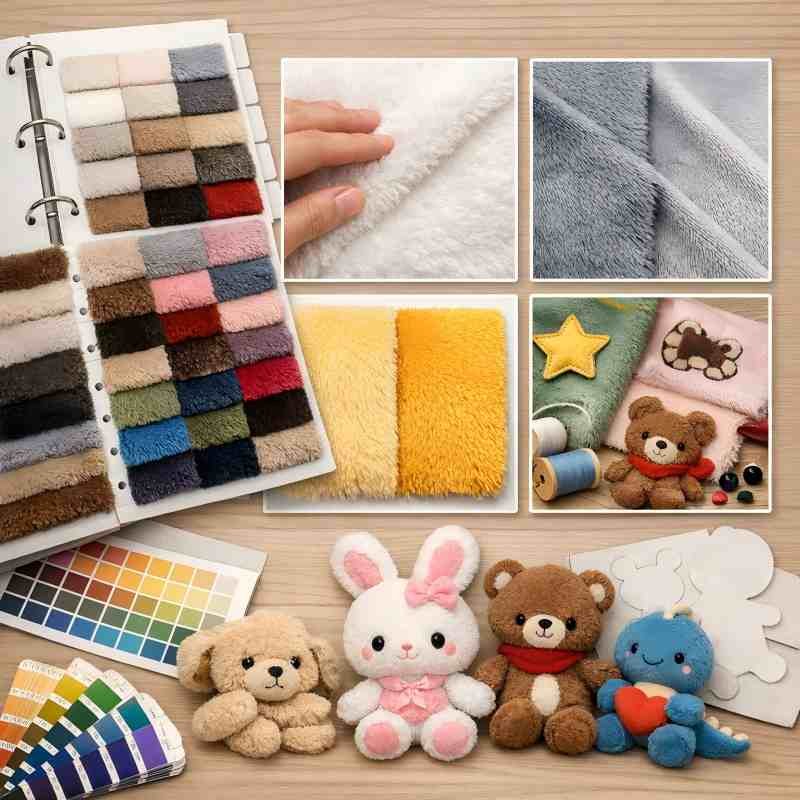
Each swatch is labeled so your team can approve one clear baseline.
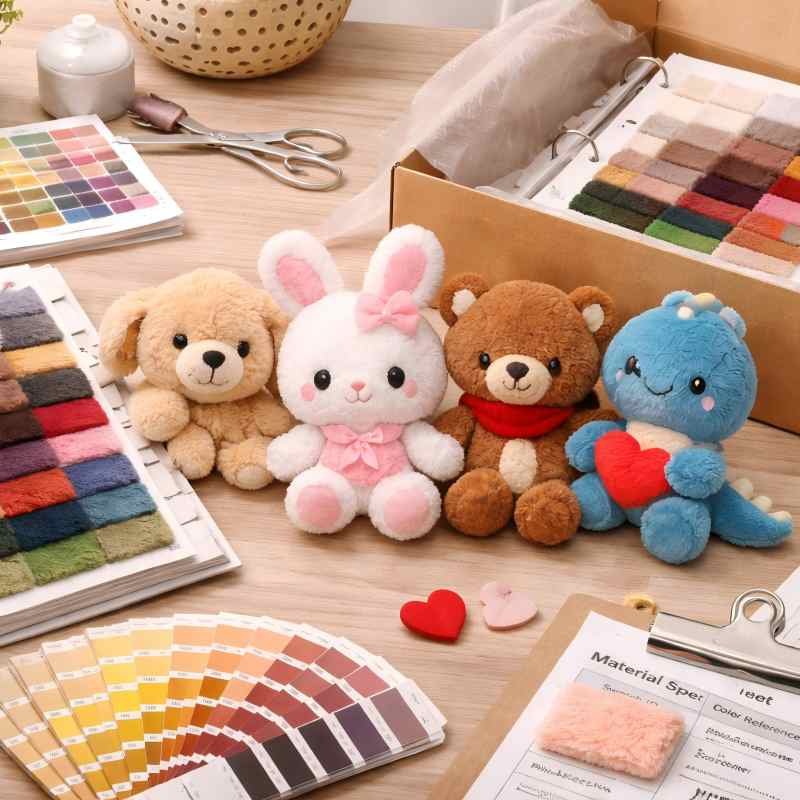
The pack includes real plush fabric swatches and a simple identification set per swatch—so you can compare hand feel, pile length, thickness, and surface behavior side-by-side. Packs can be standard (popular plush fabrics) or customized to your plush style and target price level.
Plush Fabric Swatches (Multi-Tier Hand Feel)
Real plush fabric samples across budget / mid / premium tiers so your team can compare “soft vs dense vs structured” in hand.
Pile Length Set (Short / Medium / Long)
Swatches that show how pile length changes photo texture, softness, and color perception.
Special Texture Swatches (Project-Style Options)
Examples like minky/velboa-type, shaggy/long pile, sherpa-like, faux-fur look, micro-plush—used when your character style needs a specific surface behavior.
Color Reference Support (When Applicable)
A color chip/card or reference swatches to align color direction beyond screens and reduce “looks different” disputes.
Print-Compatibility Surface Samples (If Printing/Transfer Is Planned)
Swatches selected specifically to test how printing/transfer sits on different pile heights and textures (blur risk vs crispness).
Embroidery/Patch Suitability Samples (If Branding Is Critical)
Swatches chosen to show embroidery readability differences between dense vs loose pile and how patches sit on different surfaces.
Dye-Lot / Shade Direction Notes Sample (When Color Sensitivity Is High)
Reference swatches that highlight how plush can look different by pile direction, sheen, and lighting—useful for brand color programs.
Fabric Code / Swatch ID
A unique identifier so your selection is unambiguous and reorders reference the same baseline.
Pile Type + Pile Height Range
High-level label (e.g., short/medium/long, specialty) plus a range so teams don’t approve “a look” without knowing the pile level.
Weight / Thickness Range
High-level weight/thickness band to indicate density and structure, not just softness.
Surface Behavior Notes
Notes on sheen direction / pile direction sensitivity / markability (how the surface changes under touch or camera angle).
Best-Fit Use Cases
Quick tags like keychain plush / mascot plush / collectible plush / retail plush to match fabric choice to product intent.
Care & Durability Signal (High-Level)
Simple guidance like “holds shape better” / “more plush look” / “more photo-friendly” to help buyers pick a repeatable option.
Inner/Lining Fabric Swatches
For programs needing inner layers (bags, pockets, structured bodies, special openings) so lining feel and color don’t become a surprise.
Stuffing Feel Reference Notes (If Feel Is a Brand Promise)
A short add-on reference to align fabric choice with soft/supportive/structured feel intent (helps prevent “fabric ok but feel wrong”).
Accessory/Attachment Base Fabric Suggestions (If You Have Hardware/Clothing)
Fabric suggestions chosen for areas that interact with straps, clothing, magnets, keychains, where friction and stitching stability matter.
5 points to help final decision: When to Order, How to Match Color, Test Logos & Plan Lead Time
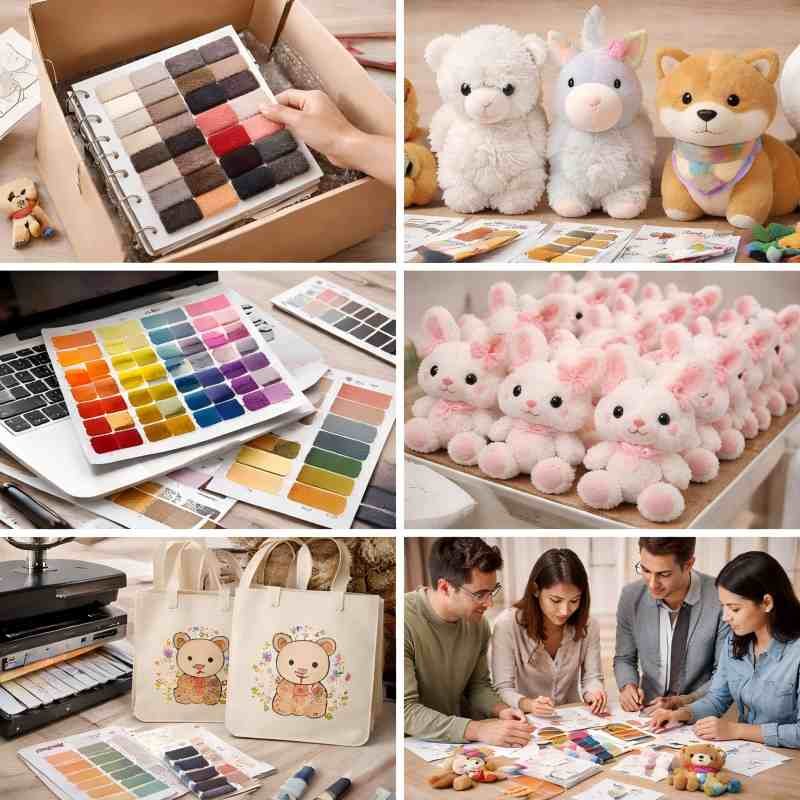
Use it when feel, color accuracy, or photo texture matters.
A swatch pack is most valuable when your plush brand cares about hand feel consistency, photo texture, or color matching. It’s also ideal for first-time projects, switching suppliers, premium/collectible lines, or long-term reorder programs where bulk consistency is part of the brand promise.
Request a fabric swatch pack when:
Shortlist 2–3 options, then lock one baseline for sampling.
Use the pack as a decision workflow: define a target hand feel, shortlist 2–3 swatches, confirm pile direction and photo texture, lock a color reference standard, then confirm decoration compatibility. The result is a clearer sampling spec and fewer prototype revisions.
Simple use workflow:
The “Material Decision Sheet” you lock:
Before sampling starts, your pack selection becomes a simple, shareable baseline:
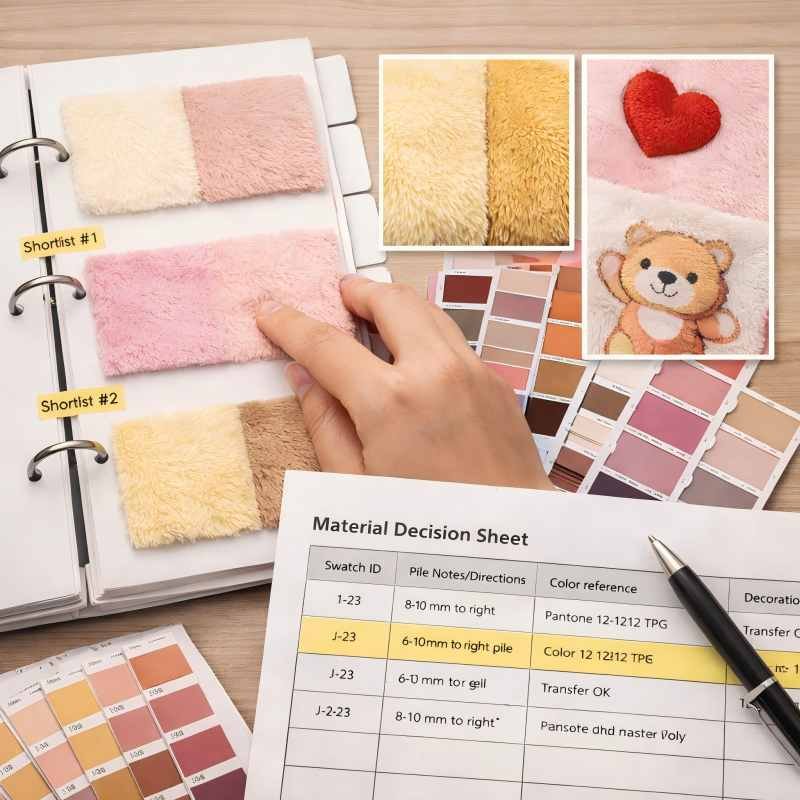
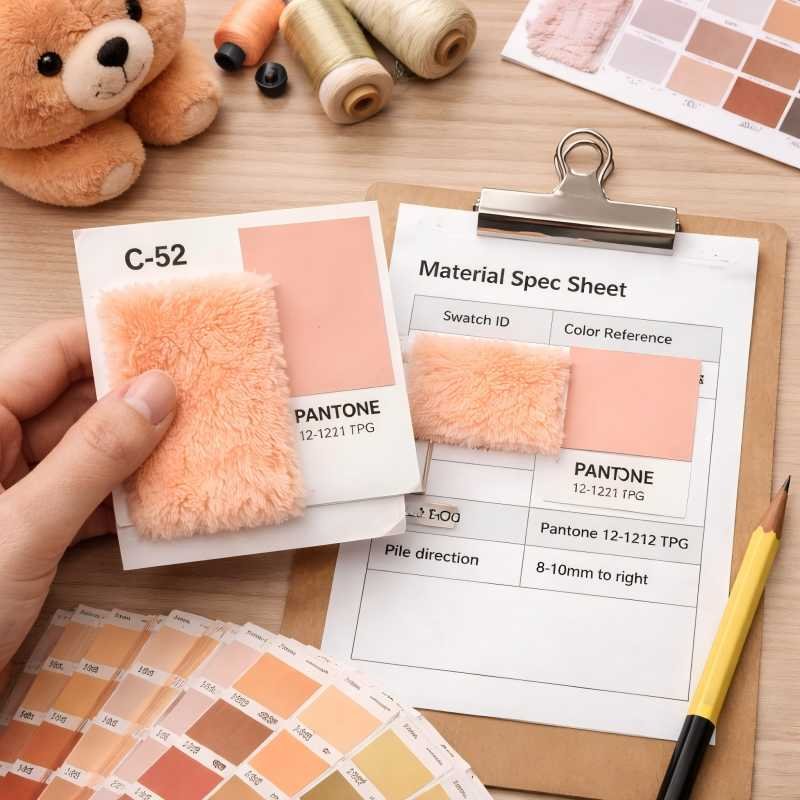
One reference standard beats endless screen debates.
Plush color matching is affected by pile direction, lighting, and dye lots—so a physical reference swatch aligns expectations better than screens. Lock one approval standard early, confirm pile direction, and keep the same fabric type through sampling and bulk to reduce “looks different” disputes.
Rule of thumb (easy to remember)
One approval standard + one lighting condition + one pile direction.
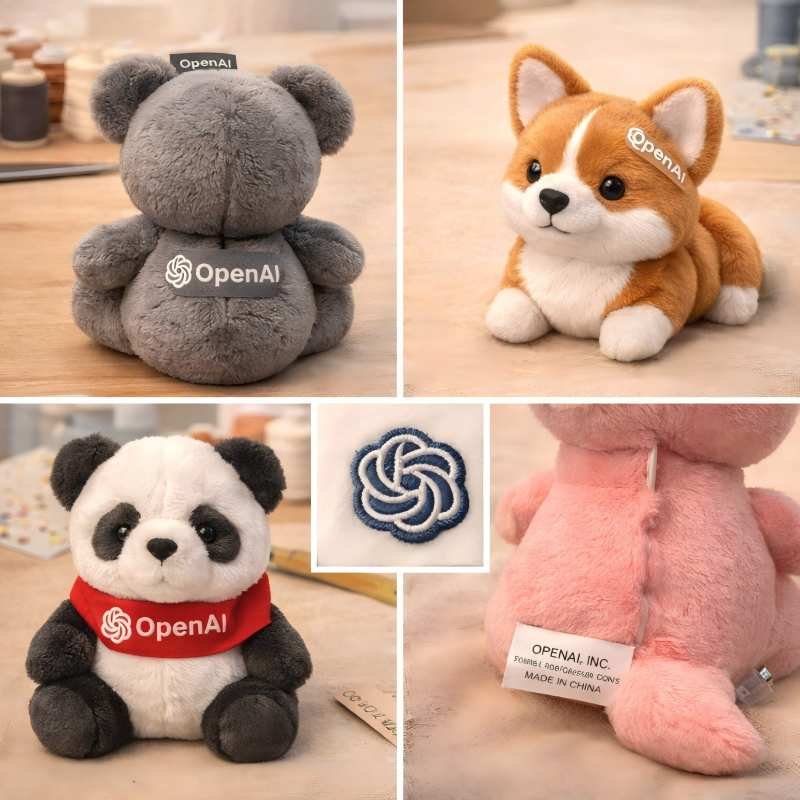
Decoration(printing, heat transfer, patches, or embroidery) clarity depends on pile height and surface texture.
Decoration results change dramatically by plush fabric texture and pile height. A swatch pack helps you choose fabrics that support your decoration method—so printing stays clear, heat transfer adheres reliably, patches sit flat, and embroidery remains readable and durable on the chosen pile.
What you can check with swatches:
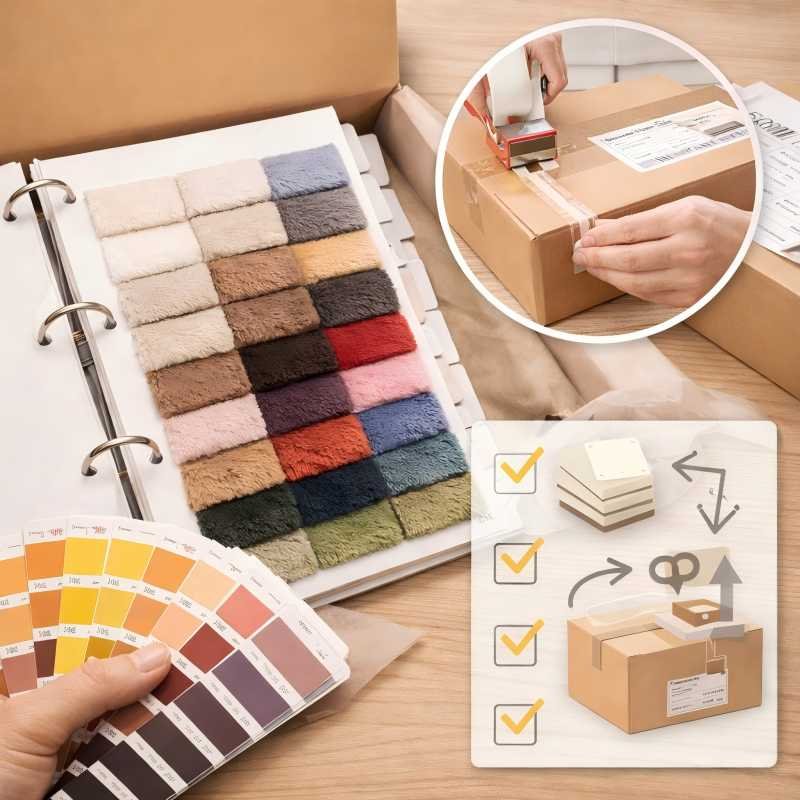
Early material decisions reduce revisions and reset loops.
Swatch packs speed up prototype sampling by locking material decisions early. Expect a short confirmation step, pack preparation, and shipping based on urgency. Once swatch codes and color standards are locked, sampling rounds typically reduce and approvals move faster with fewer “feels different” resets.
What gets confirmed before sending:
How it speeds up sampling:
When fabric + color standards are decided upfront:
Q1: Is a swatch pack required for every custom plush project?
Not always. It’s most useful when hand feel, photo texture, or color accuracy matters—or when you want fewer sampling revisions.
Q2: Can the swatch pack be customized to my plush style and budget level?
Yes. Share plush type (keychain/mascot/collectible), target feel, and quantity range. A relevant swatch set will be recommended for your target price tier.
Q3: Can you match a competitor plush or my existing product?
Yes. Send reference photos and, if possible, a physical reference. Close options will be recommended with clear tradeoffs (pile, sheen, thickness, color behavior).
Q4: Does a swatch guarantee perfect color match in bulk production?
It greatly improves alignment, but plush appearance still varies with pile direction and lighting. The key is locking one approval standard early and using it consistently for sampling and bulk.
Q5: How does this connect to prototype sampling?
Once fabric swatch code(s), pile direction notes, and the color standard are locked, sampling starts with fewer surprises—often reducing revision rounds and shortening approval time.
Q6: Can each swatch be labeled with a code for clear communication and reorders?
Yes. Swatch IDs/fabric codes make it easier to confirm “this exact option” across approvals, sampling, and future reorders.
Control what customers feel, avoide all risks.
Request a plush fabric swatch pack and share your target hand feel, market tier, and decoration method. A recommended swatch set will help you lock pile length, surface behavior, and a color reference standard—so sampling runs faster with fewer reset loops.

I am Nika, our team would be happy to meet you and help to build your brand plush.