
In plush production, what’s inside decides how reliable the product feels.
This system controls stuffing density, weight tolerance, and internal volume—so approved samples don’t soften, collapse, or drift when scaled or reordered.
Consistent feel, shape, and weight—batch after batch.
Inconsistent Feel & Weight
Softness, firmness, and weight vary across units—even when the product looks the same.
Most complaints don’t mention stuffing directly—but they point to its effects.
These issues are rarely caused by surface fabric or sewing alone.
Hidden risk Inside the Plush
Most feel and shape issues originate from uncontrolled stuffing—not fabric or sewing.
Stuffing problems often appear after sampling success.
Without controls, results vary—even when materials stay the same.
Internal Variation After Sewing
Once a plush is closed, internal variation is difficult to detect or correct without rework.
Once a plush is closed, internal variation is hard to detect or correct.
Stuffing must be controlled early, not corrected later.
Predictable Results at Scale
Defined stuffing control turns feel, shape, and weight into repeatable outcomes.
When stuffing is treated as a controlled variable:
This is the cornerstone of the bridge between excellent design and successful product.
4 importants control to remove variation before batch production.
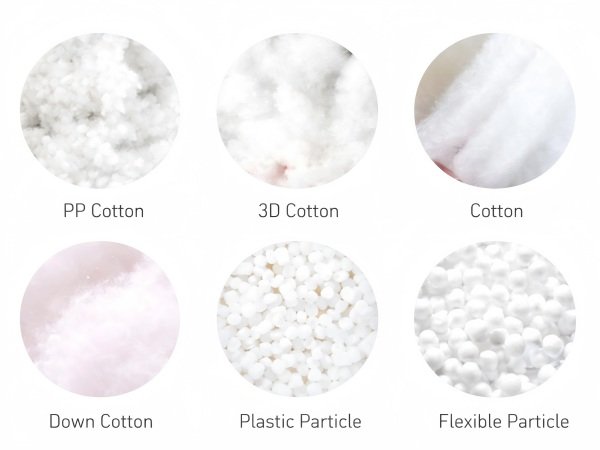
Match plush feel to product intent
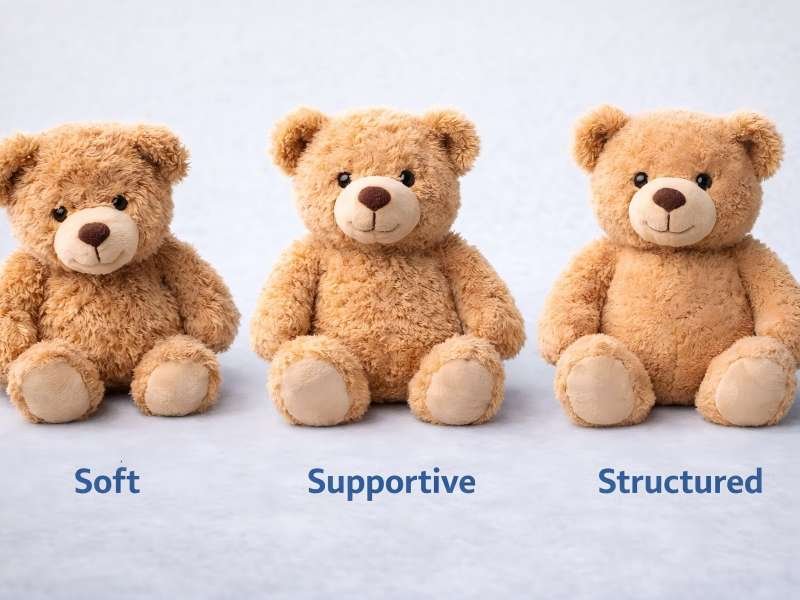
Plush stuffing is defined by how the product should behave, not by a single fill type. We set clear feel targets—soft, supportive, or structured—so internal filling supports the intended hand-feel, shape, and use case from sample to bulk production.
Feel targets we define before sampling
Stuffing is planned around product intent, not convenience.
Soft / Floppy Feel
For hug-focused or comfort-driven plush.
Supportive / Balanced Feel
For everyday plush with shape presence.
Structured / Shape-Holding Feel
For standing, sitting, or posed designs.
What defines a feel target (beyond “soft or hard”)
Each feel target is clarified using measurable factors:
This prevents vague feedback like “make it a bit firmer” later.
Why defining feel targets early matters
Define tolerances, keep unit weight consistent
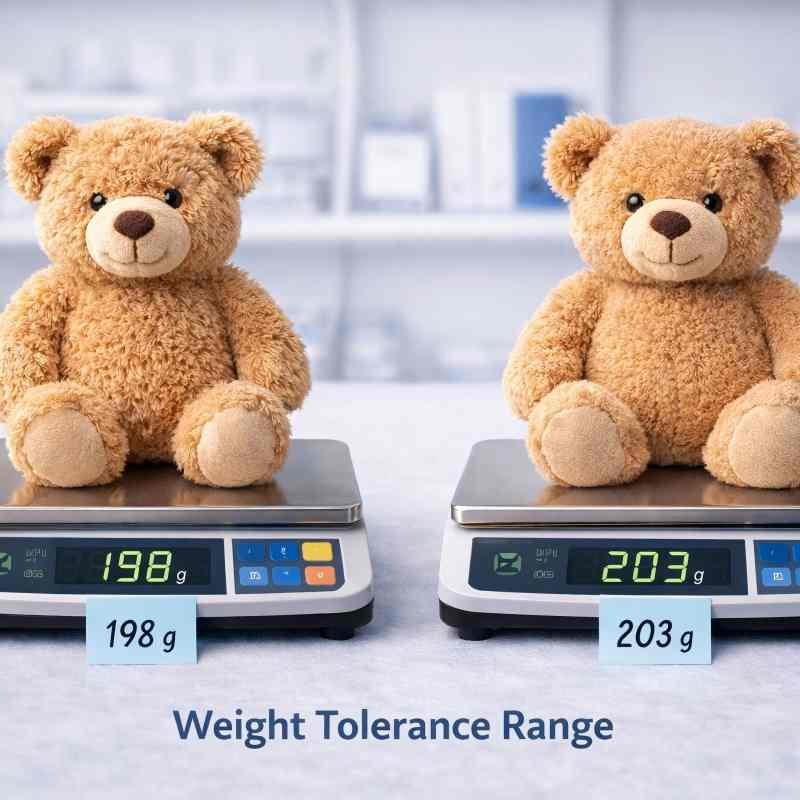
Plush weight is controlled through defined targets and tolerance ranges, not fixed guesses. By setting acceptable limits and checking weight at key stages, variation is kept predictable—supporting quality inspections, shipping accuracy, and repeatable bulk output.
Why “exact weight” is the wrong expectation
Plush products are soft goods, not rigid parts.
Chasing a single exact number increases rejection without improving real consistency.
How weight targets are defined
Before sampling and production, weight expectations are clarified as:
This aligns buyer expectations with realistic production behavior.
Where weight is checked
Weight is verified at practical control points, not randomly.
Checks focus on trend consistency, not isolated outliers.
What weight control prevents
How weight ties into other systems
Weight control works as part of a system—not in isolation.
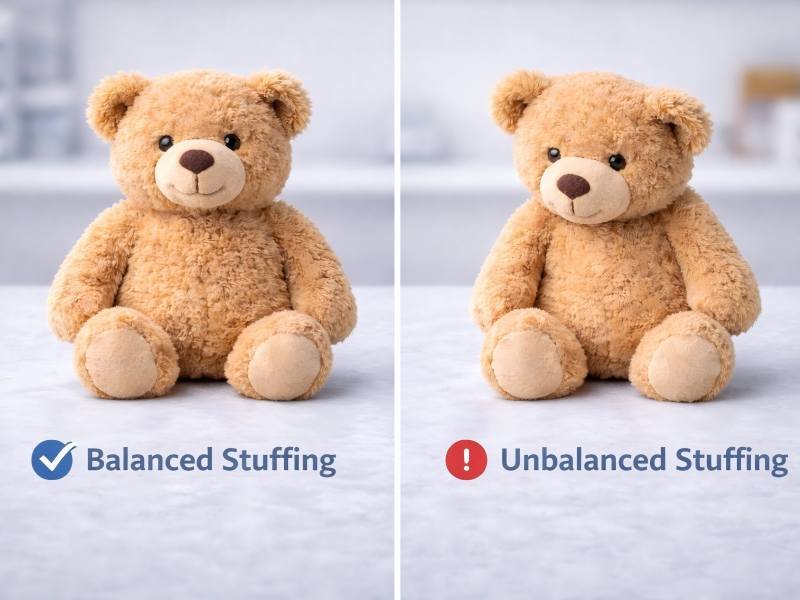
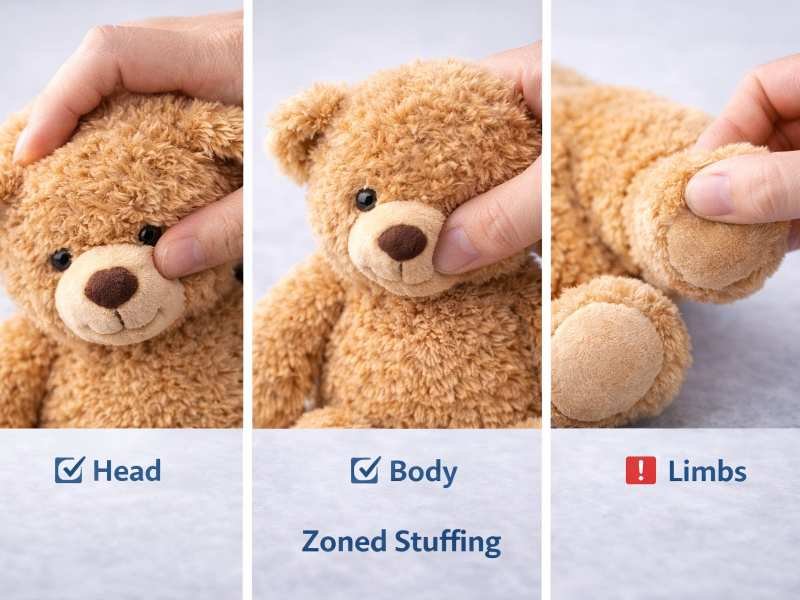
Maintain plush shape stability, Prevent dents, collapse, and uneven feel
Uneven stuffing causes soft spots, hard spots, and long-term shape collapse. By planning fill distribution and internal balance—not just total weight—we help plush products maintain consistent feel, stable form, and visual integrity through handling, display, and repeated use.
Why total weight alone isn’t enough
Two plush toys can weigh the same but feel completely different.
Weight without distribution control leads to unpredictable results.
How fill distribution is planned
Stuffing is allocated by zones, not poured uniformly.
This keeps feel and form aligned with design intent.
What prevents shape collapse over time
Collapse usually happens after handling—not on day one.
These factors work together to protect long-term shape.
What buyers avoid with controlled distribution
How this supports stable bulk production
Defined distribution standards allow production teams to:
Control carton size, freight cost, and post-delivery appearance
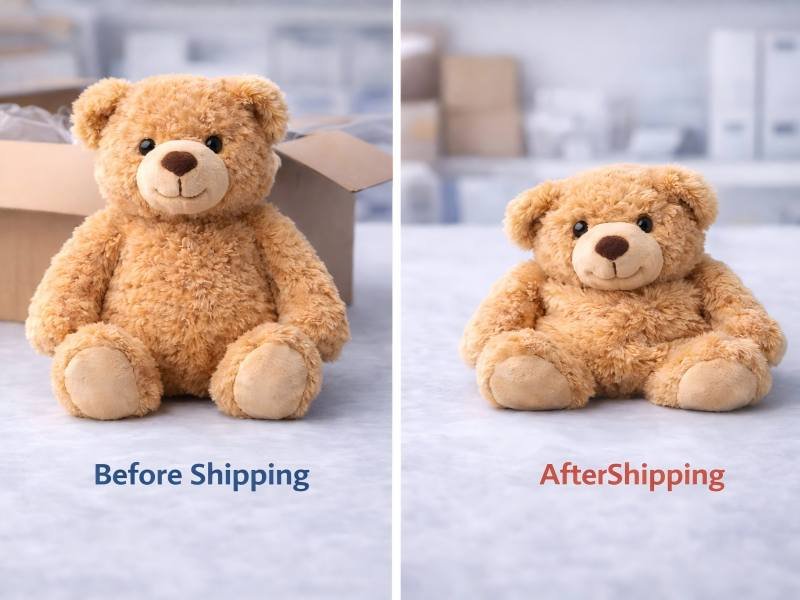
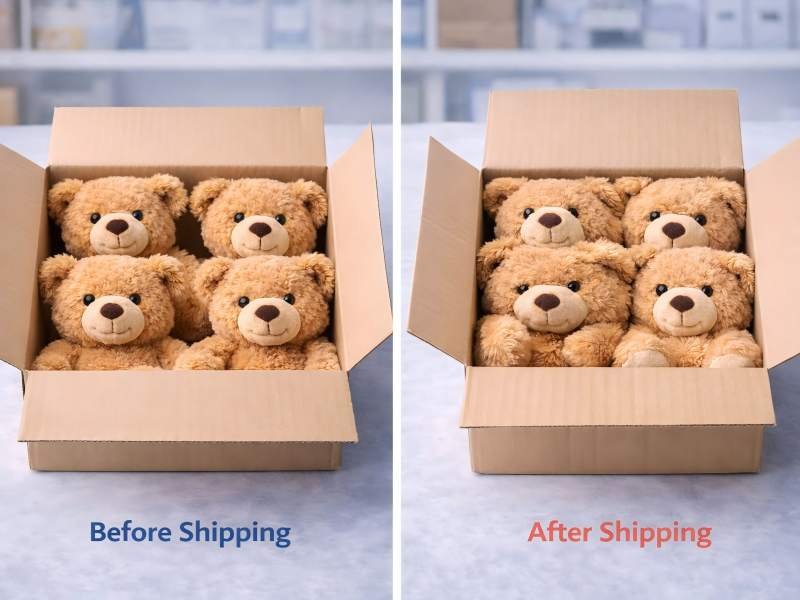
Stuffing volume and compression behavior directly impact packaging size and shipping efficiency. By planning internal fill density and rebound characteristics, plush products can be packed predictably, shipped efficiently, and recover their intended shape after transit—without surprises at delivery.
Why stuffing affects shipping more than expected
Internal volume defines how a plush behaves under pressure.
These issues multiply quickly at scale.
How compression behavior is considered early
Stuffing is evaluated not only for feel, but for compression and rebound.
This avoids choosing a fill that performs well in hand but poorly in transit.
What predictable volume enables
When internal volume is controlled:
Logistics planning becomes reliable instead of reactive.
What buyers avoid with volume control
How this supports scaling and repeat orders
Defined volume behavior allows:
Ensure repeat orders feel the same every time
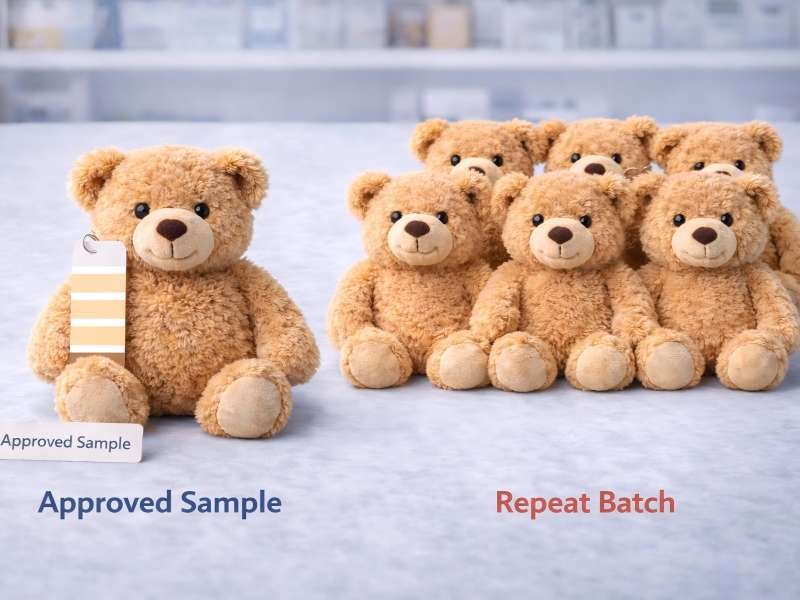
Repeat orders often fail when internal standards are not carried forward. By locking approved stuffing references, weight ranges, and distribution logic, we help ensure future batches match the original approved sample—without relying on memory or operator experience.
Why repeat orders often drift
Drift rarely happens on purpose.
Over time, small changes add up.
What gets locked after sample approval
Repeatability starts with clear internal references.
These references travel with the project—not just the order.
How alignment is checked for repeat batches
Before or during production, alignment is verified against the approved reference.
This turns “same as before” into a verifiable check.
Repeatability is achieved through system alignment—not isolated checks.
Defined internals reduce revisions and stabilize bulk output.

When stuffing targets and weight tolerances are defined early, sample iterations focus on finishing and brand clarity—not correcting feel or shape. This shortens sampling cycles and gives production teams stable references for consistent bulk execution.
How stuffing control improves sampling efficiency
Unclear internal targets slow sampling.
Defined stuffing standards turn subjective feedback into actionable adjustments.
What stays fixed as samples evolve
Once internal targets are set:
Later sample rounds refine details, not foundations.
How this supports smoother production hand-off
Production teams work from locked references.
This minimizes drift between sample and bulk.
How it fits the broader factory system
Stuffing control keeps these systems aligned.
Q1: Can you match the feel of an existing plush sample?
Yes. You can provide a physical reference or describe the target feel. Stuffing density, distribution zones, and weight range are aligned during sampling and locked against the approved reference for consistency.
Q2: Does stuffing choice affect shipping cost and carton size?
Yes. Stuffing density and internal volume directly impact compressibility, carton dimensions, and freight cost. If shipping efficiency matters, targets are aligned early to avoid unexpected volume or cost increases.
Q3: Why do repeat orders sometimes feel different from the first batch?
Reorder drift usually happens when internal standards are not referenced. If feel, weight range, and distribution logic aren’t locked and checked, small variations accumulate across batches.
Q4: Can you produce very firm or shape-holding plush for mascots or display use?
Often yes. Structured or firm feel can be achieved through defined stuffing zones and internal support planning. Feasibility depends on size, pose, and intended use, which are reviewed before sampling.
Q5: Do bead fills or specialty stuffing materials affect compliance?
They can. Specialty fills may change testing, labeling, or age-grading requirements. Share your target market and sales channel so the appropriate compliance approach can be confirmed early.
Q6: How do you ensure weight consistency within a bulk order?
Weight is controlled using defined targets and tolerance ranges, with checks at sampling and production stages. This keeps variation predictable rather than random across units.
Control what customers feel, avoide all risks.
Share your target feel, weight range, and use case. We’ll review stuffing options, tolerance ranges, and distribution logic, then outline a controlled sampling path you can validate before bulk production.

I am Lumi, our team would be happy to meet you and help to build your brand plush.