Consistent plush quality depends on how sewing work is organized—not who happens to be stitching.
Uniomy operate defined sewing and assembly lines with clear workstation roles, handoff points, and in-process controls—so approved samples can be reproduced consistently, even as volumes scale.
A structured sewing and assembly system designed for consistency and throughput.
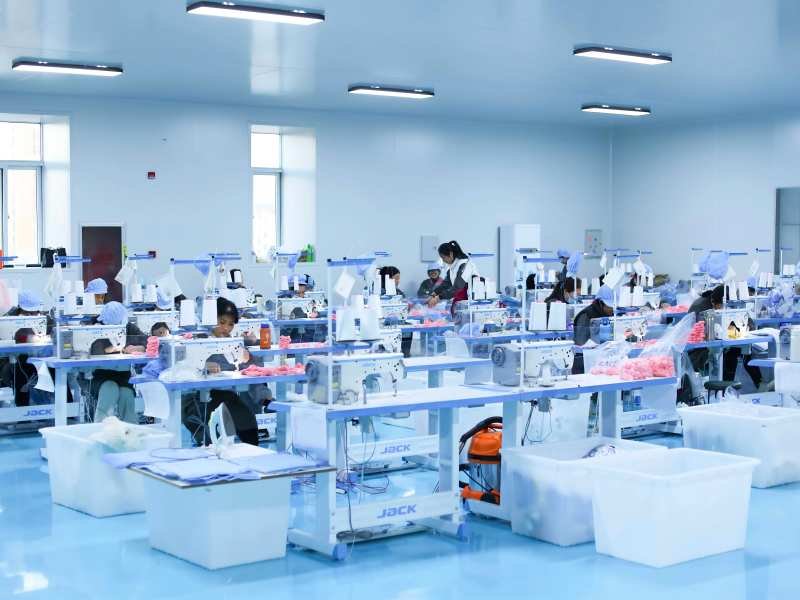
The production floor is organized around dedicated sewing and assembly lines.
This layout supports both repeatability and production continuity.
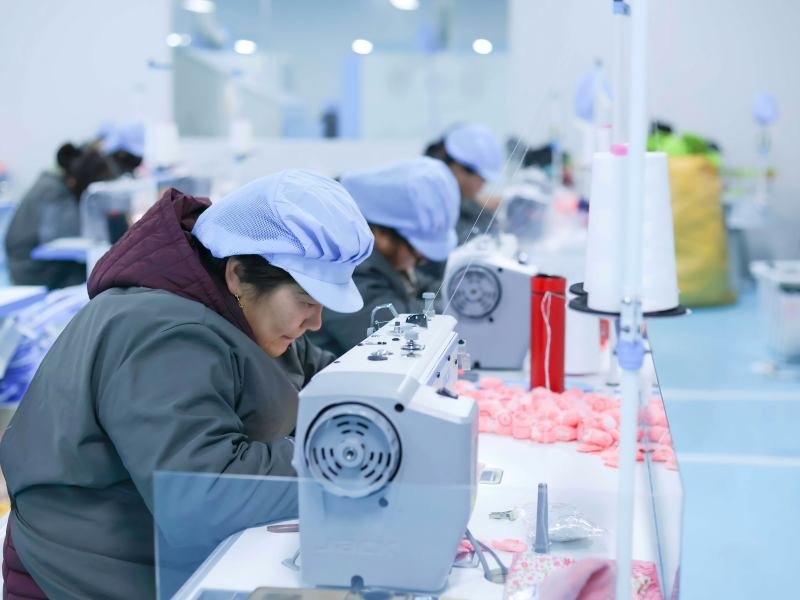
Each line is divided into focused workstations aligned with plush assembly stages.
Clear task boundaries allow each step to be executed consistently.

Workstations are connected through a defined handoff sequence.
This coordination keeps execution aligned as volume increases.
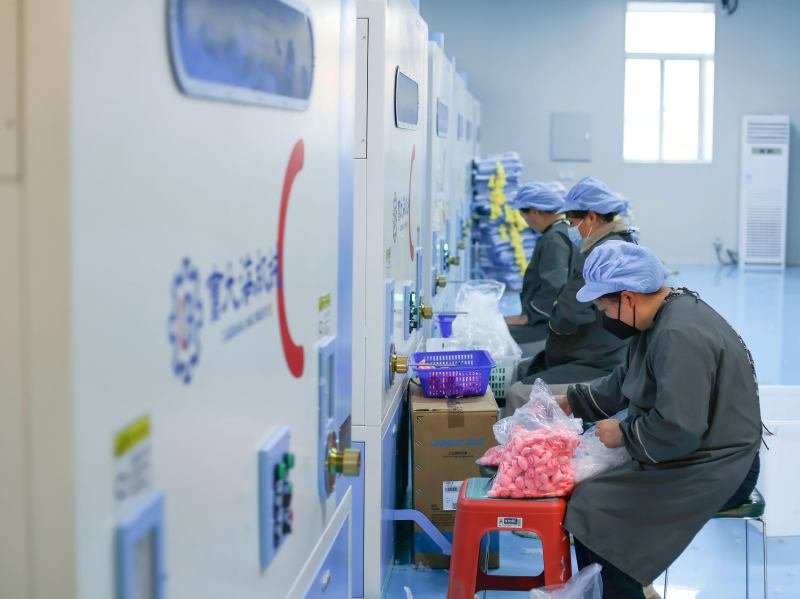
This is the cornerstone of the bridge between excellent design and successful product.
Ensure every plush looks and feels the same—no matter who sews it.

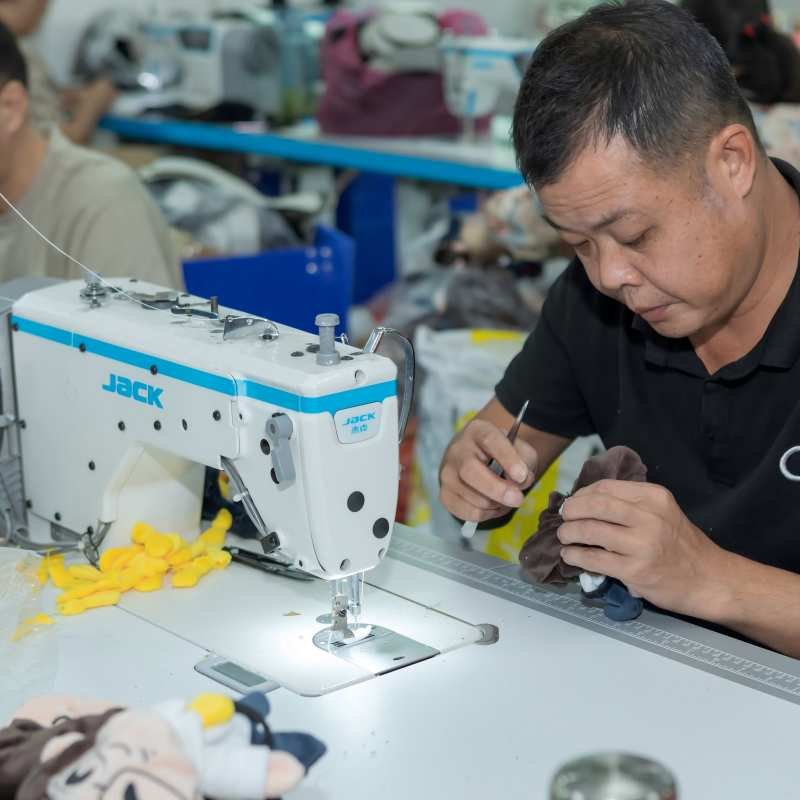
Consistent plush quality cannot rely on individual experience. This sewing system fixes key execution references and handoff rules, so multiple operators can produce the same approved result—without interpretation drift, guesswork, or rework.
Why consistency usually breaks on sewing lines
Most inconsistency is not caused by mistakes, but by interpretation.
Without a system, results depend on who is sewing—not what is approved.
What stays fixed on the line (regardless of operator)
Consistency comes from locking execution anchors, not controlling people.
These elements do not change between operators or shifts.
What operators follow instead of memory
Operators are guided by visible references, not recollection.
This removes subjective interpretation from execution.
How this reduces variation and rework
When execution rules are fixed:
Consistency becomes the default outcome—not a correction effort.
Issues are addressed within the flow—before they turn into delays or rebuilds.
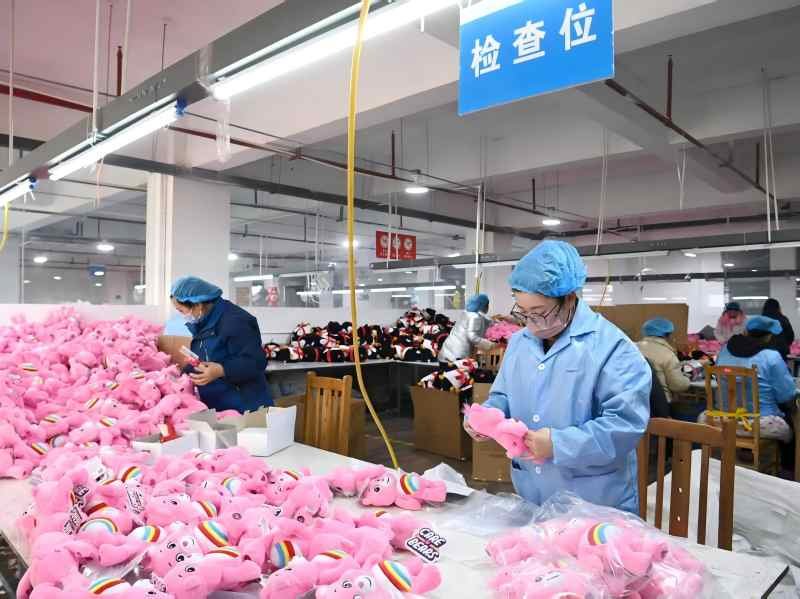
Rework is minimized when risks are addressed at the right step. Our sewing and assembly flow is designed to surface alignment, fit, and sequencing issues early—so corrections happen in-process, not after full assembly or final inspection.
Key points where variation is controlled
Certain steps have the highest impact on final appearance and fit. These are addressed directly in the flow.
Addressing these points early reduces downstream correction.
How in-process checks support smooth execution
Rather than waiting for final inspection, alignment and fit are confirmed during assembly.
This keeps the line moving without accumulating hidden issues.
Why this reduces rework and disruption
When issues are corrected within the flow:
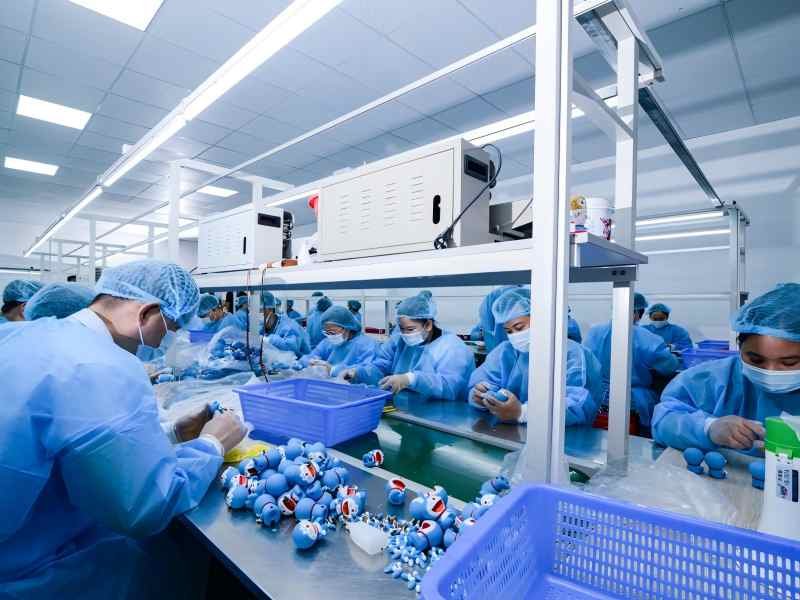
A balanced flow keeps production moving—without slowdowns or pileups.
Smooth production depends on flow balance. Our sewing and assembly lines are organized to match task time, workstation capacity, and handoff rhythm—so no single step slows the entire line or disrupts overall progress as volume increases.
Why bottlenecks form in plush assembly
Plush production involves steps with different time and skill requirements.
Without flow planning, these differences can accumulate.
How the line is balanced in practice
The assembly flow is designed to keep work moving evenly.
This balance supports continuous execution.
How this supports stable daily output
When flow remains balanced:
The line progresses without stop-start patterns.
What gets approved is what the line actually builds.
An approved sample only matters if it can be executed consistently on the line. We translate sampling outcomes into clear line references—so sewing and assembly follow defined standards, not personal interpretation, as production begins.
What the line receives after sample approval
Before bulk production starts, key execution references are transferred to the line.
This ensures everyone works from the same reference point.
What is fixed—and not open to interpretation
Certain elements are locked once a sample is approved.
These references remain consistent across operators and shifts.
What operators don’t need to guess
Line execution is designed to reduce reliance on personal judgment.
This keeps production aligned from the first unit onward.
How this prevents drift during production
With clear execution references in place:
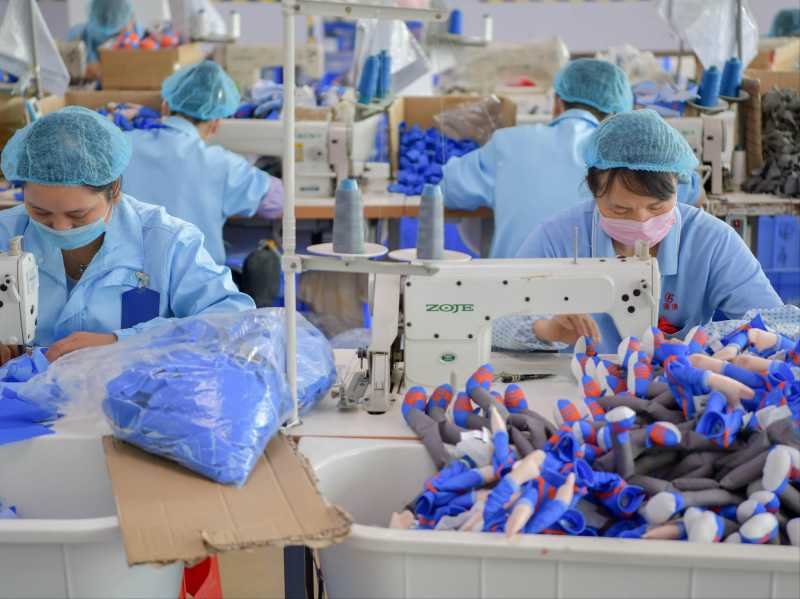
A production system designed to scale without losing control.
Scaling production depends on execution stability. When sewing and assembly are organized around defined workstations and balanced flow, capacity can expand without disrupting consistency—making lead times more predictable as order volumes increase.
Why structured workstations scale more reliably
Scaling is easier when work is system-based.
This allows expansion without changing how the product is built.
How execution stability supports predictable timelines
When sewing and assembly follow a stable flow:
Predictability comes from flow stability—not optimistic promises.
How this connects to production capacity planning
A stable execution system is the foundation for capacity planning.
This execution layer feeds directly into production planning.
Q1: Can you keep face and logo placement consistent in mass production?
Yes—placement rules and checkpoints are defined around the approved reference sample, with IPQC checks at critical stations.
Q2: What usually causes inconsistency in plush production?
Common causes are unclear reference standards, late spec changes, and missing station checkpoints. We reduce these with handoff rules and in-process QC.
Q3: How do you handle multiple SKUs or variants in one order?
We plan by SKU complexity and changeover needs, group similar variants when possible, and use clear separation to prevent mixing.
Q4: Can you provide progress updates during production?
Yes—milestone-based updates can be provided, aligned with production stages and any exceptions.
Q5: How does this relate to AQL inspection?
AQL is an outgoing sampling inspection method; line controls (IPQC) prevent defects earlier so AQL results are more stable.
See how approved designs move through a stable sewing and assembly system—before scaling up.
Share your project basics or approved sample. We’ll walk you through how sewing and assembly are organized, what stays fixed on the line, and how execution remains consistent as production scales.

I am Nika, our team would be happy to meet you and help to build your brand plush.