
Plush keychains · bag charms · clip-ons · phone charms · mini mascots · retail hang-sell · DTC bundles
A plush keychain is judged differently from a standard plush toy. It must stay cute after constant friction, survive being pulled by the ring, look clean at a small size, and arrive ready to hang on pegs or ship as a bundle. The difference between “looks good” and “works in real life” is attachment engineering, small-part discipline, and packaging that fits your channel.
A keychain plush that works must deliver:
Last updated:Feb. 28, 2026 · Applies to: Custom plush keychain OEM/ODM programs · Channels: Retail hang-sell / 3PL / Retail DC / DTC / FBA-like · Covers: attachment engineering → prototype → approval locks → bulk durability consistency → packaging & label readiness
A keychain plush is a stress-point product.
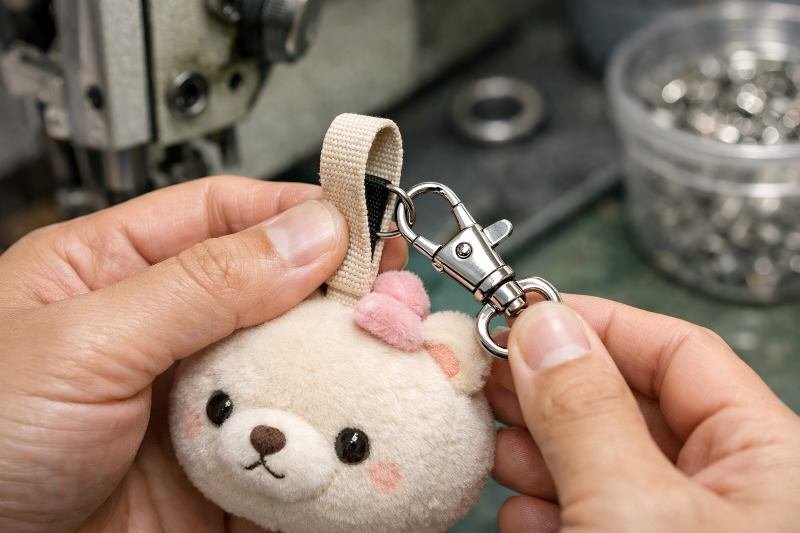
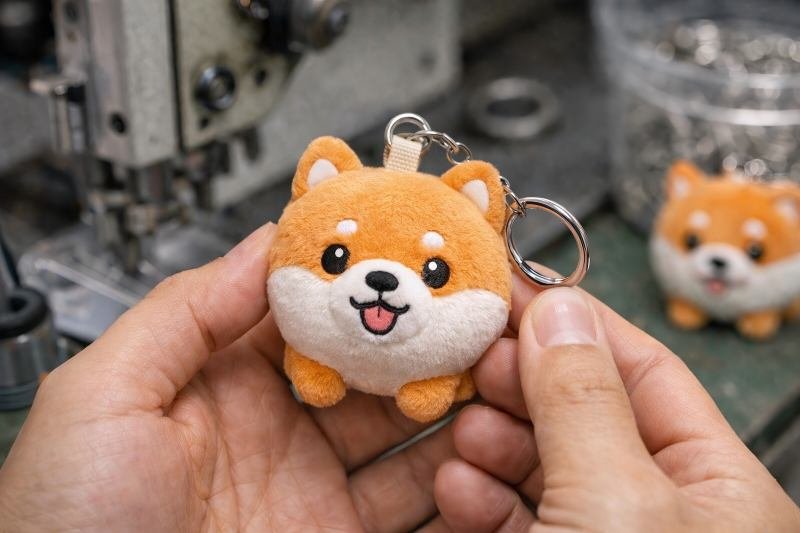

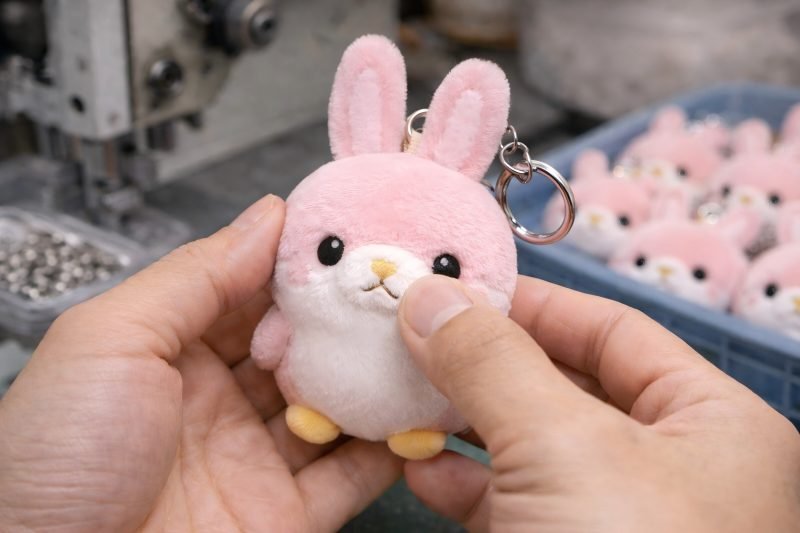
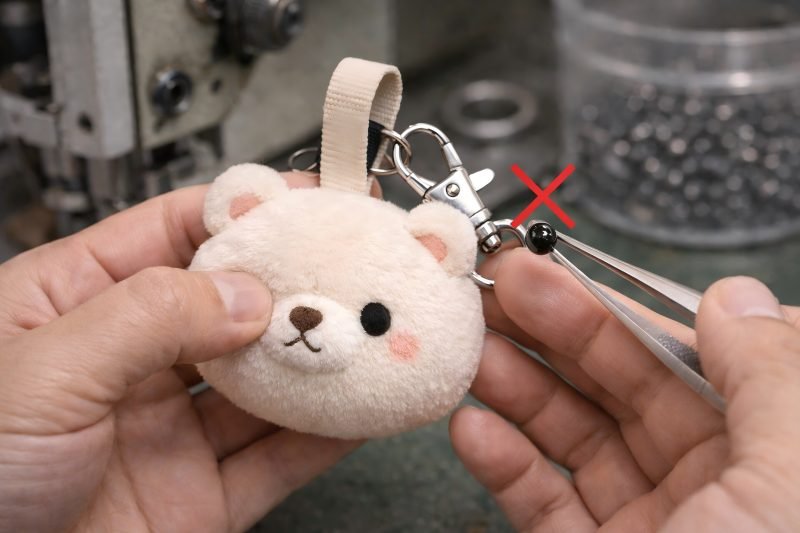
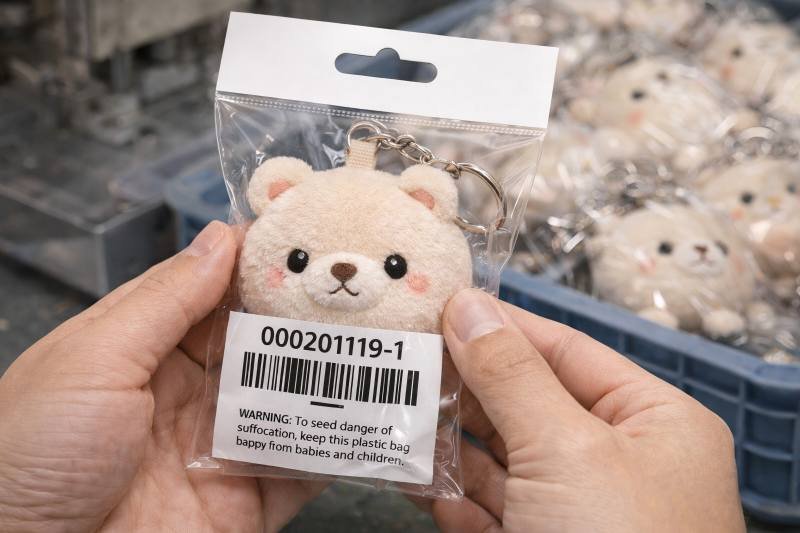
The “cute” part is only half the job; the other half is controlling how it carries, hangs, and resists pull and wear.
A plush keychain is a wear product + hang product + packaging product in one. Brands don’t judge it like a normal plush toy. They judge it by what happens after daily carry, friction, drops, and retail peg handling—then by whether it arrives ready to sell without relabeling or repacking.
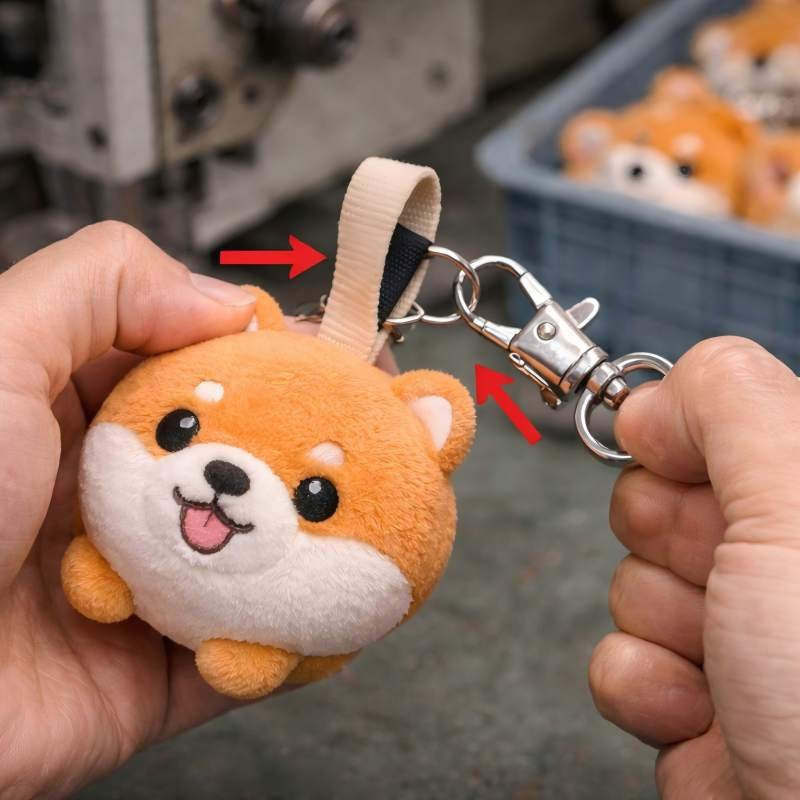
What brands look for: the connection feels secure, doesn’t wobble, doesn’t distort the plush, and keeps the keychain front-facing.
What usually goes wrong: the anchor is stitched to soft fabric only, reinforcement is cosmetic, or the load path isn’t distributed—so the ring/clip slowly “walks out” after real use.
How we control it: we design an attachment load path (where force travels), choose a reinforcement method (internal strap/webbing + anchor patch + stitch pattern), and confirm the hang orientation on the prototype before any style details are expanded.
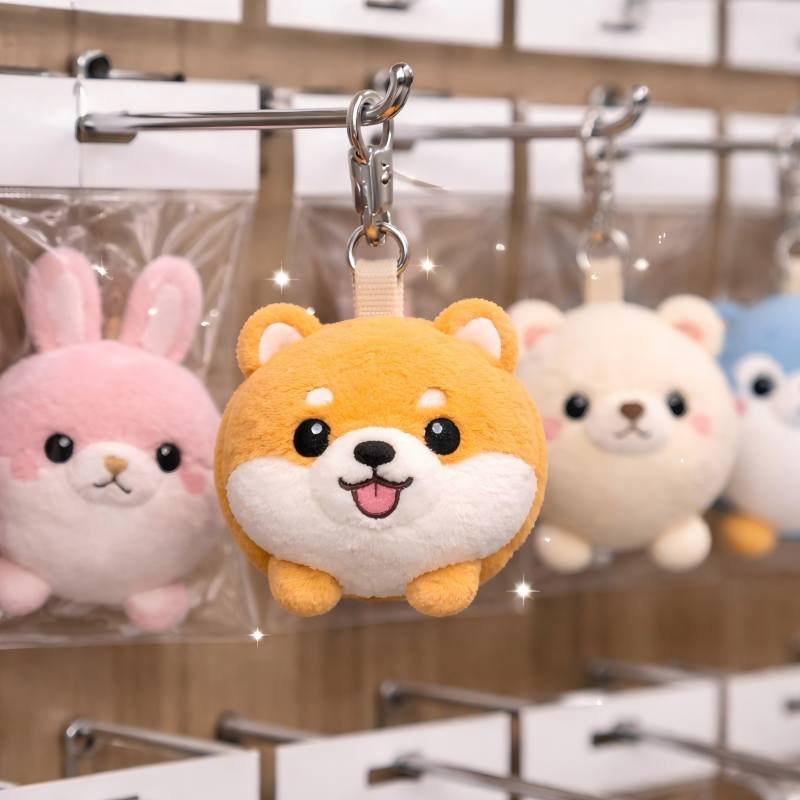
What brands look for: the character faces forward on a retail hook, stays photo-friendly, and doesn’t flip awkwardly.
What usually goes wrong: anchor placement and internal orientation are not planned, so the plush rotates, tilts, or twists depending on how it’s clipped.
How we control it: we lock a hang behavior standard (front-facing vs side-facing), then build rotation control into the anchor placement and internal strap direction—verified on the prototype with simple “hang tests.”
What brands look for: at 6–10 cm, the face still reads instantly—clean embroidery edges, stable feature placement, and no “crowded” details.
What usually goes wrong: designs are scaled down without simplification, micro patches shift, and embroidery becomes too dense—so the face looks noisy and inconsistent in bulk.
How we control it: we apply mini-scale simplification rules (what gets enlarged/removed), lock a clean embroidery layout, and approve the key facial distances/positions that must remain stable at small size.
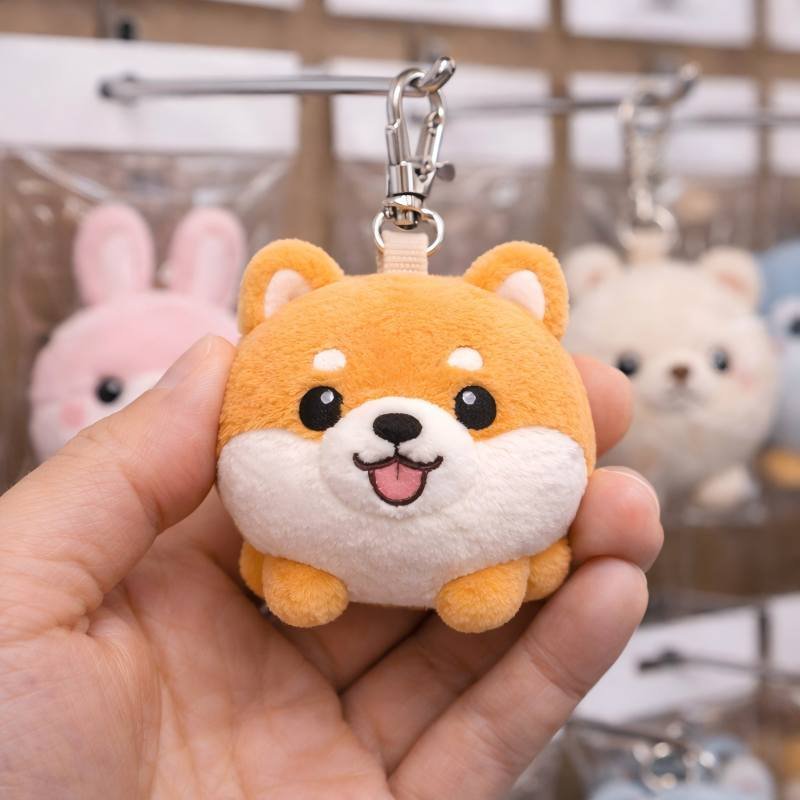
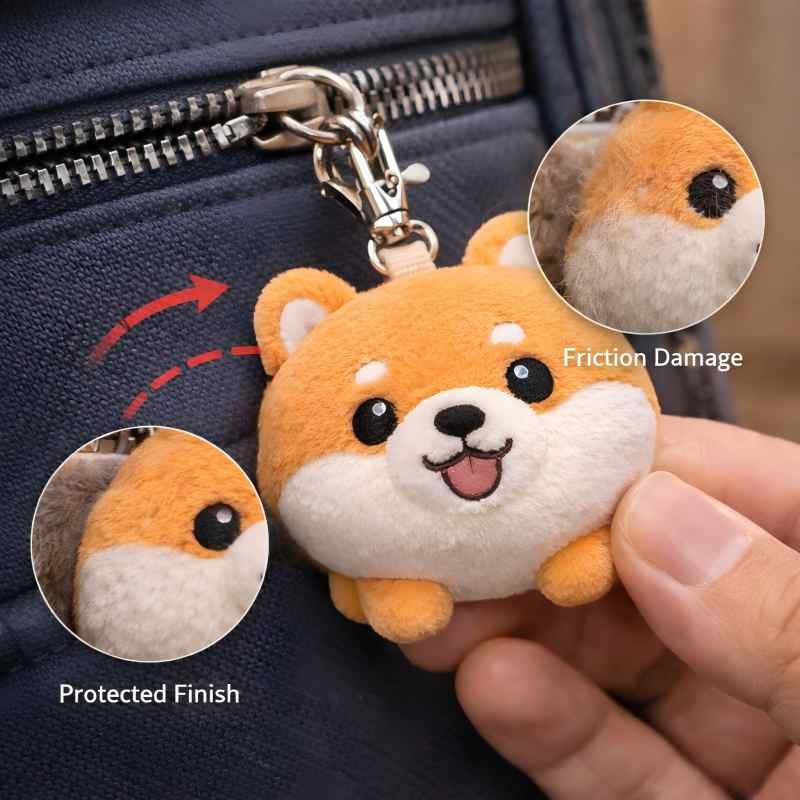
What brands look for: the keychain still looks premium after rubbing against bags, keys, pockets, and skin oils.
What usually goes wrong: fabric is chosen for softness only; abrasion points aren’t considered; finishing expectations are vague—so the surface pills or the fur tangles quickly.
How we control it: we choose materials by wear behavior, not marketing softness, define finishing expectations (trim/brush/edge cleanliness), and protect high-friction zones so the product ages “clean,” not “worn.”
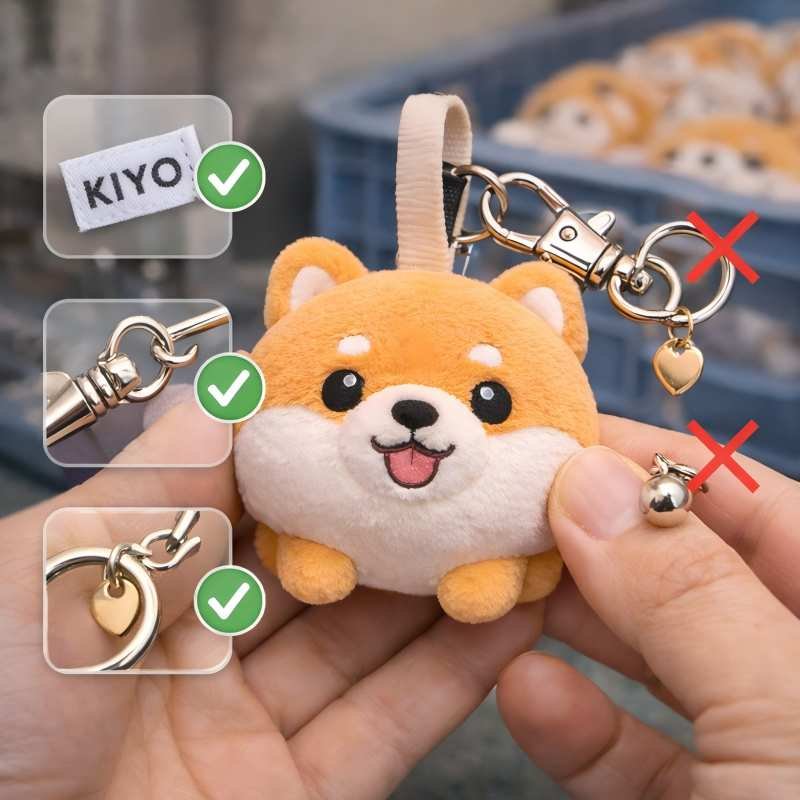
What brands look for: hardware and small details elevate the product without snagging, breaking, scratching, or creating channel/compliance headaches.
What usually goes wrong: tiny ornaments snag, charms break, and decorative parts create returns—or force last-minute changes for certain channels.
How we control it: we keep add-ons minimal, secure, and repeatable, prefer stitched/embroidered identity details, and confirm early what is acceptable for your channel and audience.
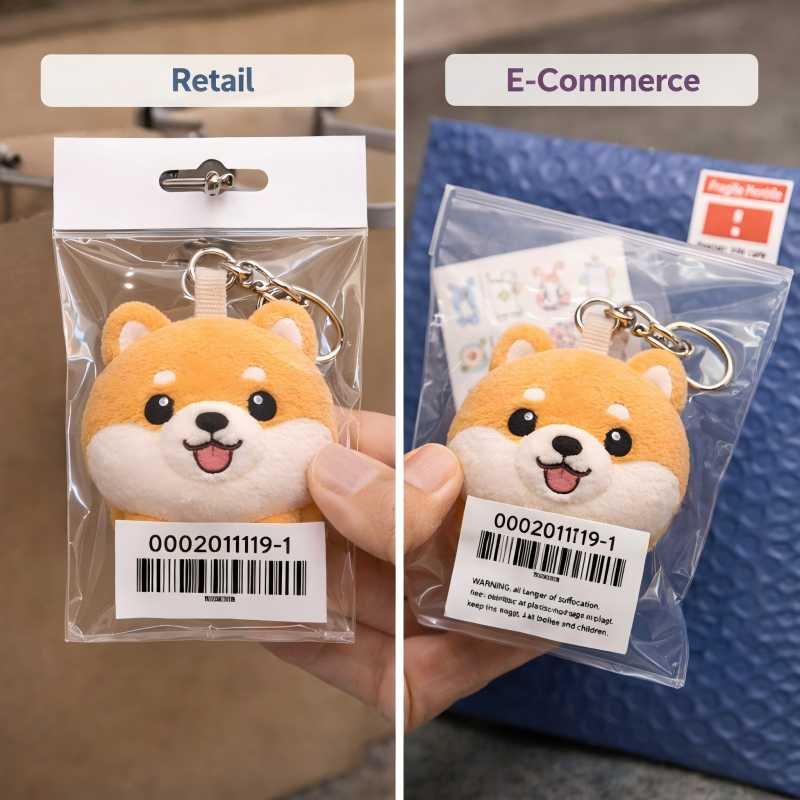
What brands look for: it arrives ready for your selling method—peg display, bundle insert, or fulfillment—with barcode placement that scans correctly and packaging that protects the surface finish.
What usually goes wrong: header card/hole position isn’t planned; barcode placement causes scanning friction; packaging crushes fur/shape; kitting rules aren’t defined.
How we control it: we lock a pack-out plan with your selling method (hang-sell / bundle / fulfillment), confirm barcode and label placement, and choose protective packing that keeps the keychain photo-clean when opened.
Below are common keychain styles and what must be controlled for each. Use this as a fast selection guide.

Best fit: mass retail racks, promo drops, brand add-ons, high-volume repeat runs
Perceived value: simple, dependable, “everyday merch”
Lock early (non-negotiables):
Ring spec + plating expectation (smoothness, no burrs, no discoloration surprises)
Strap loop load path (internal reinforcement, not just surface stitches)
Hang orientation target (front-facing vs side-facing on peg)
Most commonly missed: ring feels cheap in hand, or the anchor sits on soft fabric and slowly loosens after daily pull.
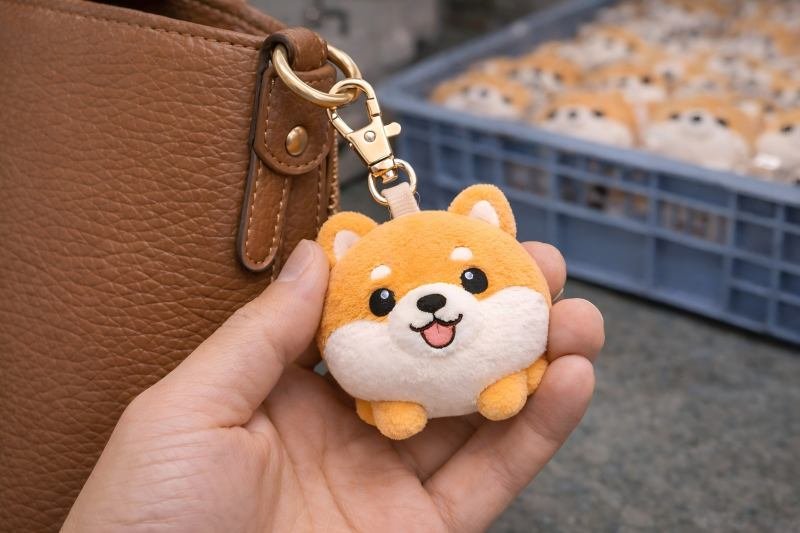
Best fit: fashion/lifestyle brands, handbags/backpacks, gift-ready sets
Perceived value: more “accessory” than “merch”—hardware becomes part of the brand experience
Lock early (non-negotiables):
Hardware finish that won’t scratch easily and won’t snag fabrics
Clasp spring strength + opening feel (premium tactile feedback matters)
Quiet carry design (reduce metal-on-metal noise where possible)
Most commonly missed: clasp scratches the charm or the bag, or sharp edges catch knitwear and create complaints.
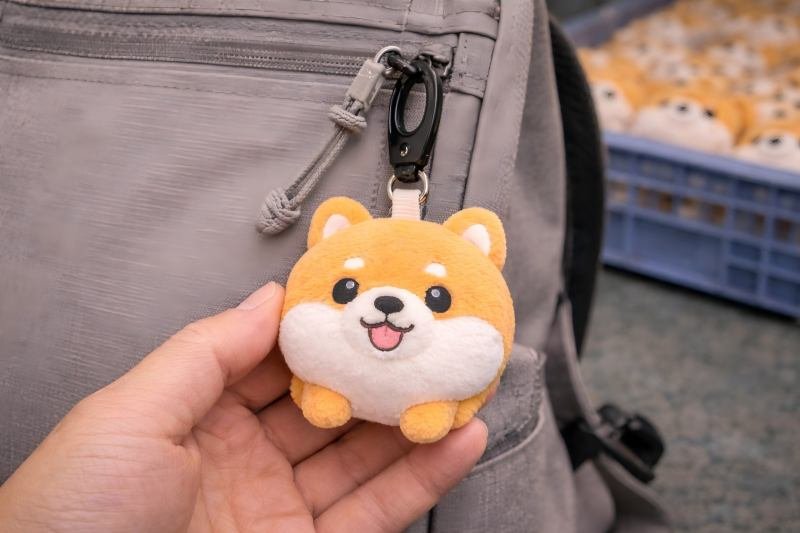
Best fit: youth programs, outdoor collabs, quick attach/detach use cases
Perceived value: utility and convenience, less “luxury accessory”
Lock early (non-negotiables):
Clip durability and safe edges (no sharp corners, no brittle feel)
Noise/rattle control (clips can become “annoying” if not planned)
Hanging stability (clips swing more; plush can flip more)
Most commonly missed: the clip works, but the product feels noisy, flips constantly, and looks messy on a retail hook.
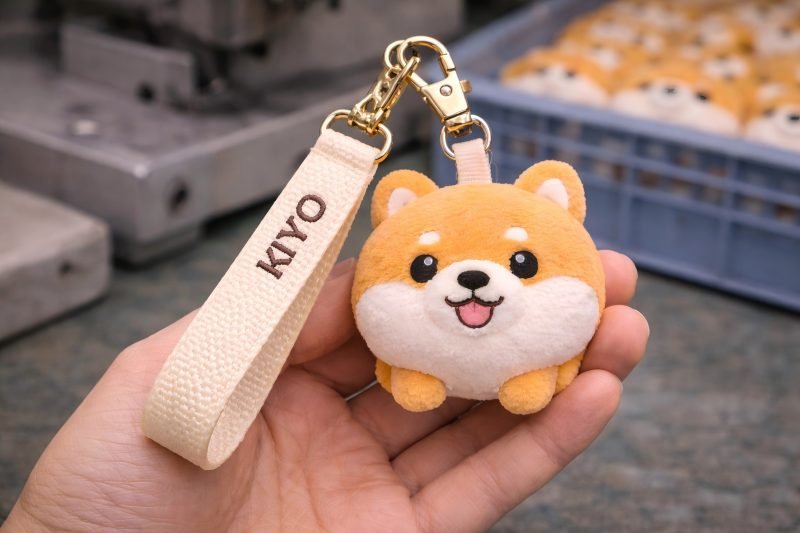
Best fit: minimalist brands, premium brand drops, phone/bag strap charm programs
Perceived value: “branded accessory” with a clean design language
Lock early (non-negotiables):
Strap width + hand-feel (softness vs stiffness—cheap straps kill premium perception)
Logo method and placement that stays crisp in bulk
Stitch discipline (strap stitching is highly visible at close range)
Most commonly missed: strap looks fine in photos but feels stiff/rough in hand, or the logo placement drifts and looks inconsistent.
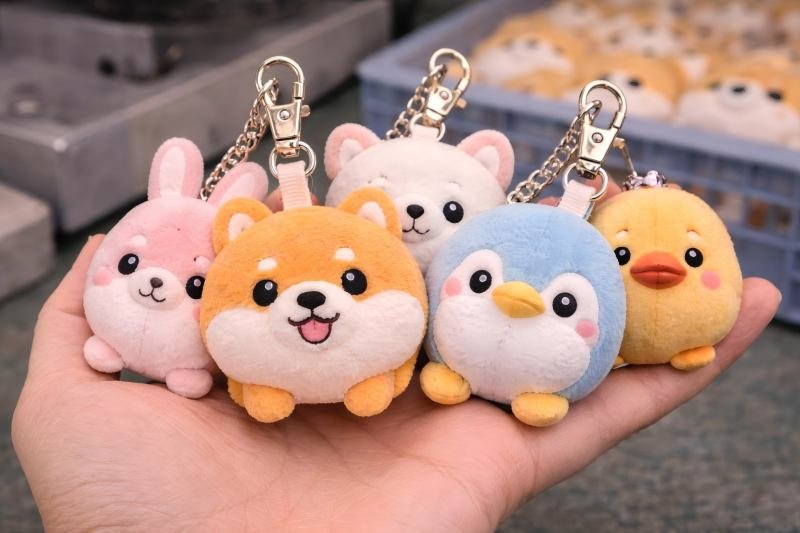
Best fit: IP brands, games, creators, character lines that must be recognizable at 6–10 cm
Perceived value: character recognition and collectability
Lock early (non-negotiables):
Mini-scale readability rules (what gets simplified, what must stay visible)
Face placement references (small size magnifies drift)
Expression consistency (avoid “each unit looks slightly different”)
Most commonly missed: teams try to keep every detail; the result is a noisy face and inconsistent bulk that hurts reviews.
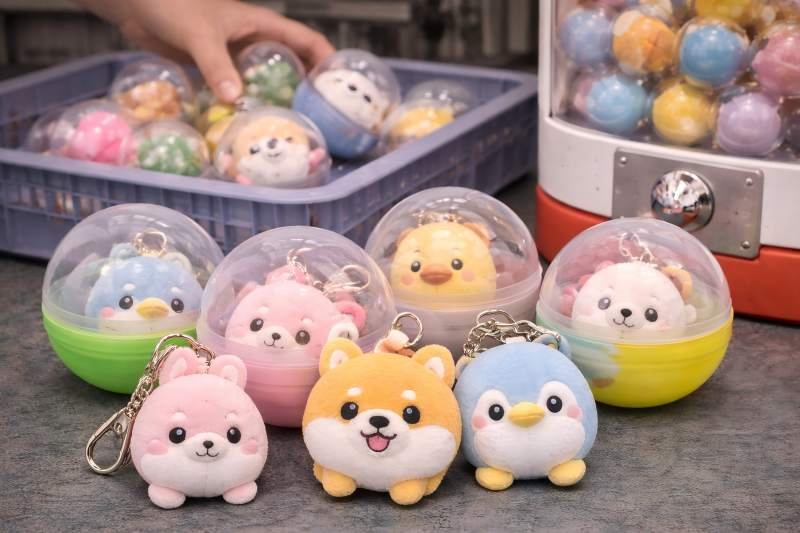
Best fit: arcade, capsule machines, prize programs, collectible series drops
Perceived value: series collectability with strict unit economics
Lock early (non-negotiables):
Seam durability under repeated handling and bulk bin storage
Series consistency rules (colors/variants that must look “same family”)
Packing efficiency plan (how units are counted, protected, and scanned)
Most commonly missed: production is cheap but uncontrolled—variants drift, or packing causes crushed fur and messy presentation at point-of-sale.
Keychain plush is a small product, so the hardware becomes a big part of the perceived value. Customers touch the ring, clip, clasp, and strap every time they use it—then judge the whole item based on how it feels, how it scratches, how it sounds, and whether it snags. A “cute plush” with cheap-feeling hardware reads as low-end instantly.
Below are the hardware decisions brand teams typically care about—because these are the choices that drive real-world complaints, returns, and reorder satisfaction.
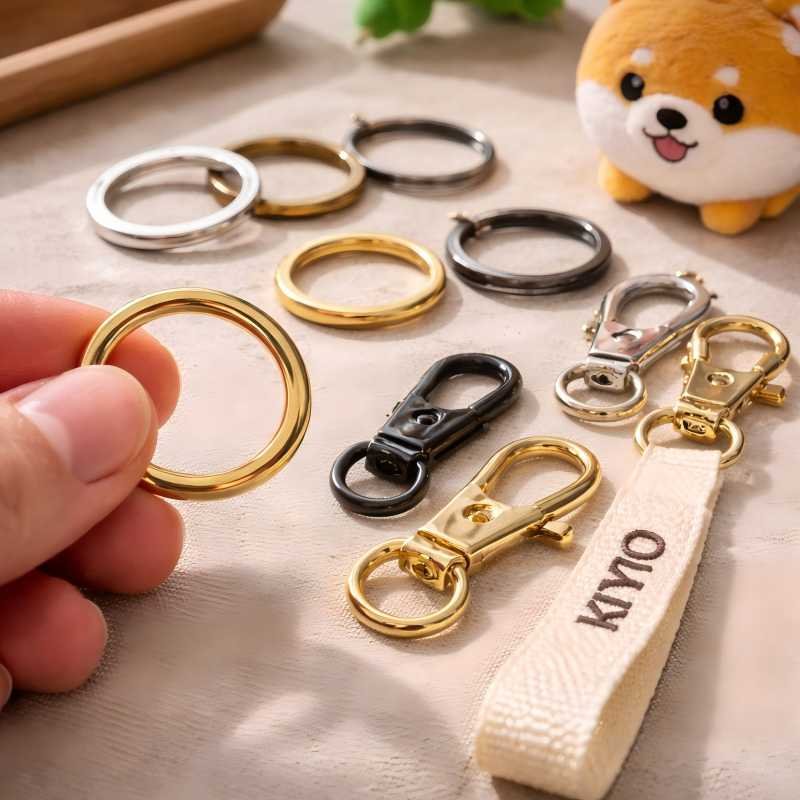
Brands often treat split rings as a commodity. In practice, ring feel is one of the fastest “cheap vs premium” signals.
Often appears in: retail keychains, promo drops, high-volume merch programs.
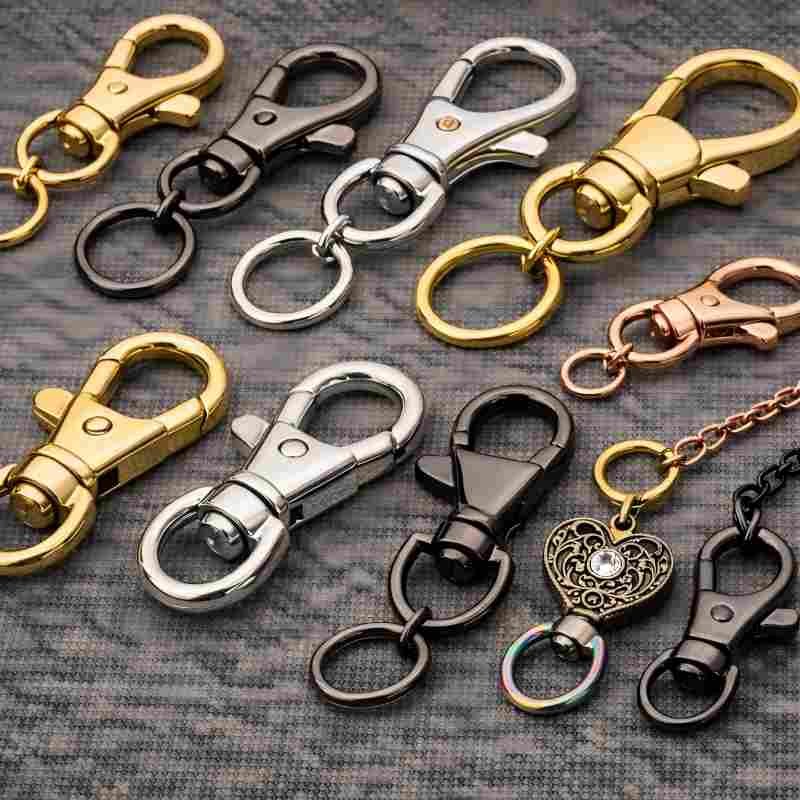
Lobster clasps are judged like fashion hardware, not like toy parts.
Often appears in: bag charms, premium gifting, fashion/lifestyle collaborations.
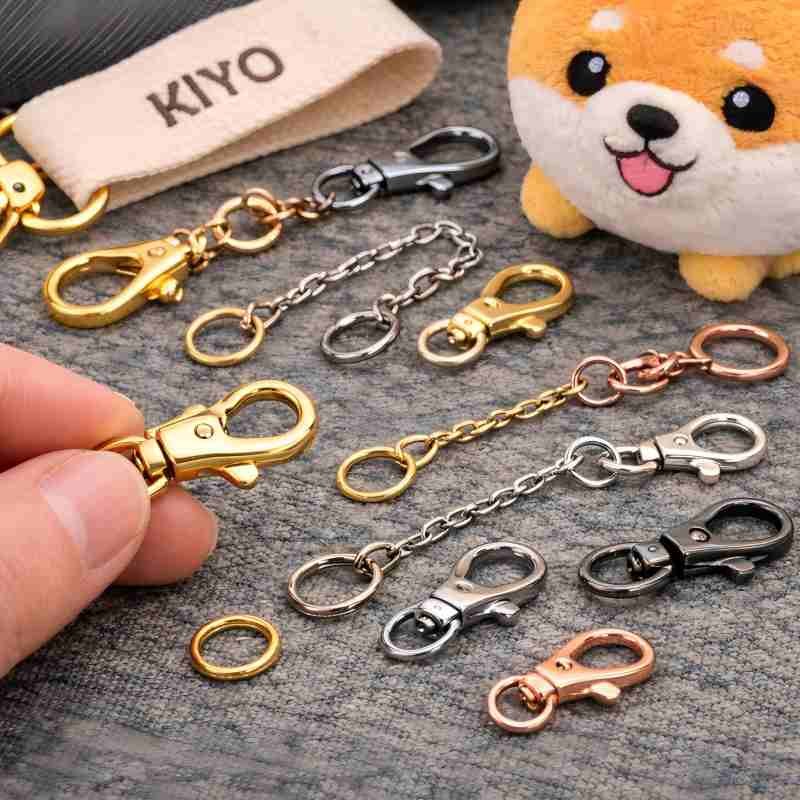
Most “mystery failures” come from connector choices—not from the plush itself.
Often appears in: premium keychains, multi-part charms, series collectibles.
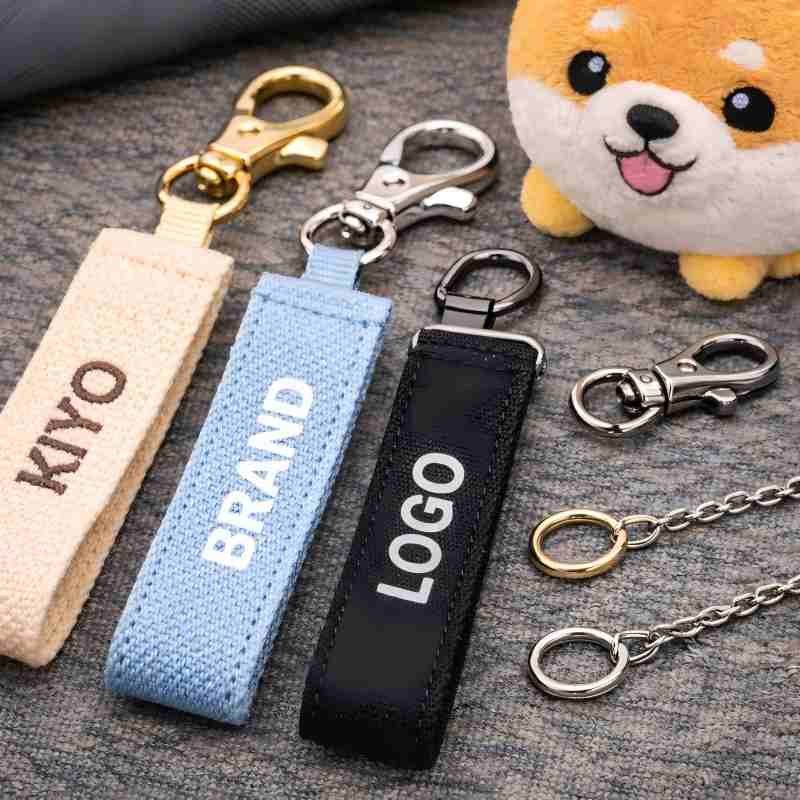
A woven strap can upgrade a keychain instantly—but only if the strap feels premium and looks consistent in bulk.
Often appears in: minimalist brands, phone/bag strap charms, premium drops.
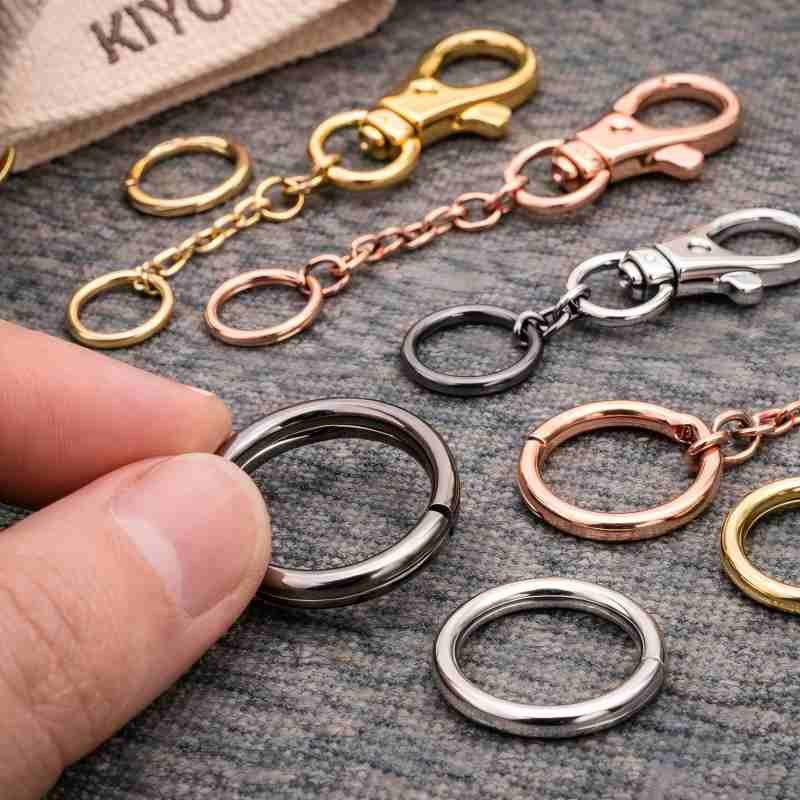
Premium isn’t only strength—it’s also how the product behaves around clothes and bags.
Often appears in: fashion/lifestyle usage, daily carry products, gift items.
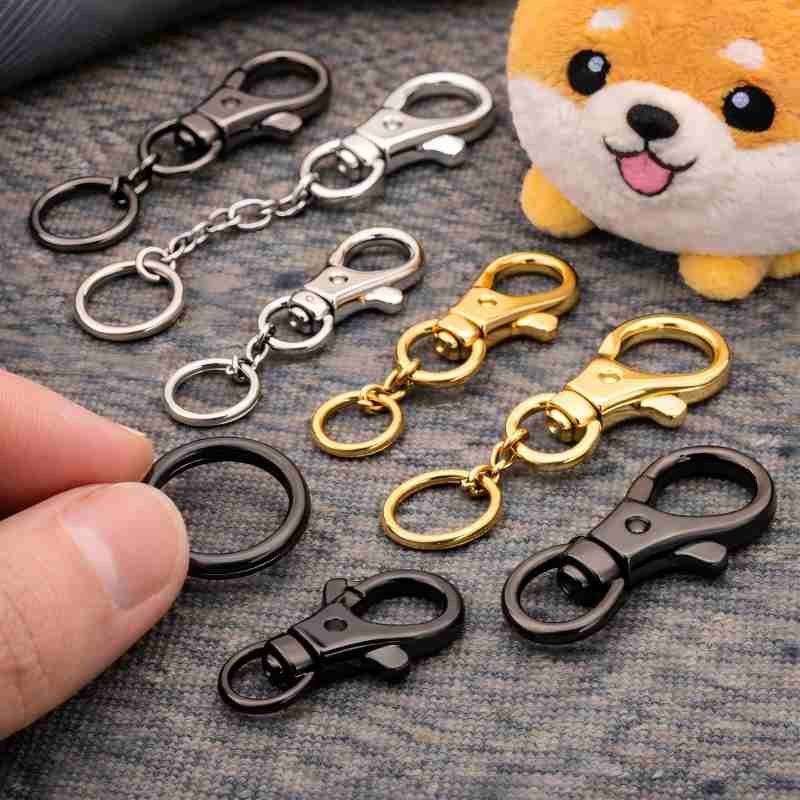
These quick confirmations let us choose hardware that fits your brand tier and avoids avoidable complaints.
Turns “brand focus points” into a decision panel your team can actually sign off on. Pick the experience you want, and we freeze it as the build standard—so sampling stays focused and bulk doesn’t drift.
Option A — Quiet Premium (recommended for fashion/lifestyle and gifting)
Option B — Playful Charm (acceptable for youth merch and promo programs)
Freeze this decision: acceptable noise behavior + touch comfort expectation.
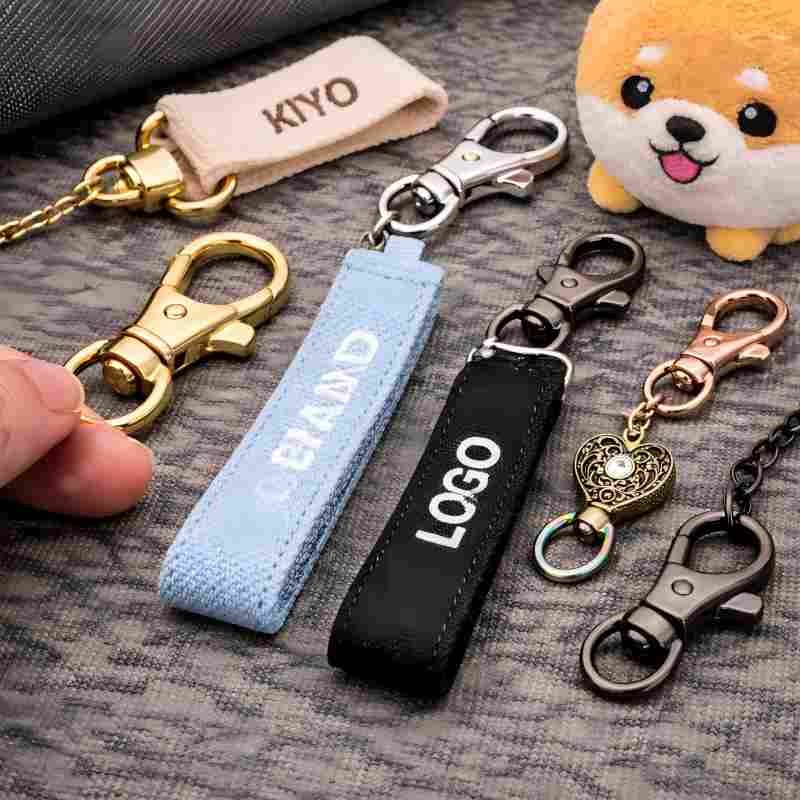
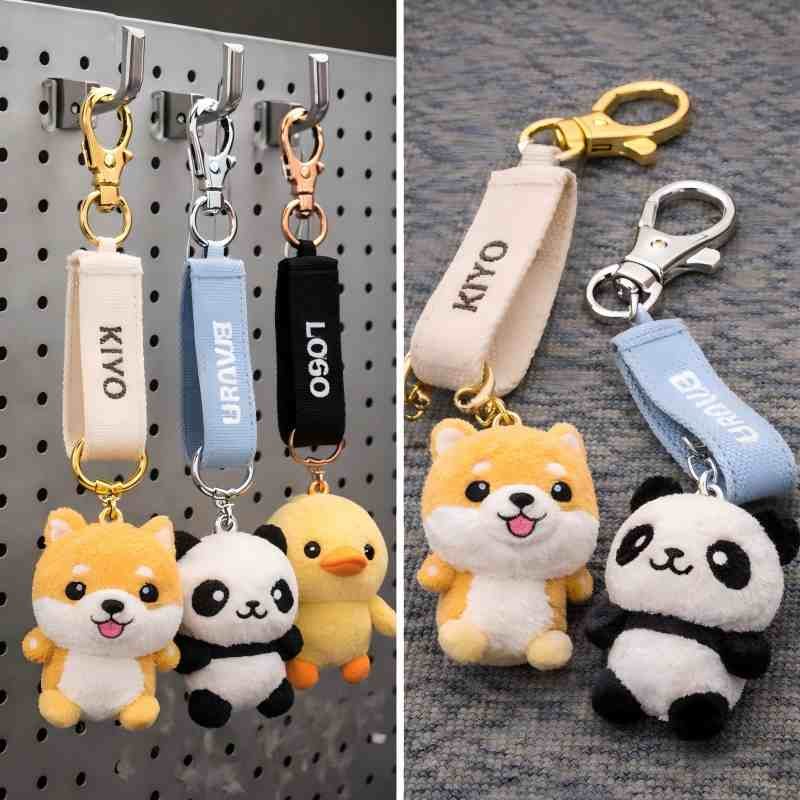
Option A — Always Front-Facing (best for retail hooks and photo consistency)
Option B — Free-Rotation (best for casual key use and clips)
Freeze this decision: facing rule + the hanging orientation your brand expects customers to see.
Option A — Clean Bold (high repeatability, low complaint risk)
Option B — Collectible Detail (higher complexity, needs tighter discipline)
Freeze this decision: the “detail ceiling” (how much detail is allowed) and what must remain readable.
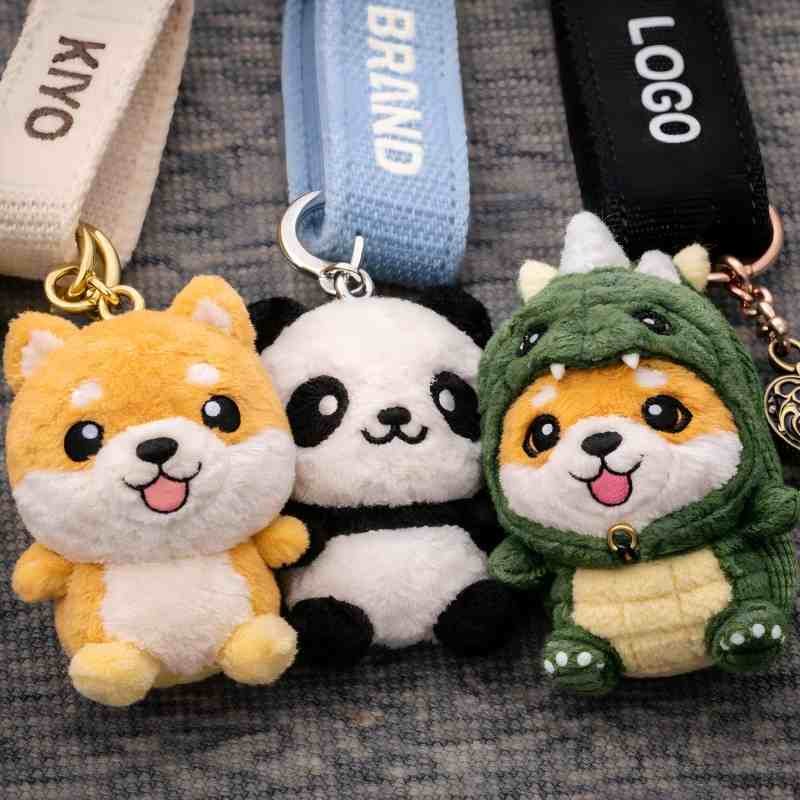
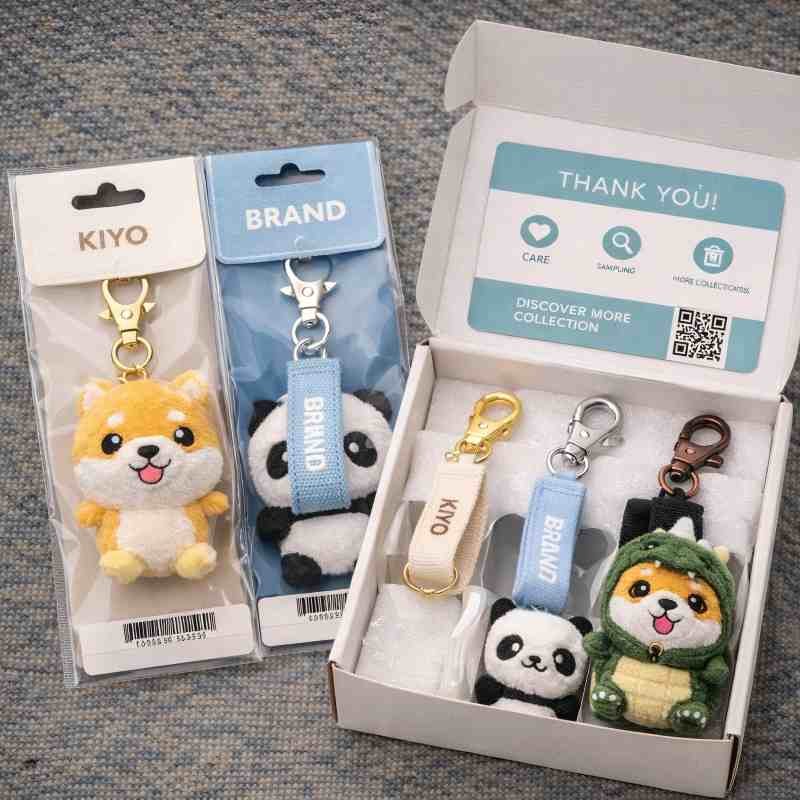
Option A — Peg-Ready Retail Pack
Option B — Bundle / PR Kit / DTC Insert Pack
Freeze this decision: packaging format + barcode/label placement logic + kitting rules if applicable.
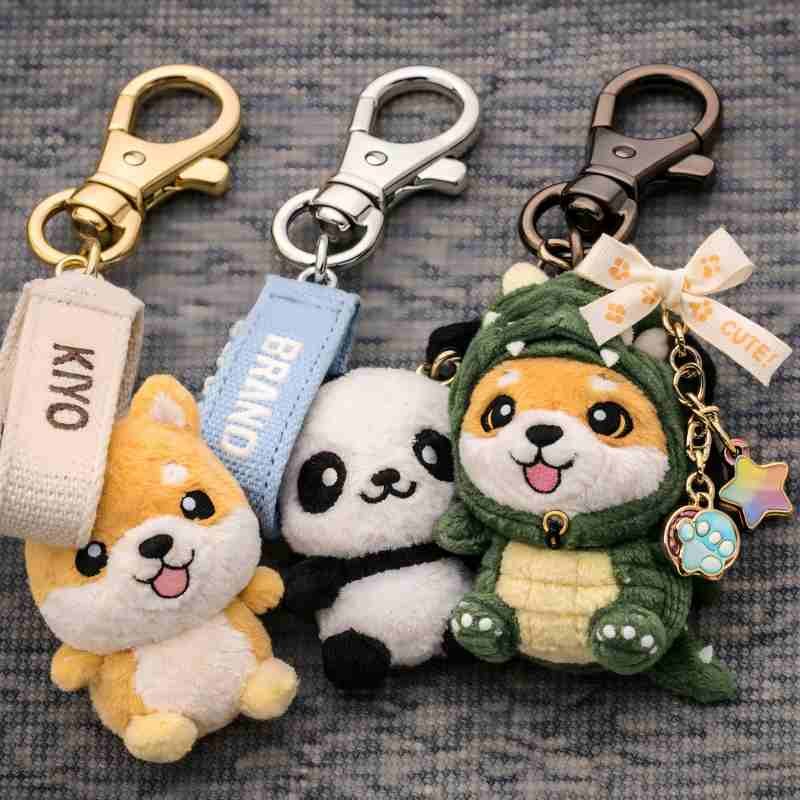
Option A — Minimal Premium (recommended for premium brand perception)
Option B — Accessory-Rich (works when the program is meant to be playful)
Freeze this decision: add-on allowance level + snag/noise tolerance + what must be avoided.
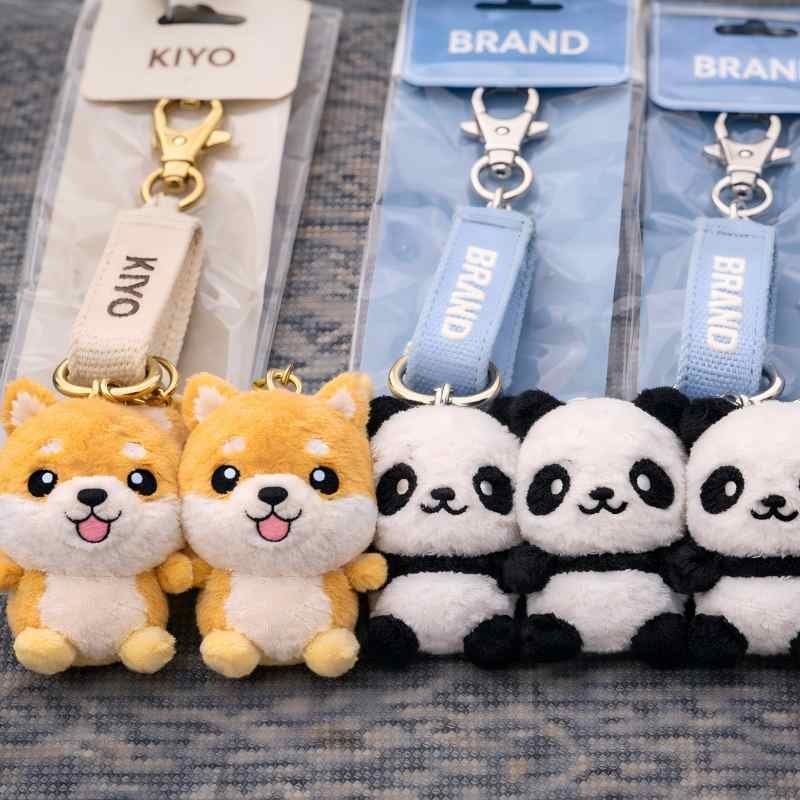
Option A — Reorder-Strict (best for long-term programs)
Option B — Campaign-Tolerant (best for short runs and fast promos)
Freeze this decision: the consistency bar your team expects across bulk and repeat runs.
The Keychain Path That Prevents Rework
You share: hang-sell vs DTC bundles, target audience, hardware preference.
You receive: a build direction that matches channel requirements.
We define what must remain visible and what gets simplified at small scale.
You receive: a mini-detail plan (clean and repeatable).
We select fabric that stays clean under friction and matches your feel target.
You receive: fabric direction + finishing expectations.
Prototype verifies: hanging orientation, pull feel, face readability, finishing.
You receive: a focused review checklist (what matters most on keychains).
We adjust only what changes performance or identity clarity.
You receive: updated references + what is now frozen.
A bulk-like reference confirms reinforcement and finishing repeatability.
You receive: attachment checkpoints + mini-detail photo standard.
Packaging format, barcode placement, and kitting rules are confirmed.
You receive: pack-out rules aligned with receiving.
Stress points are checked consistently, not only at final inspection.
You receive: consistency evidence that supports repeat runs.
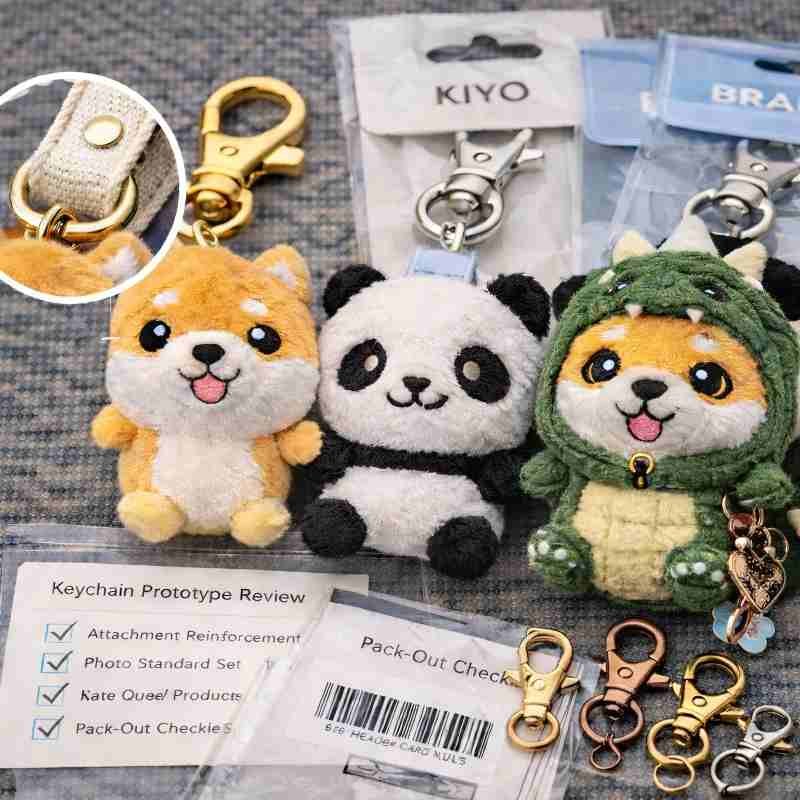
A keychain line succeeds when returns stay low and repeat runs stay consistent.
What gets protected:
What your team can keep as proof:
Where do plush keychains perform best for brands:
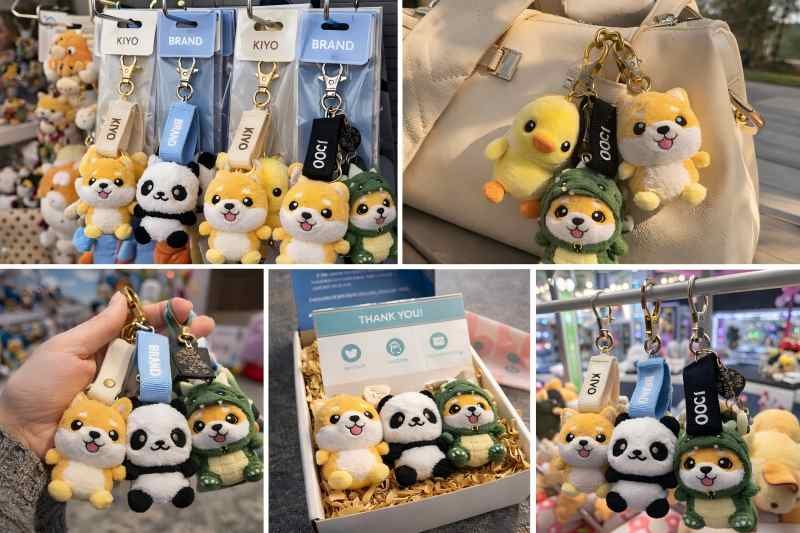
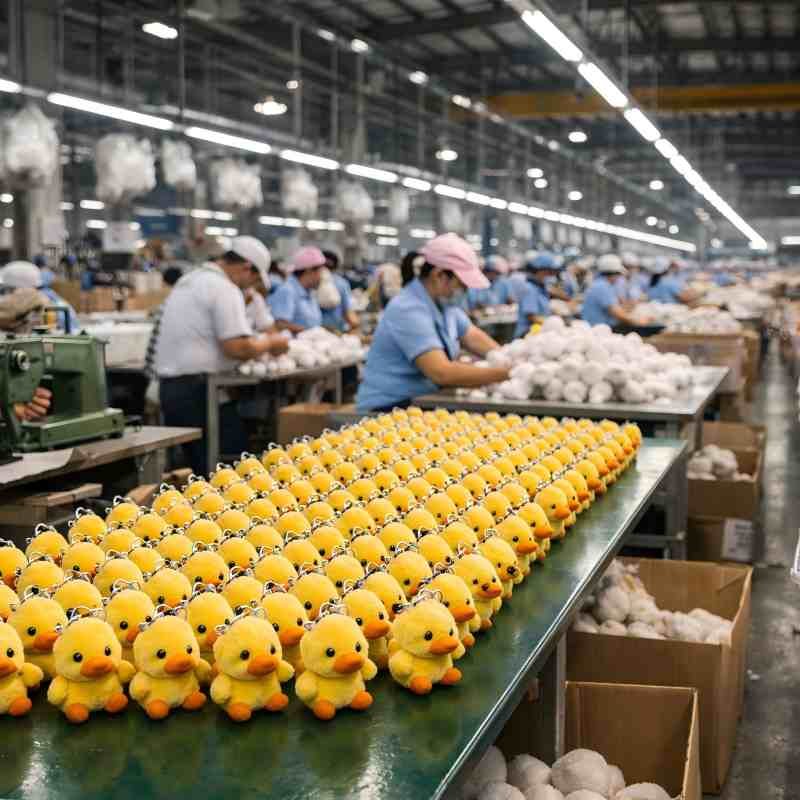
1) What’s the most common failure point?
Attachment tear-out or loosening. That’s why we design load-path reinforcement early.
2) Can you make the same character as a full plush and a keychain?
Yes. We simplify details for mini readability while keeping identity consistent.
3) What size is most common?
Brands often choose 6–10 cm for keychains, but the best size depends on face readability and hardware.
4) Which hardware is best: split ring or lobster clasp?
Split rings are simple and durable; lobster clasps feel more “bag charm” premium. The choice depends on use and audience.
5) Will long fur look messy on a keychain?
It can, because of friction. Long pile can work with finishing discipline, but wear behavior should match your expectation.
6) Can you do hang-sell packaging?
Yes—header cards, facing control, barcode placement, and receiving-ready pack-out can be built into the project.
Choose your keychain route—then we build the spec set that makes it hold up in real use.
Pick the program style below. We’ll return a prototype plan + a frozen build standard that protects durability, hang behavior, and premium feel in bulk.
Route A — Peg-Ready Retail Keychain (Stable Facing)
Result: Front-facing on hooks, scan-ready packaging, consistent presentation across volume.
Route B — Premium Bag Charm (Accessory-Level Feel)
Result: Quiet, refined hardware feel, low snag risk, gift-ready premium impression.
Route C — Collectible / Capsule Series Program
Result: Repeatable series consistency, packing efficiency, and lower mix-up risk for variants.
We reply with the recommended path and input checklist within 1 business day after receiving the 3 points above.
This form is built for accurate quoting—size, quantity, materials, accessories, and compliance needs. The more complete your brief, the fewer revisions and the faster your sample can start.

I am Nika, our team would be happy to meet you and help to build your brand plush.