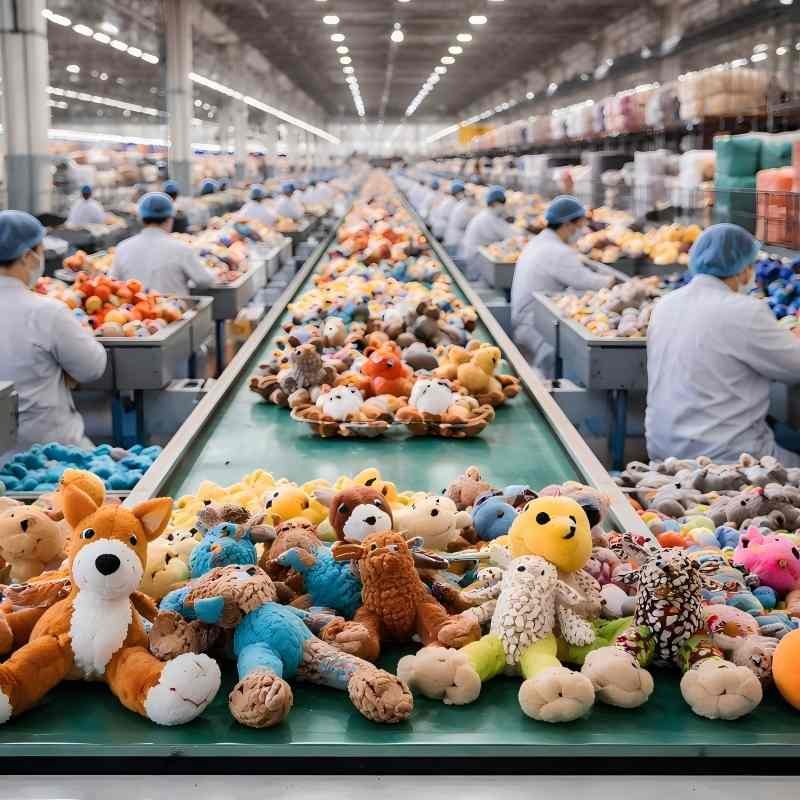
Custom Pet Plush Toys Engineered for Durable Play and Brand-Ready Presentation

Squeaker plush · crinkle plush · rope hybrid tug plush · plush with internal ball · multi-pack pet toys · pet retail & subscription programs

Pet plush is a stress product. It gets bitten, tugged, dragged, washed, and thrown—then judged by pet parents on how long it lasts and how safe it feels. A strong pet plush program isn’t built around “cute.” It’s built around controlled stress points, protected inserts, washable materials, and packaging/labeling that fits pet retail and e-commerce.

A pet plush that truly works must deliver:

– Reinforced seams and attachment points that resist tearing under tugging
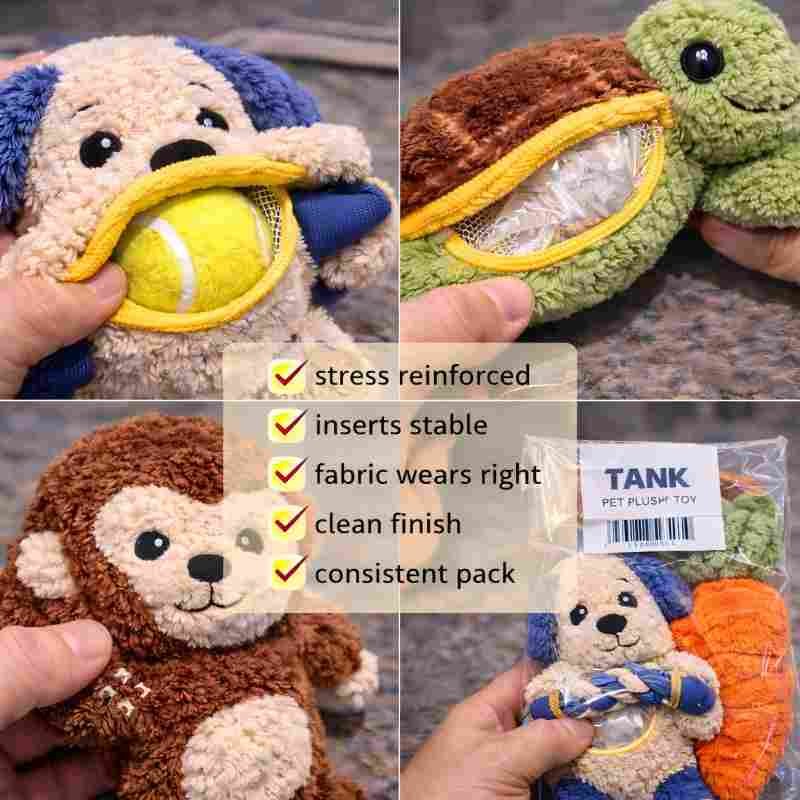
– Insert security (squeakers/crinkle/rope/ball) designed to stay contained
– Fabric choices that balance softness with abrasion resistance
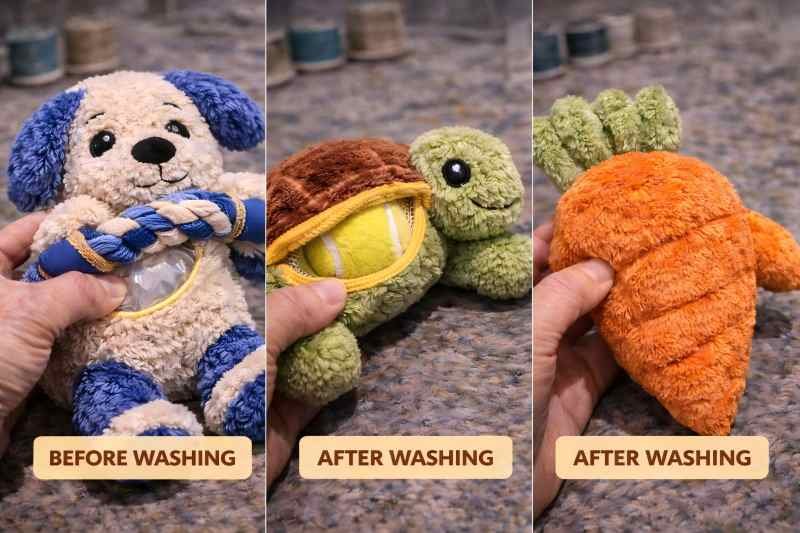
– Wash behavior that stays acceptable after real cleaning (shape, feel, stitching)
– Feature decisions that avoid unnecessary small-part risk
– Packaging and labeling aligned to pet channels and customer expectations

Last updated:Feb. 28, 2026 · Applies to: Custom pet plush OEM/ODM programs · Channels: Pet retail / 3PL / Retail DC / DTC / FBA-like · Covers: play scenario + durability spec → prototype & insert containment → approvals → bulk consistency → pack-out readiness

What a Serious Pet Plush Manufacturer Controls?

From Concept to Production: The Work Most Suppliers Don’t Show

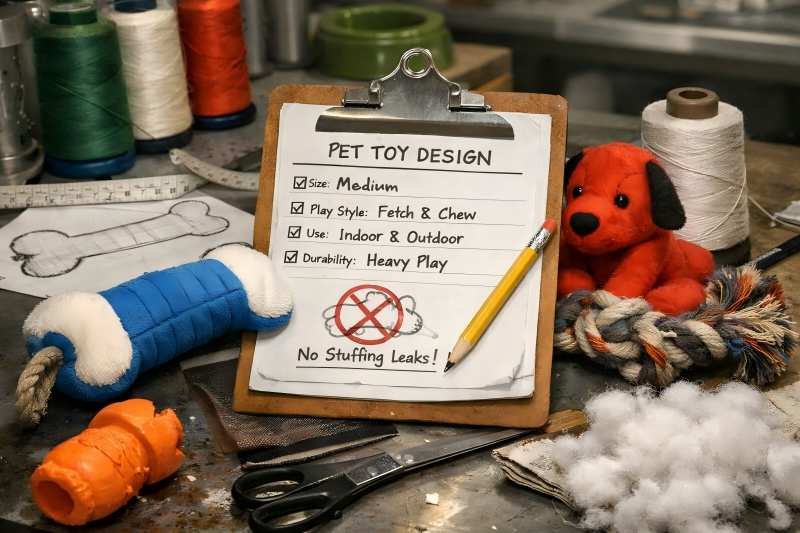
Play behavior design brief

  • Target pet type/size range (small/medium/large)
  • Primary play style: carry, fetch, chew, tug, shake
  • Environment: indoor, outdoor, travel, kennel
  • Owner expectation: “gentle play” vs “heavy play” durability
  • Must-avoid outcomes: stuffing leaks, insert exposure, fast seam failures

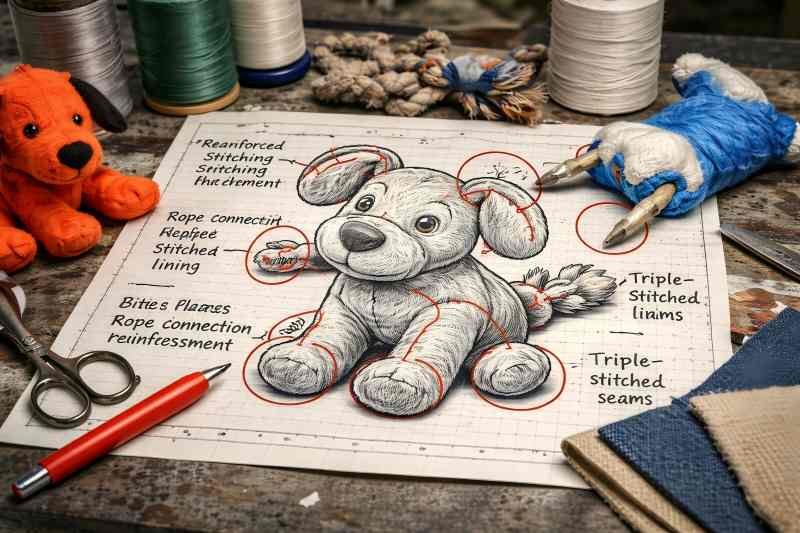
Stress-point blueprint

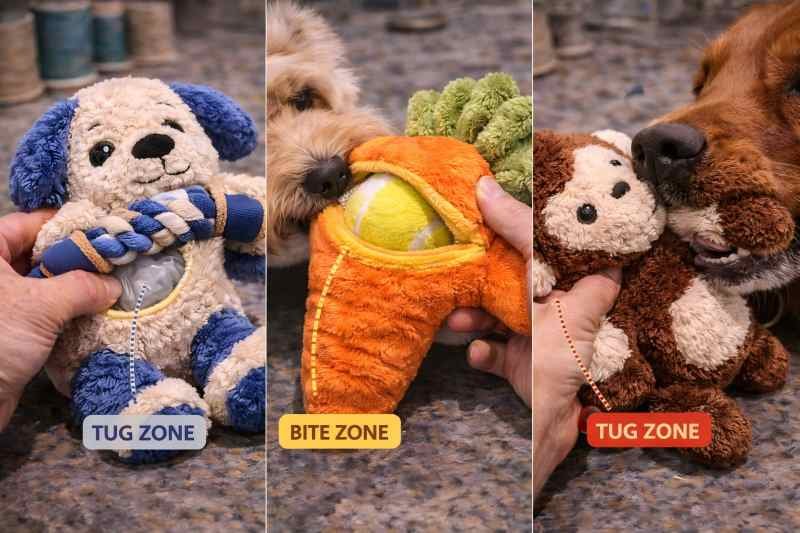
  • Tug zones: limbs, ears, tails, rope connections, handle-like parts
  • Bite zones: edges, corners, protrusions, mouth area
  • Shake zones: long appendages and stitched junctions
  • Stitch line planning: how to prevent seam split propagation

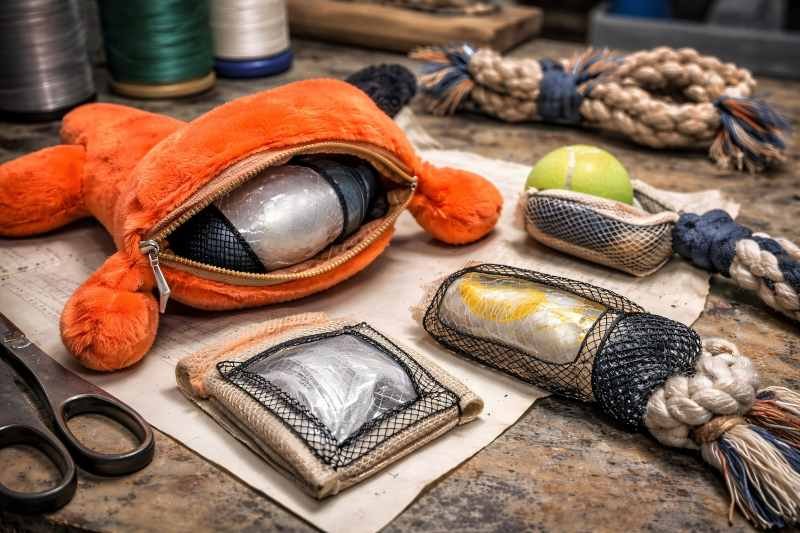
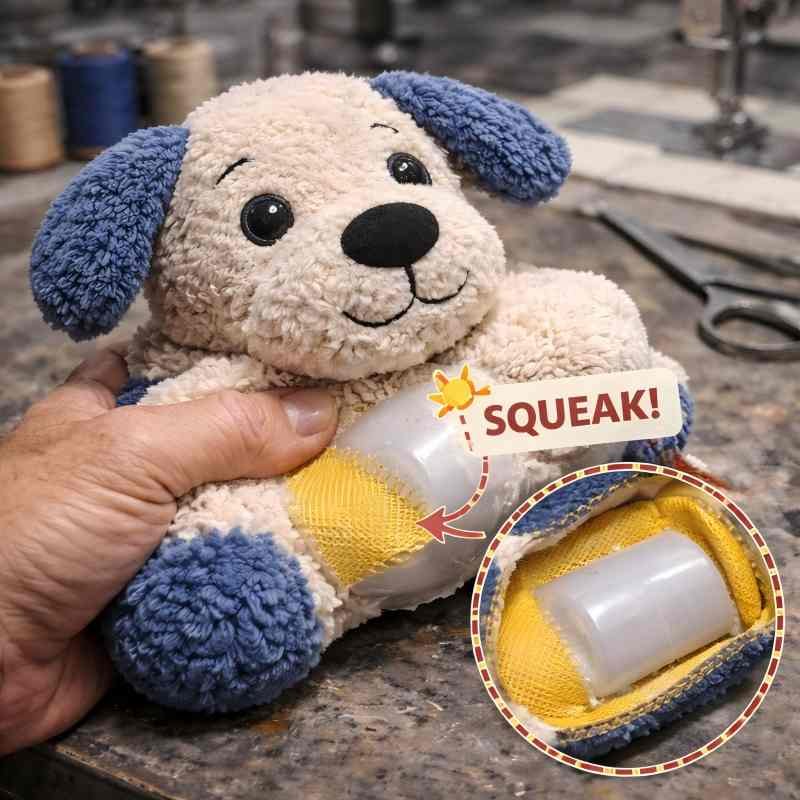
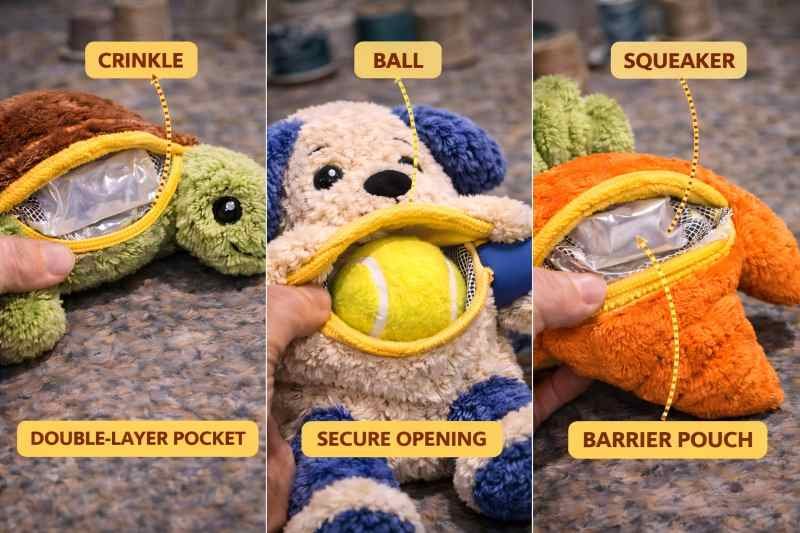
Insert protection (squeaker/crinkle/rope)

  • Insert selection: squeaker size/shape, crinkle film type, rope diameter
  • Containment strategy: internal pouch, secured pocket, layered barrier
  • “If insert fails, what happens?” plan: prevent immediate exposure or loss
  • Noise/feel expectations (squeaker loudness, crinkle crispness)

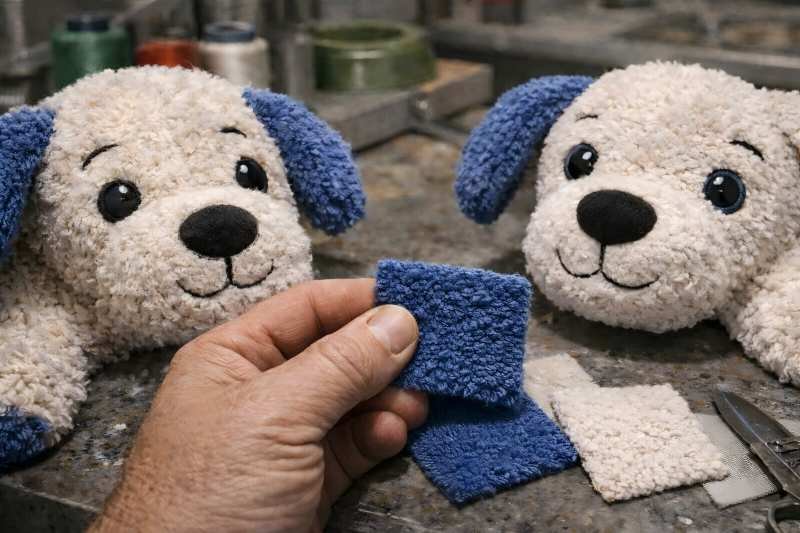
Fabric & surface selection

  • Softness vs abrasion: choose by friction behavior, not only touch
  • Pilling and snag resistance considerations
  • Dark vs light color practicality (visible dirt and cleaning perception)
  • Printed vs embroidered details under repeated chewing and washing

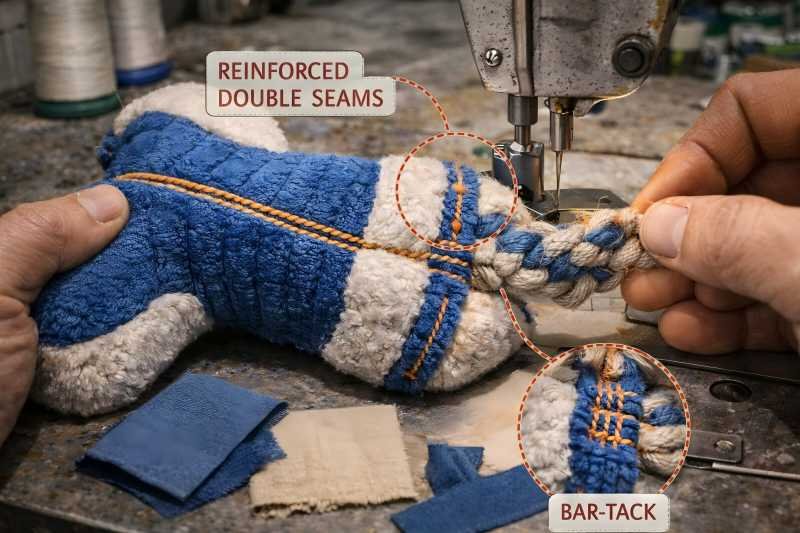
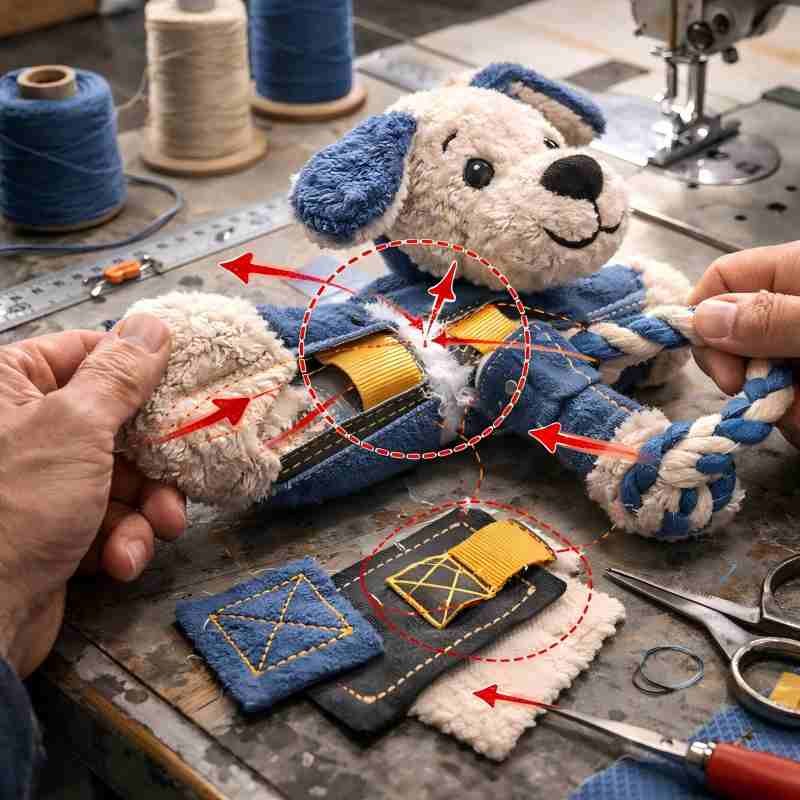
Reinforcement architecture

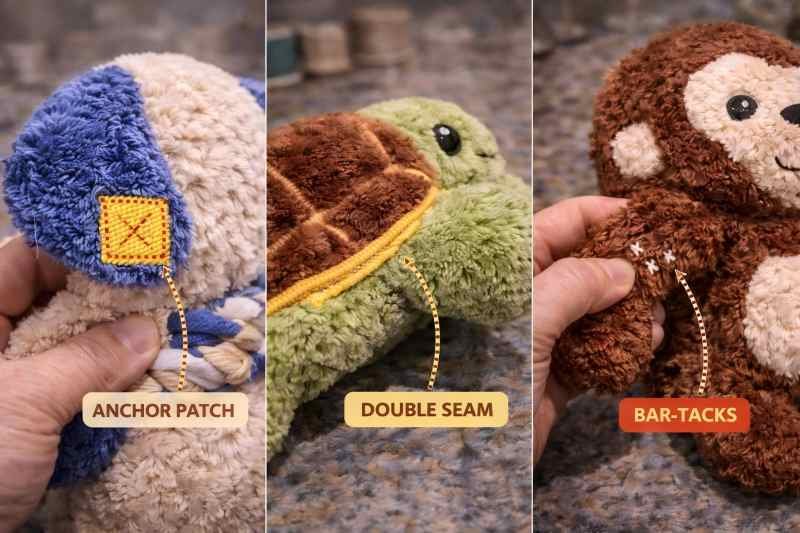
  • Double seams / reinforced seam patterns in high-stress zones
  • Bar-tack style reinforcements where load concentrates
  • Edge binding where fray risk is high
  • Patch reinforcement for tug points and rope junctions

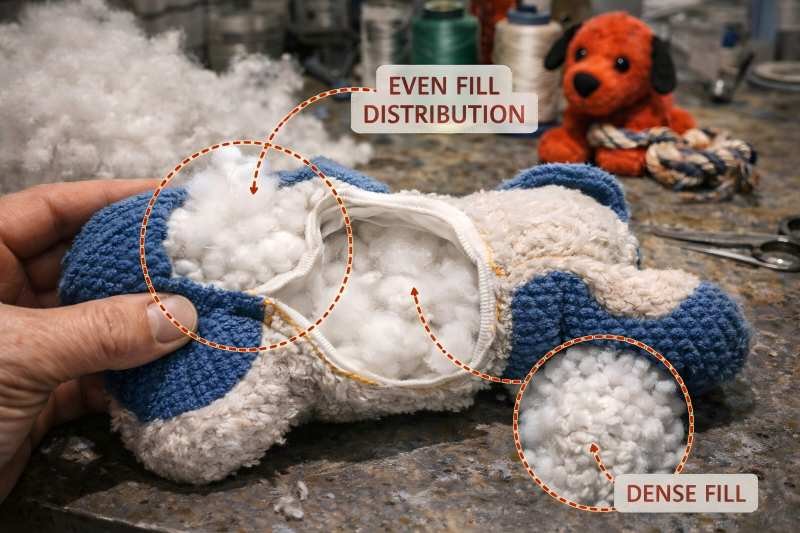
Fill behavior keeps shape

  • Fill density targets (too loose collapses; too tight feels hard)
  • Distribution rules to avoid hollow corners and migrated fill
  • “Feel” goals: soft cuddle vs firmer chew feel

Feature discipline reduce risk

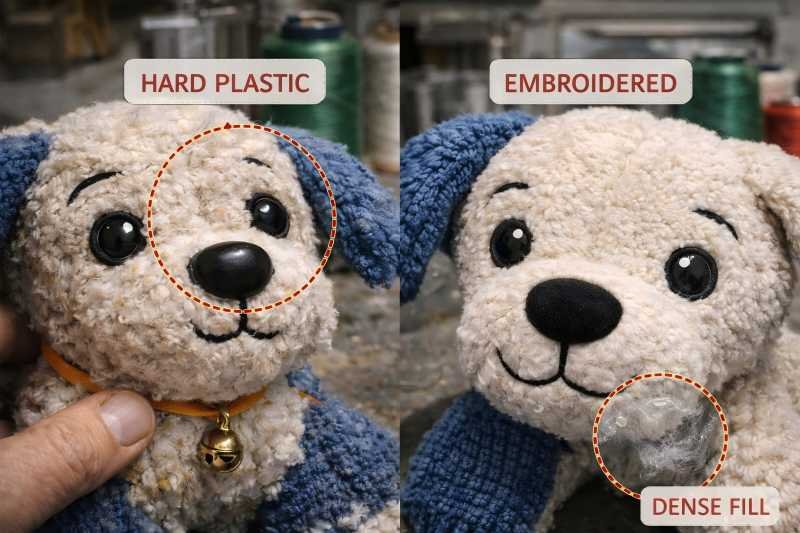
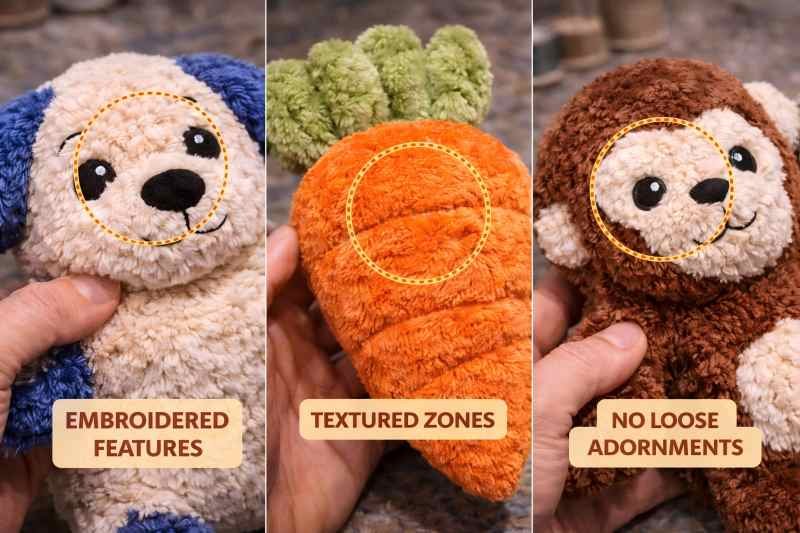
  • Prefer embroidered eyes/noses over hard plastic pieces for pet use
  • Avoid tiny loose ornaments that can be bitten off easily
  • Keep external trims minimal unless they serve a purpose and are secured

Pack-out and pet-channel

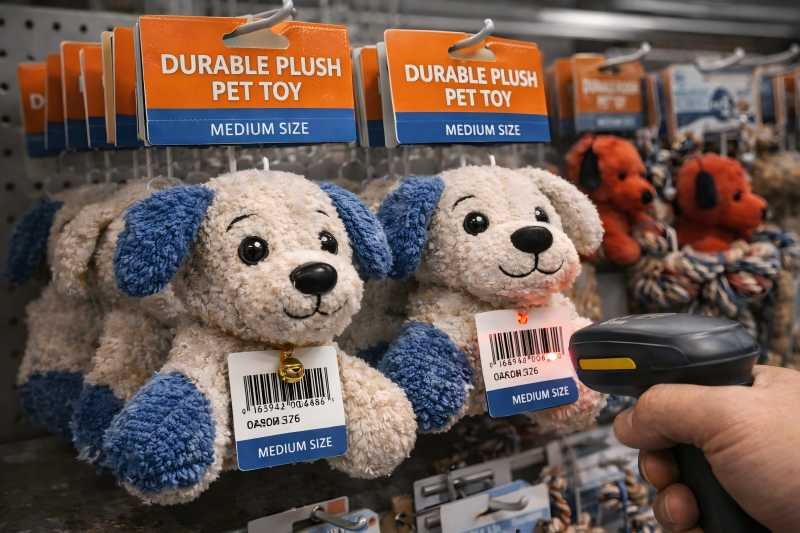
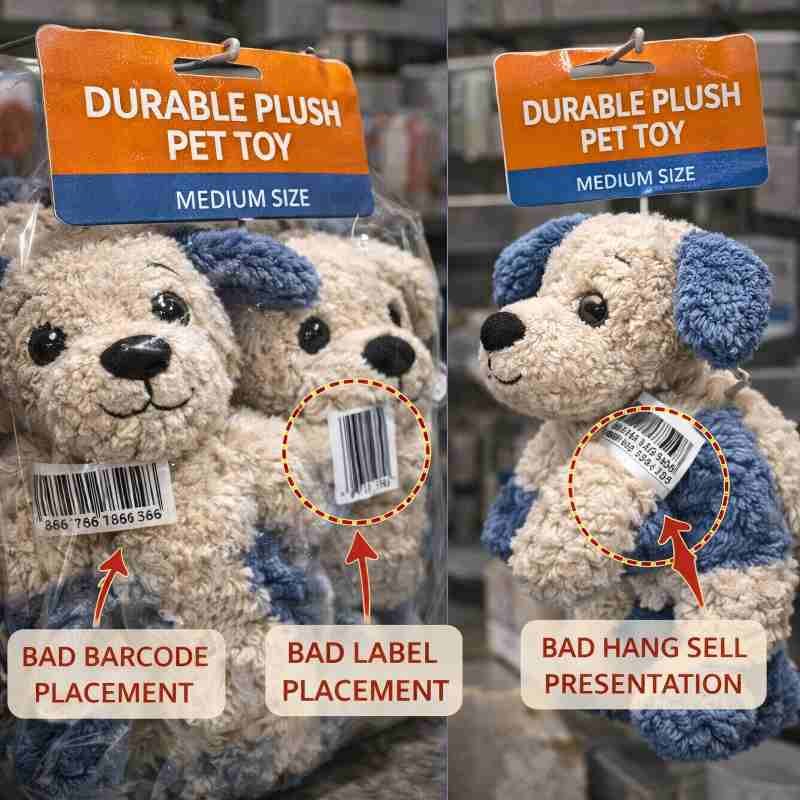
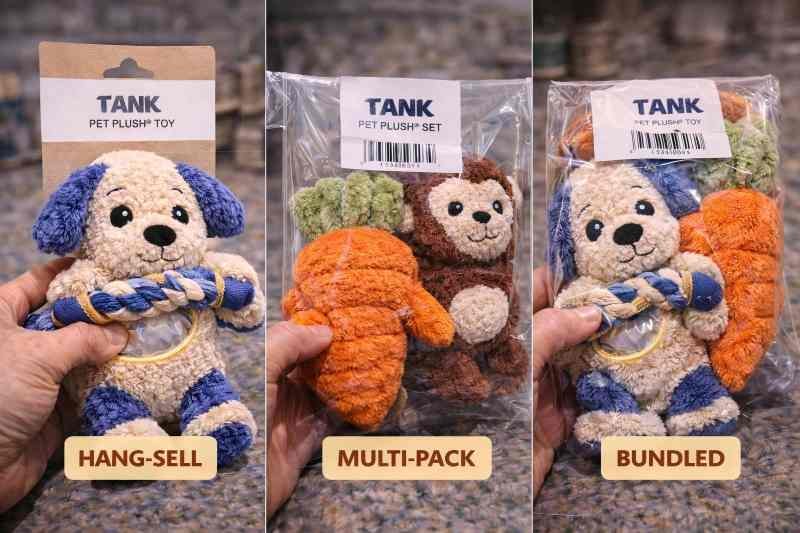
  • Hang-sell presentation (header cards/hooks) if used
  • Multi-pack collation rules (mix control and count accuracy)
  • Barcode placement discipline for pet retail and e-commerce
  • Instruction/label approach aligned to pet-use expectations

Most vendors can “sew a plush.” A professional plush manufacturer runs a development system so your team can approve confidently—and bulk stays aligned to what you signed off.

What Pet Plush brands Care About Most?

The 6 Failure Points Brands Experience—and We Engineer Out

1) Pull-Point Failure (Tugging Tears Seams)

What goes wrong: seams open at the first high-load junction (ears/limbs/rope ends/handle zones)

Why it happens: load path is undefined; reinforcement is added “after the fact”

How we control it (brand-grade):

  • map load zones before sampling starts (where force concentrates)
  • choose a reinforcement architecture (internal strap/anchor patch + stitch pattern)
  • lock a stress checkpoint for bulk (same reinforcement, same placement, same execution)

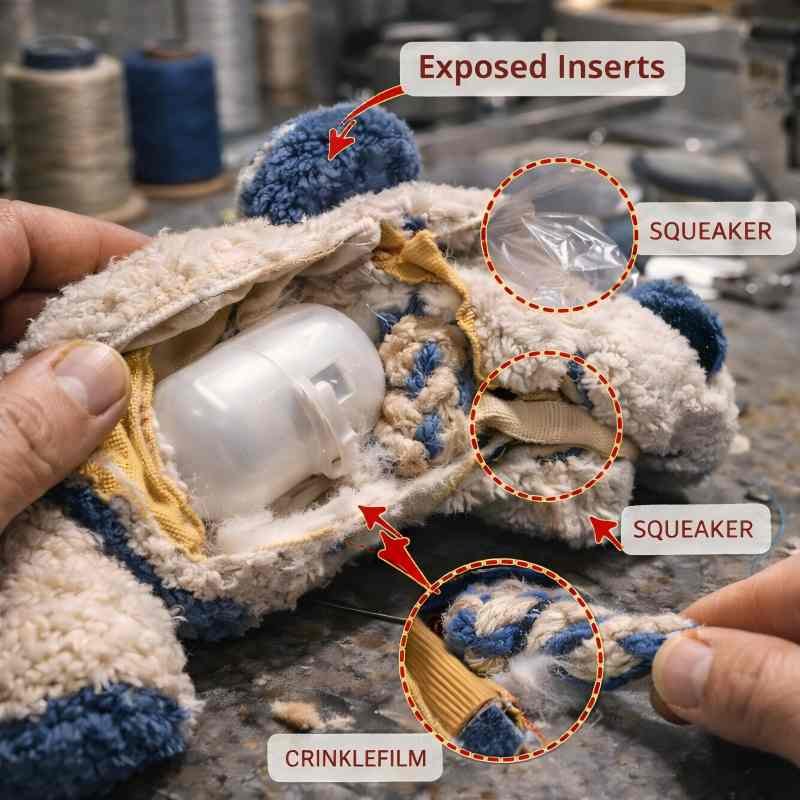
2) Insert Exposure (Squeaker / Crinkle / Rope / Ball)

What goes wrong: inserts shift, break through lining, or become reachable

Why it happens: inserts are treated as accessories, not a containment system

How we control it (brand-grade):

  • build an internal containment route (pouch / secured pocket / layered barrier)
  • define insert placement rules (no drift zones + secured orientation)
  • lock “if damaged, what happens” logic (prevent immediate exposure; controlled failure mode)

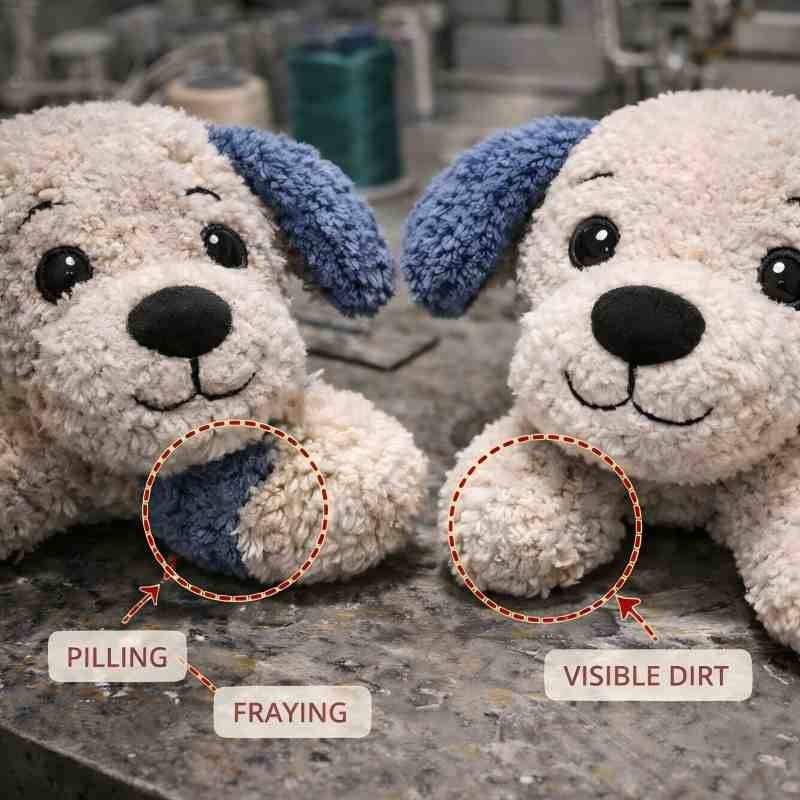
3) Fast Wear Look (Pilling / Fraying / “Dirty” Appearance)

What goes wrong: surface looks tired quickly; reviews mention “worn in days”

Why it happens: fabric selected by softness only; finishing varies run-to-run

How we control it (brand-grade):

  • select fabric by abrasion reality (carry, bite, drag, wash cycles)
  • define a finish standard (trim/brush/edge cleanliness) that can be repeated in bulk
  • lock a camera + hand-check reference so appearance doesn’t drift between batches

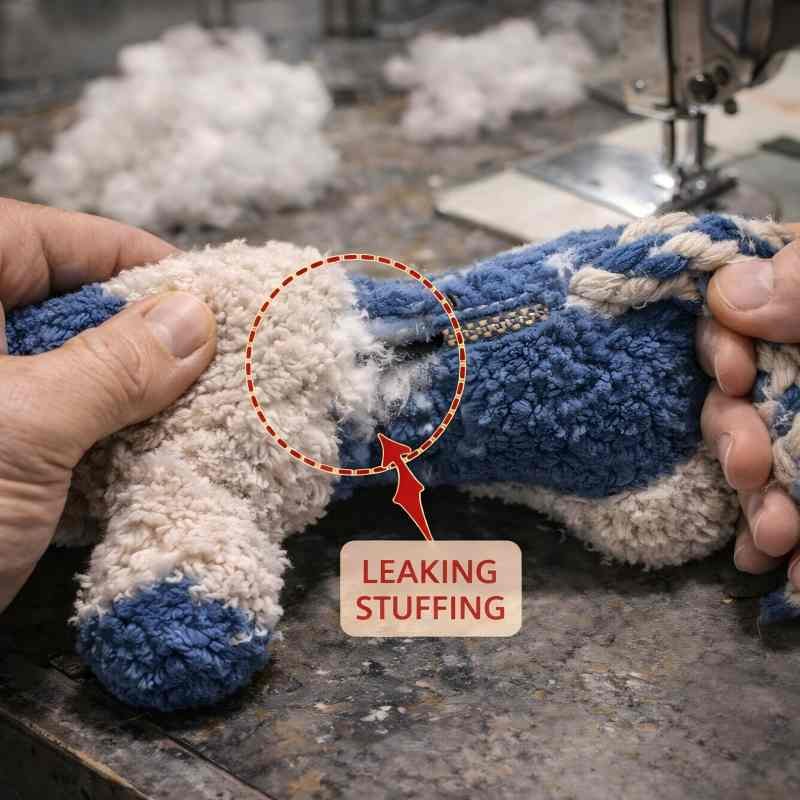
4) Stuffing Leak (Chew + Edge Failures)

What goes wrong: fill leaks from corners/edges; seams unravel under repeat biting

Why it happens: edge zones aren’t engineered; closure and junctions are weak

How we control it (brand-grade):

  • reinforce edges + junctions (corners, openings, connection points)
  • choose a seam strategy designed to stop propagation (not just “stronger stitch”)
  • lock a bulk inspection focus on the highest-risk lines, not only final QC

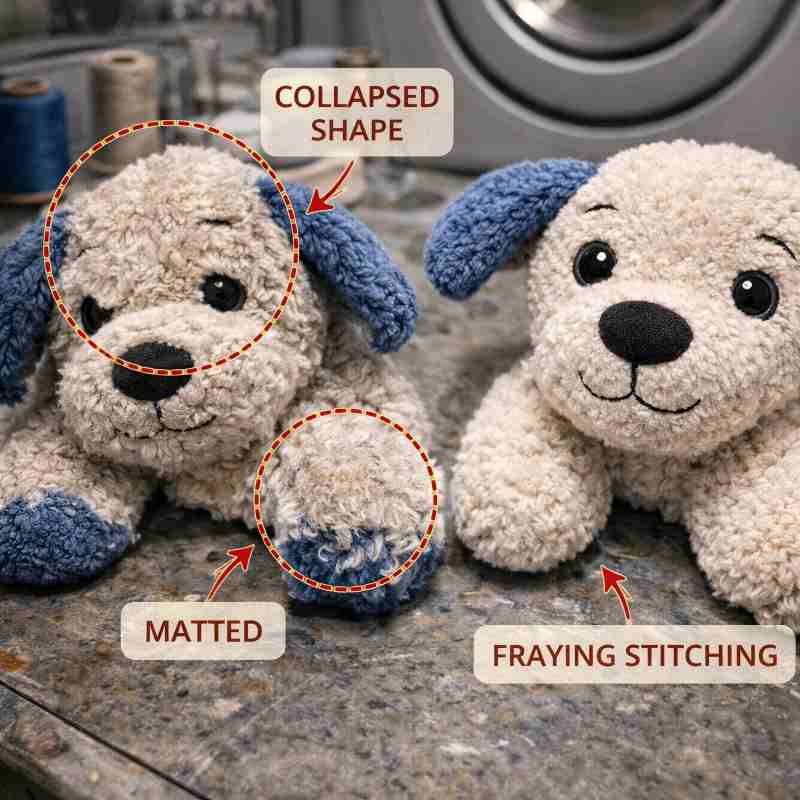
5) Wash Breakdown (Shape, Feel, Stitching Degrades)

What goes wrong: after cleaning, shape collapses, feel changes, stitching looks messy

Why it happens: wash expectation is vague; construction isn’t designed for cleaning

How we control it (brand-grade):

  • define a wash target your brand can stand behind (what must stay the same)
  • validate wash behavior during prototyping (not after bulk)
  • lock care reality: materials + construction aligned to actual consumer cleaning habits

6) Channel Friction (Packaging / Labels / Receiving Fails)

What goes wrong: peg display doesn’t face correctly; barcodes don’t scan; multi-pack mis-packs; receiving rejects

Why it happens: packaging is designed after the toy; channel rules are discovered late

How we control it (brand-grade):

  • confirm sell channel format early (hang-sell / multi-pack / bundle / fulfillment)
  • lock barcode & label placement rules (unit + pack + carton mapping)
  • define a pack-out discipline that reduces mis-packs and check-in delays

Custom Pet Plush types Uniomy engineerd for global brands

A Controlled plush developement System From Sample to Scale

Squeaker Plush (classic)

  • Best for: pet retail core line, daily play, repeat replenishment
  • What makes it premium: consistent squeak feel, clean finishing, durable seams that don’t “open up” after a week
  • Key controls: containment method + squeaker placement · reinforced bite zones (same spec every run)

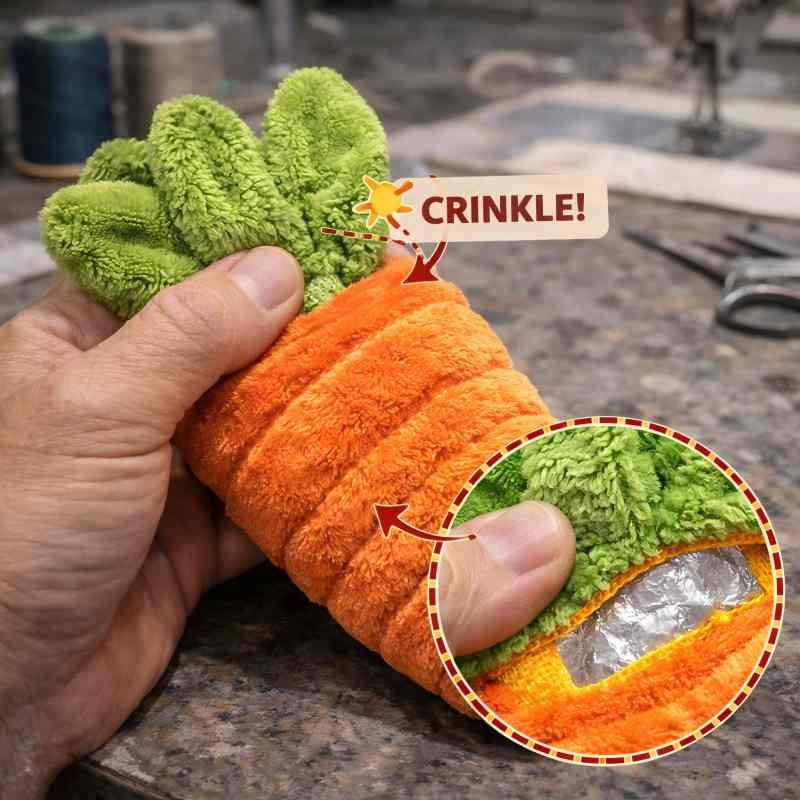
Crinkle Plush (sensory play)

  • Best for: cats/small dogs, subscription boxes, multi-buy add-ons
  • What makes it premium: stable sound, comfortable touch, acceptable wash results
  • Key controls: crinkle layer type + noise consistency · sound + wash consistency (no bunching / no drift)

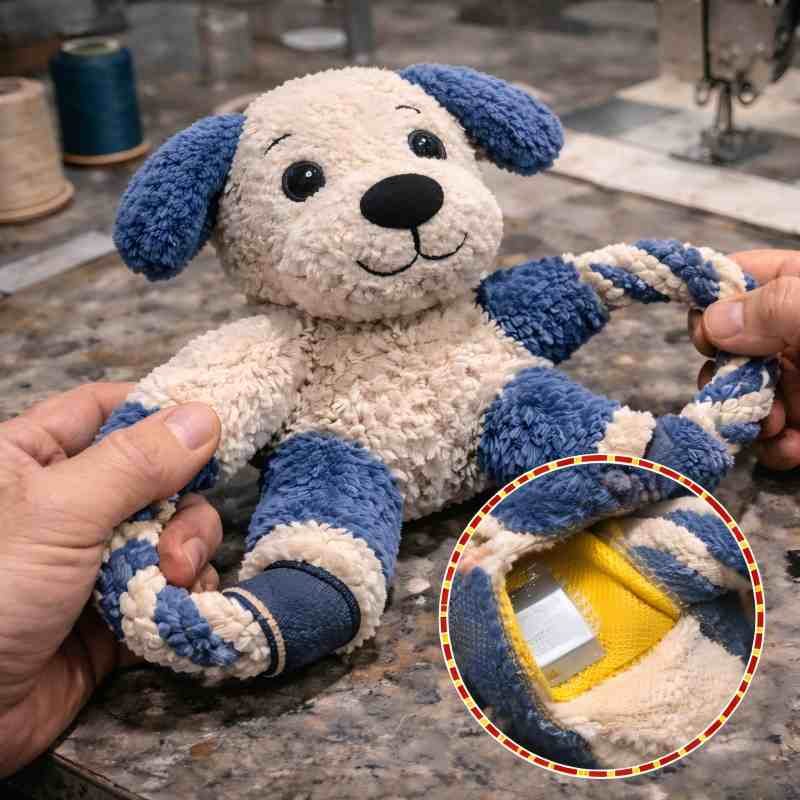
Rope Hybrid Tug Plush

  • Best for: tug lines, “durable play” positioning, higher perceived value
  • What makes it premium: clean rope integration, comfortable grip, reduced fray
  • Key controls: : load-path + junction reinforcement · fray-control finish (repeatable rope ends)

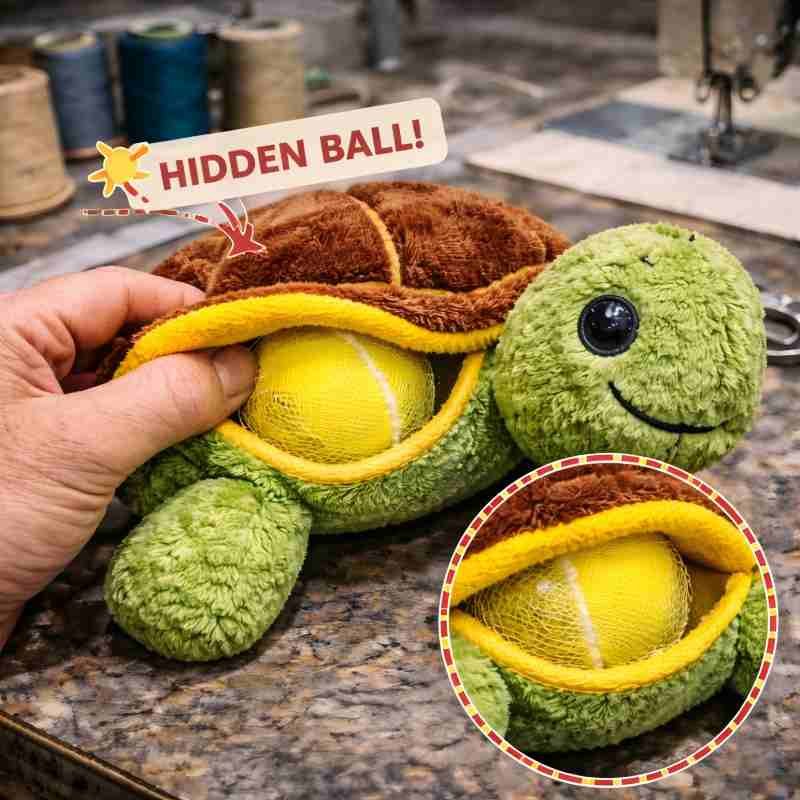
Plush With Internal Ball

  • Best for: fetch play, enrichment lines, interactive positioning
  • What makes it premium: ball stays contained, silhouette stays stable
  • Key controls: secure internal pocket design · shape stability (no shifting, no collapse)

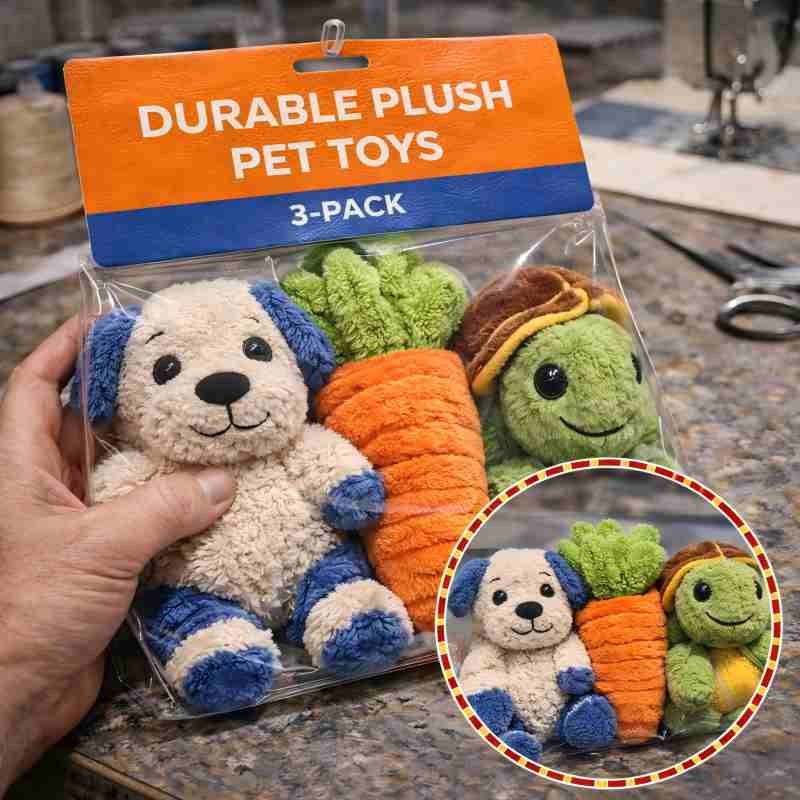
Multi-Pack Sets

  • Best for: gift packs, subscription programs, seasonal bundles
  • What makes it premium: coherent set, consistent feel across pieces, clean presentation
  • Key controls: set composition rules + pack-out mapping · count/variant accuracy (no mis-packs)

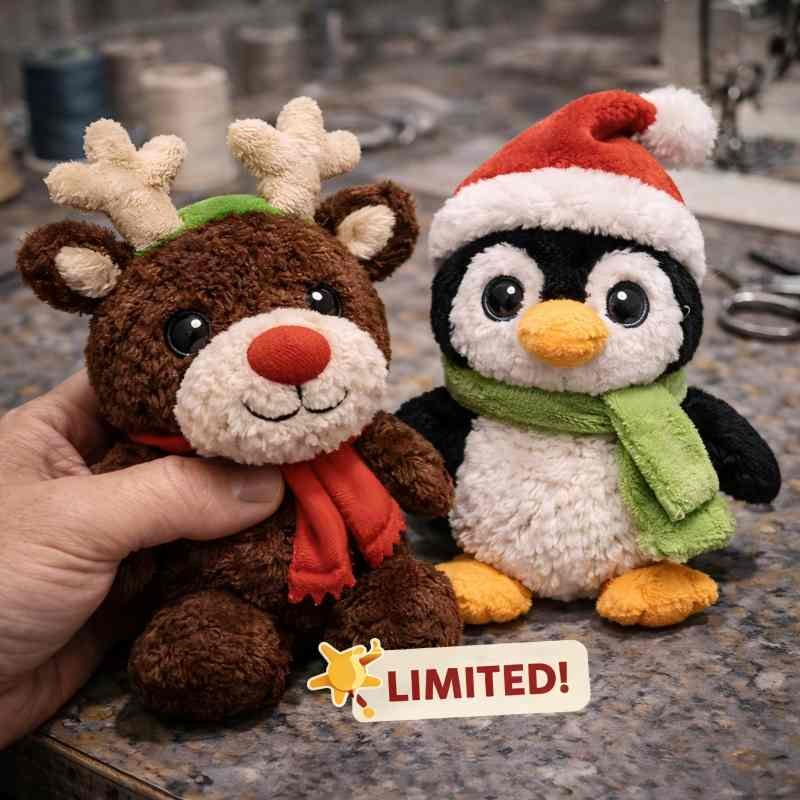
Seasonal Pet Plush

  • Best for: campaign drops, seasonal promos, PR bundles
  • What makes it premium: speed without quality drift across short runs
  • Key controls: materials availability plan + finish standard · short-run consistency checks (first = last)

The Insert & Sensory System for pet Plush

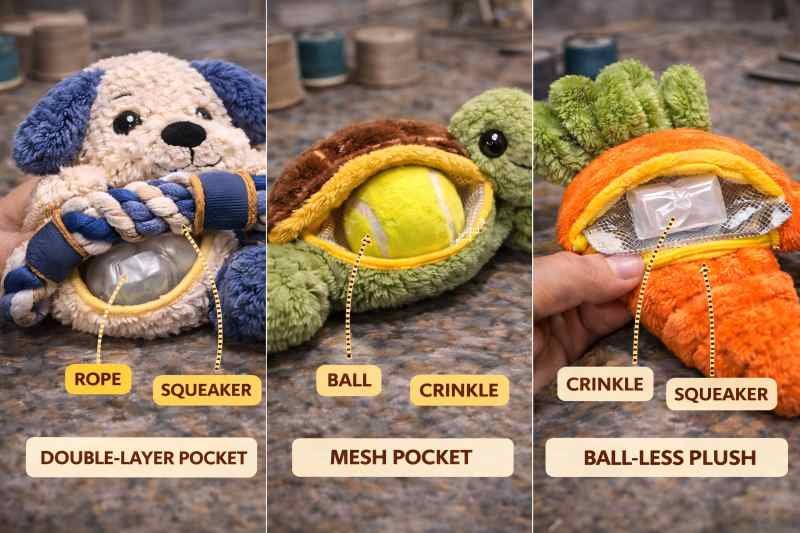
What Makes Pet Plush Feel “Premium”? Pet plush is bought for play feedback—not just looks. We treat squeakers, crinkle layers, ropes, and internal balls as a controlled system: sound target, placement logic, containment method, and repeatable bulk execution.

1

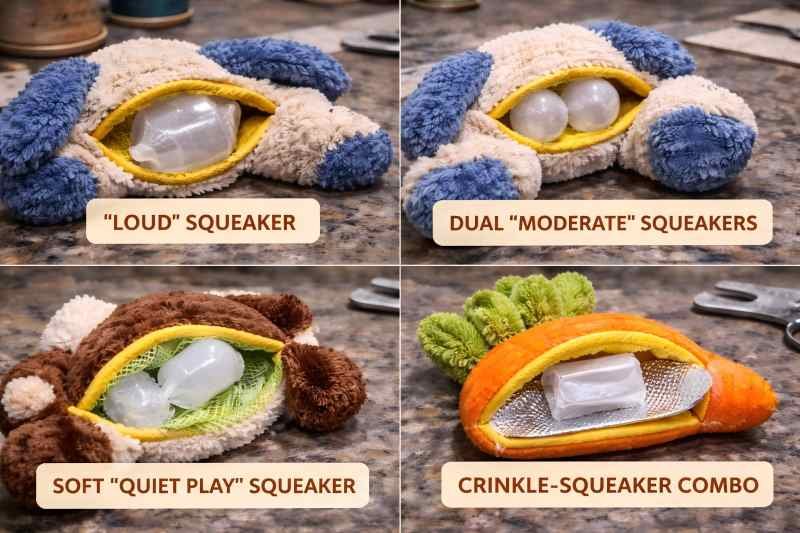
Squeaker Options

  • What brands decide: loud vs moderate vs “quiet play”
  • Common build choices: single squeaker vs dual squeakers (consistent feel across units)
  • What we lock: sound target + placement zone + containment method (so it doesn’t shift or become reachable)

2

Crinkle Layers

  • What brands decide: crisp crinkle vs softer crinkle (cat vs small dog vs mixed audience)
  • Placement logic: where pets bite and paw most (not randomly inside the body)
  • What we lock: crinkle material type + placement zones + wash behavior expectation (no bunching, no migration)

3

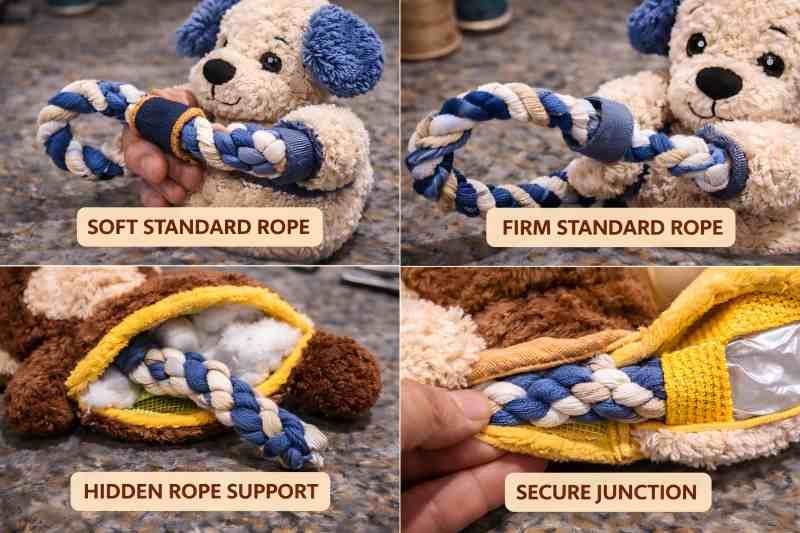
Rope Elements

  • What brands decide: rope-forward tug toy vs “hidden rope support” inside plush
  • Rope feel options: softer hand-feel vs firmer tug feel (positioning changes perception)
  • What we lock: rope diameter/material + junction architecture + fray-control finish (repeatable, not improvised)

4

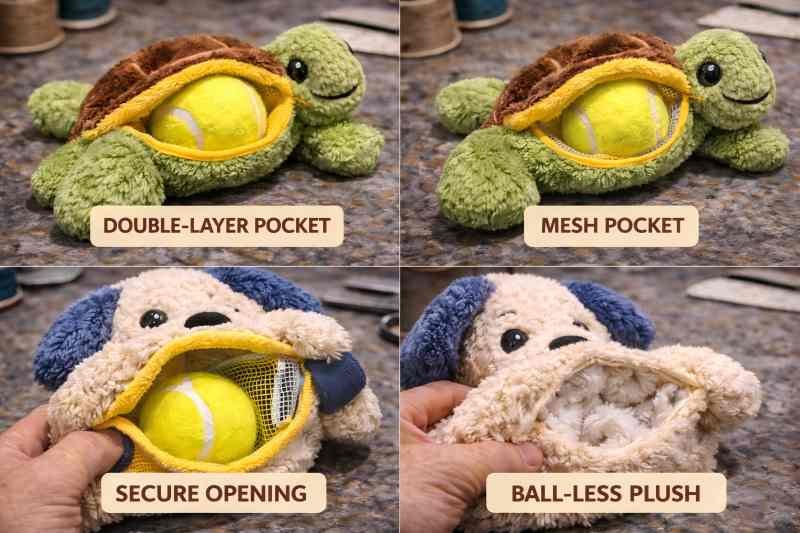
Internal Ball Builds

  • What brands decide: ball presence for fetch motivation vs plush-only comfort
  • Key design reality: containment pocket must be stable and positioned to protect silhouette
  • What we lock: ball size + pocket security approach + shape stability checkpoints (no shifting, no collapse)

5

Multi-Sensory Combinations

  • Common premium mixes: squeak + crinkle · rope + squeak · ball + crinkle
  • The rule: more features only work when the assembly steps stay controlled and the “failure mode” stays safe
  • What we lock: feature map (where each effect lives) + containment approach + bulk repeatability standard

6

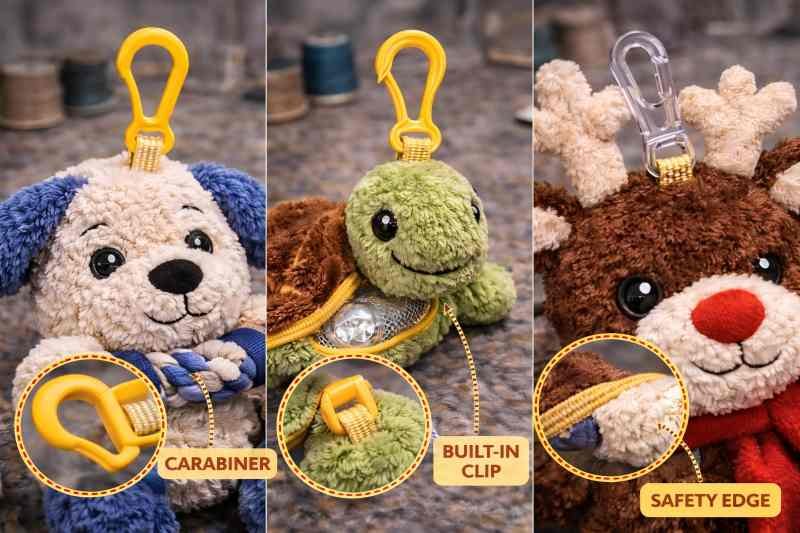
Optional Hardware

  • Typical use: travel/hanging convenience or premium presentation needs (not as decoration)
  • What we lock: hardware type + edge safety + placement that won’t create stress tears
  • Brand note: pet plush stays premium when hardware is purposeful and minimal

Brand Custom Details That Change Durability and Play Experience

Customization only works when the right details are locked early.

1). Chew/tug positioning decisions

  • You decide: pet size range + play style (carry / fetch / chew / tug / shake)
  • You decide: durability positioning (gentle play / everyday play / stronger play) + what it’s not built for
  • We lock early: primary grab zones + “must-hold” behaviors (tug points, bite zones, drop handling)
  • Brand-safe wording: claims stay realistic and defensible to protect ratings and reduce return disputes

2). Reinforcement and seam architecture

  • You decide: where stress happens first (ears/limbs/rope ends/handles/edges/corners)
  • You decide: reinforcement method by zone (double seams / bar-tacks / anchor patches / edge binding)
  • We lock early: junction construction rules (so a tear can’t easily spread)
  • Kept consistent in bulk: reinforcement placement and stitch execution stay the same—no silent simplification

3). Sound & Insert System

  • You decide: sensory route (squeak / crinkle / rope / internal ball / combinations) — options in H2-4
  • We lock early: insert placement + containment method (pocket/pouch/barrier layers)
  • Kept consistent in bulk: acceptable variance for sound/feel is defined so units don’t ship with “mixed experience”

4). Surface features and “pet-safe” detailing

  • You decide: face/detail method (embroidered features are usually best for pet-use)
  • You decide: texture zones that add interest without fragile add-ons
  • We lock early: “no loose ornaments” rule where applicable (reduces bite-off complaints)
  • Finish standard: thread cleanliness, trimming discipline, and camera-ready consistency for product pages

5). Wash and hygiene expectations

  • You decide: cleaning expectation (spot clean vs gentle wash) + what must still look/feel acceptable after cleaning
  • We lock early: construction choices that protect shape and stitching under that cleaning reality
  • Checked during prototyping: wash behavior is validated before bulk, not after
  • Care that matches reality: guidance aligns with how customers actually clean pet toys

6). Packaging, labeling, and Channel Fit

  • You decide: selling format (hang-sell / multi-pack / bundle / subscription / fulfillment)
  • We lock early: barcode/label placement + pack-out mapping (unit + pack + carton discipline)
  • Kept consistent in bulk: count accuracy and variant control for sets (reduces mis-packs and chargebacks)
  • Presentation: packing protects shape/surface so it arrives photo-ready, not crushed

How We Move From Prototype to Production

8 engineered steps of Pet Plush Path That Prevents Returns

Step 1

Confirm durability

You share: pet size range, play style, and “gentle vs heavy play” expectation.

You receive: a build recommendation focused on stress points and insert containment.

Step 2

Lock stress

We define tug zones, bite zones, and where reinforcement is required.

You receive: a reinforcement plan that guides sampling and bulk.

Step 3

Choose fabric

Fabric direction is chosen for abrasion and cleaning reality, not only softness.

You receive: fabric direction and finishing expectations.

Step 4

Prototype sample

Prototype is reviewed for seam strength, insert containment, and play feel.

You receive: a focused checklist for pet plush performance.

Step 5

Controlled revisions

We adjust reinforcement, insert placement, and materials before locking.

You receive: updated reference and what is now frozen for bulk.

Step 6

Production benchmark

A bulk-like reference confirms repeatability of seams, inserts, and finishing.

You receive: measurable checkpoints that protect consistency.

Step 7

Pack-out confirmation

Packaging and label placement are confirmed for your selling channel.

You receive: a pack-out checklist aligned to your distribution.

Step 8

Bulk production w

Stress zones are checked consistently, not only at final inspection.

You receive: consistency evidence that supports repeat runs.

Why Brands Partner with Uniomy for Durable Pet Plush?

Pet plush wins when customer reviews say “it lasted” and “my pet loves it.”

What gets protected:

  • stress-zone reinforcement stays consistent across production
  • inserts remain contained and stable
  • fabric wear behavior matches expectation
  • finishing remains clean after handling and packing
  • packaging/labeling stays aligned to how the product is sold

What your team can keep as proof:

  • reinforcement plan and stress-point map
  • insert containment approach notes
  • prototype review checklist for pet-use performance
  • bulk benchmark reference and repeatable checkpoints
  • pack-out rules for your channel

Common Brands Programs for Pet Plush

Pet Plush programs show up across many launch patterns and channels:

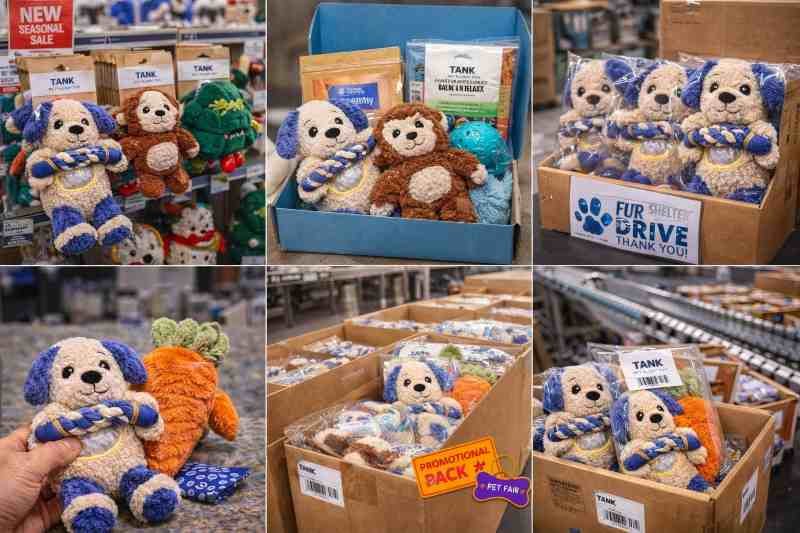
  • Pet retail seasonal drops and everyday lines
  • Subscription boxes and curated bundles
  • Shelter and fundraising merchandise
  • Vet clinic gift programs
  • E-commerce brands with repeat replenishment
  • Promotional packs tied to pet events and launches

Common receiving setups include: 3PL warehouses, retail DCs, DTC fulfillment, and FBA-like check-in environments.

Custom Pet Plush Manufacturer

1) What is the #1 failure point in pet plush?

Seam failure and insert exposure. That’s why we build stress reinforcement and containment early.

2) Can you make a “tough” plush for heavy chewers?

We can reinforce and design for stronger play, but plush has practical limits. Setting the correct durability expectation at the start prevents disappointment.

3) Are squeakers and crinkle layers safe?

They can be, when contained and reinforced properly. We treat insert security as a core design task, not an afterthought.

4) Can these be washed?

Often yes, depending on materials and construction. Wash behavior expectations should be agreed early and validated during prototyping.

5) Do you recommend plastic eyes for pet plush?

For pet-use, embroidered features are usually safer and more durable under chewing.

6) Can you make multi-pack sets?

Yes. We define collation rules, count controls, and pack-out mapping to prevent mis-packs.

7) What should we send first?

Play scenario, pet size range, target size of the toy, insert preference (squeaker/crinkle/rope/ball), channel, and quantity options.

8) How do you keep reorders consistent?

By keeping a usable bulk benchmark and repeatable reinforcement/insertion checkpoints for later runs.

Choose the Fastest Route to a Plush Program Your Team Can Approve?

Different play styles need different build logic. Choose the route that matches how your customers actually use the toy—then we’ll return a quote-ready prototype plan.

Route A — Everyday Plush

Result: soft feel + clean finish + consistent bulk

Confirm: toy size · feature (none/squeak/crinkle) · selling format

Route B — Tug / Rope Hybrid

Result: reinforced pull points + cleaner rope integration

Confirm: tug zones · rope feel (soft/firm) · single vs set

Route C — Enrichment (Ball / Multi-sensory)

Result: stable containment + premium play feedback

Confirm: insert mix · firmness target · channel rules (labels/kitting)

Fast share your: references/artwork · pet size range · order range · in-hand date

You’ll get back: prototype plan · quote direction · pack-out outline

We reply with the recommended path and input checklist within 1 business day after receiving the 3 points above.

Tell Us About Your Plush Project (Quote Form)

This form is built for accurate quoting—size, quantity, materials, accessories, and compliance needs. The more complete your brief, the fewer revisions and the faster your sample can start.

Contact Us Today, Get Reply Within 12-24 Hours

I am Nika, our team would be happy to meet you and help to build your brand plush.