
Stop compliance from becoming a last-minute scramble. This pack turns your SKU into a complete, review-ready file set—built to pass lab submission, procurement checks, and audit requests without gaps.
Everything needed for fast QA review
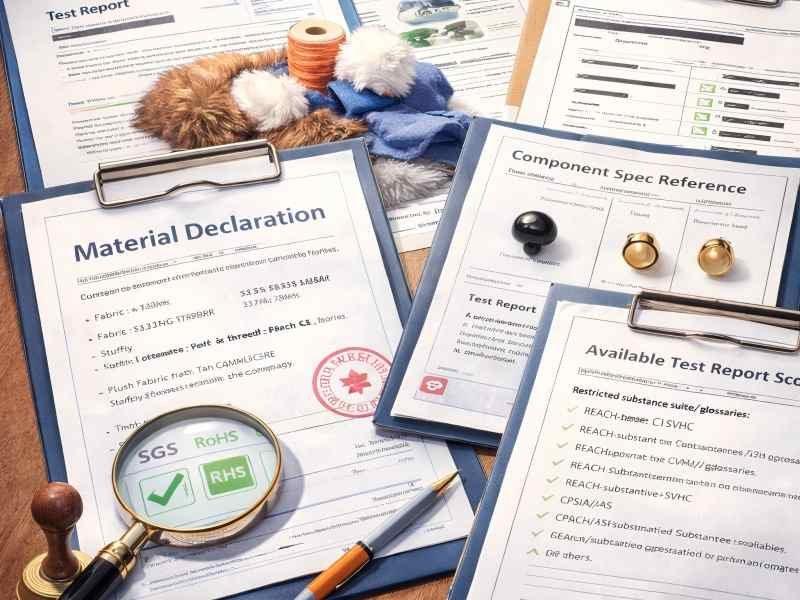
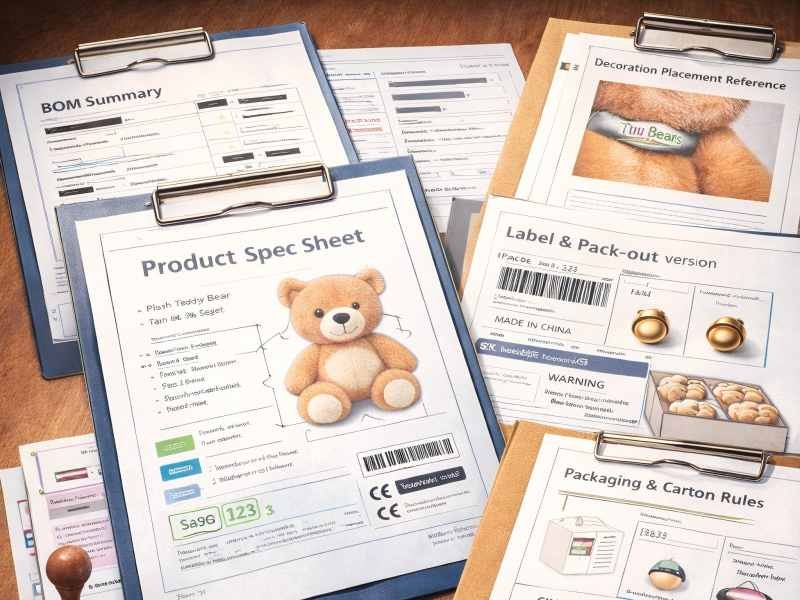
A compliance document pack is built for one outcome: a complete, review-ready file set that can be checked without chasing missing pieces. For custom plush programs, the pack is structured around how approvals actually happen—stable company documents first, product-locked documents after approvals, and lot-linked release records before shipment.
What the pack covers (audit must-haves)
How the pack follows a custom program timeline
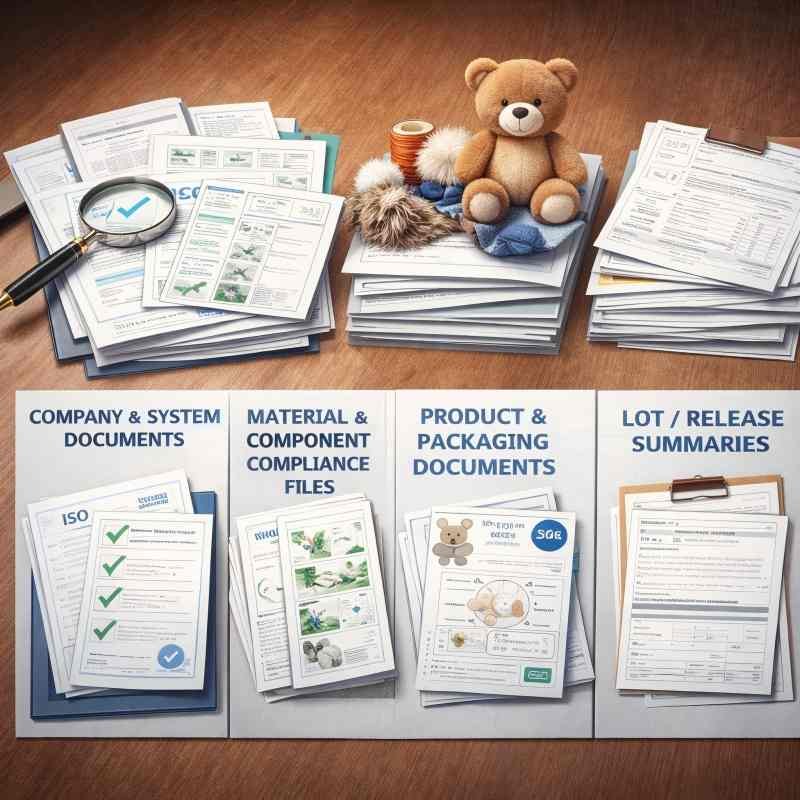
Document Map by Project Stage
Document readiness depends on one thing: what has been locked. Files that don’t depend on product specifics can be shared early. Files tied to materials, attachments, labels, or pack-out versions become reliable only after approvals. Lot-linked release records exist only once bulk is ready to ship.
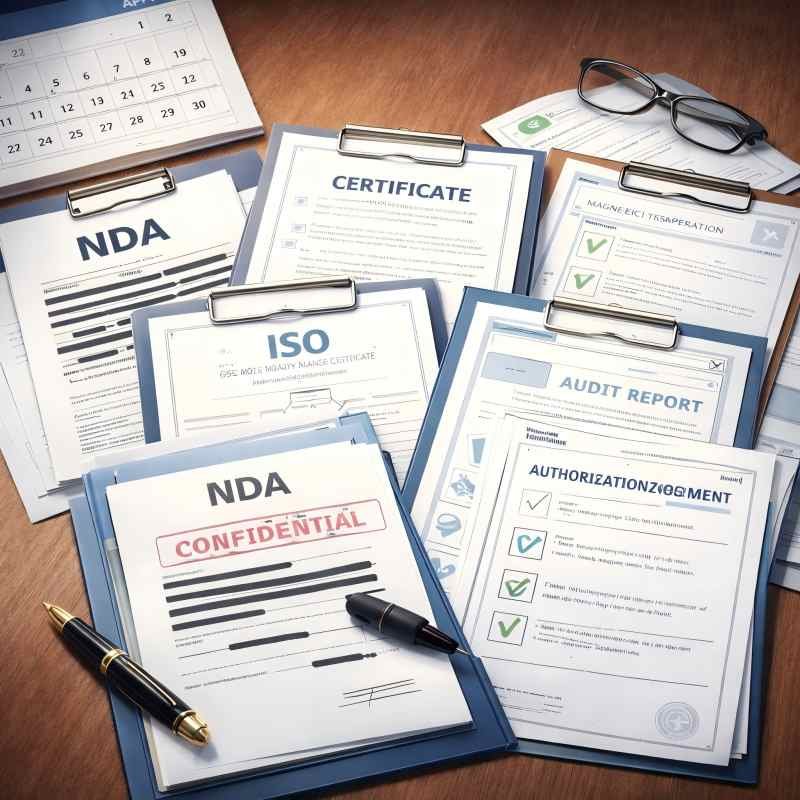
Typically available early because versions are stable:
Status note: Available early / Can be shared in redacted form
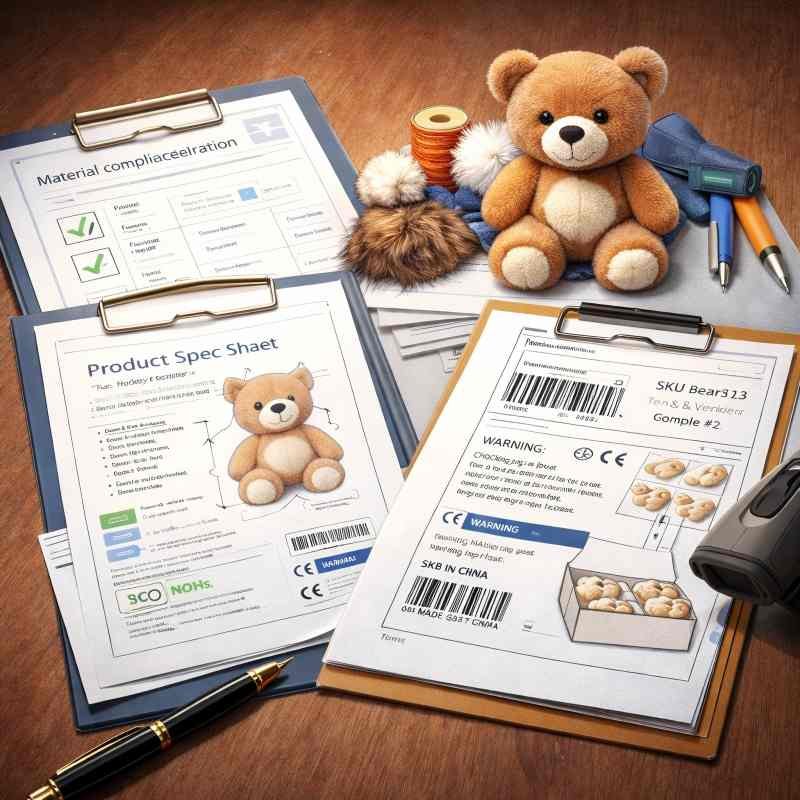
Becomes meaningful only after these are frozen: materials, structure, attachments, decoration placement, labels, and pack-out version.
Typical outputs:
Status note: Requires approval lock / May include third-party items if requested
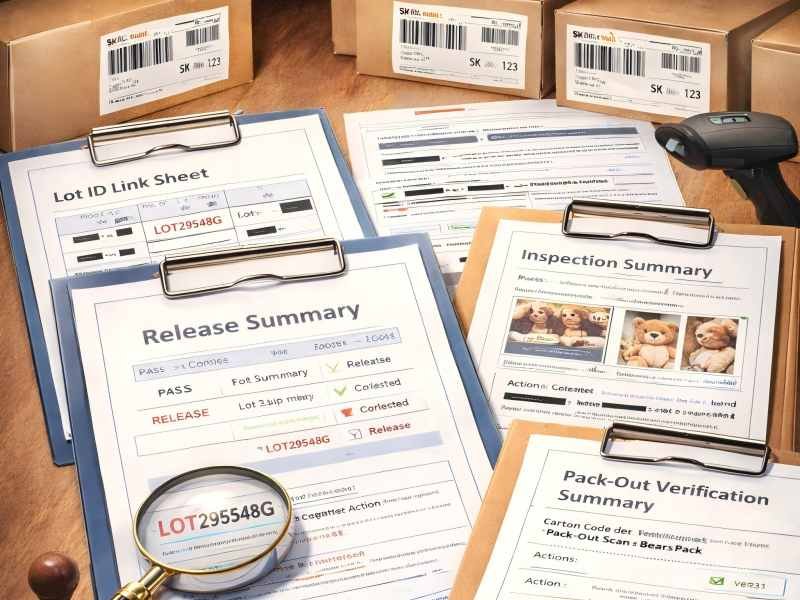
Exists only when bulk is ready for shipment and can be tied to a specific lot/batch:
Status note: Only available pre-ship / Some items may depend on third-party testing timelines
Audit-friendly files, clearly grouped and versioned
Below is the document inventory typically used for custom plush compliance reviews. Items are grouped the same way QA teams review them: system first, then materials, then product/pack-out versions, then lot-linked release proof. Availability and format depend on the program stage and confidentiality scope.
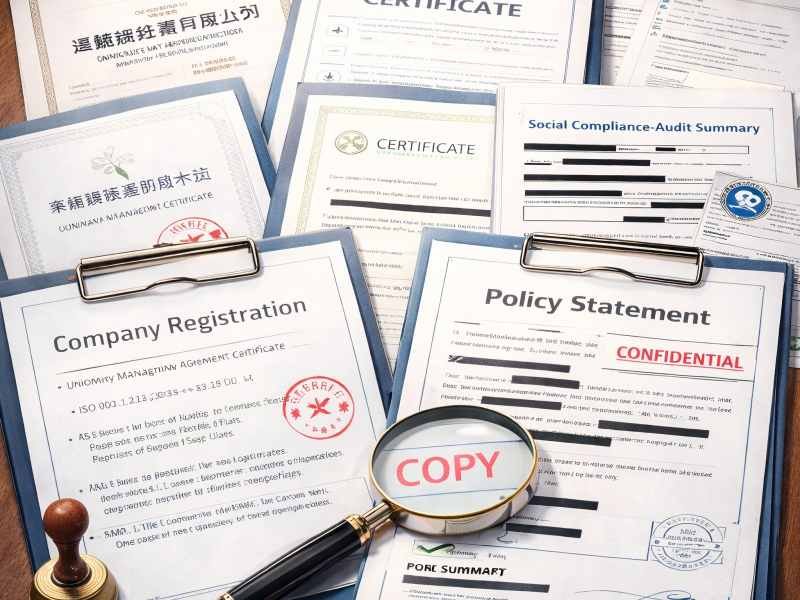
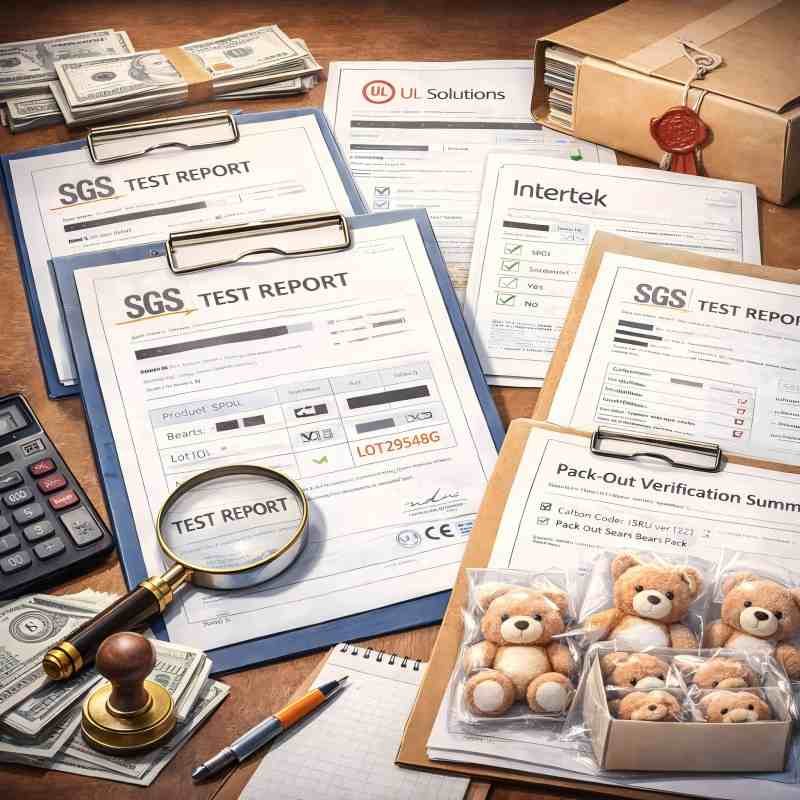
Compliance documentation becomes confusing when test reports, internal declarations, and market-specific requirements get mixed together. This section separates what is typically available as documentation, what must be commissioned as third-party testing, and what varies by market/channel/product risk—so responsibility and cost are clear upfront.
What is “third-party testing” (independent lab reports)
These are reports issued by an external accredited lab. They have lead time, require samples, and carry a program cost.
What is “buyer-nominated lab / buyer-specified testing”
Some programs require a specific lab, a specific test plan, or a retailer/platform format.
What is “internal documentation” (non-lab files)
These are files that support audit readiness but are not lab reports:
Company/system documents and policy-level statements
Material and supplier declarations (IP-safe versions when needed)
Versioned product/pack-out documents (spec page, label mapping, packaging version page)
These can often be shared as templates, summaries, or redacted examples early in the program.
What changes by market, channel, and product risk
Some documentation requirements shift based on:
Target market and distribution channel (retail vs e-commerce vs gifting programs)
Age grading intent (especially when small parts, magnets, or functional components exist)
Accessory type (hardware, weights, magnets, electronic modules)
Packaging and labeling scope (warnings, inserts, barcode/SKU mapping formats)
The document pack is built around the program’s target path so the file set matches what will be reviewed.
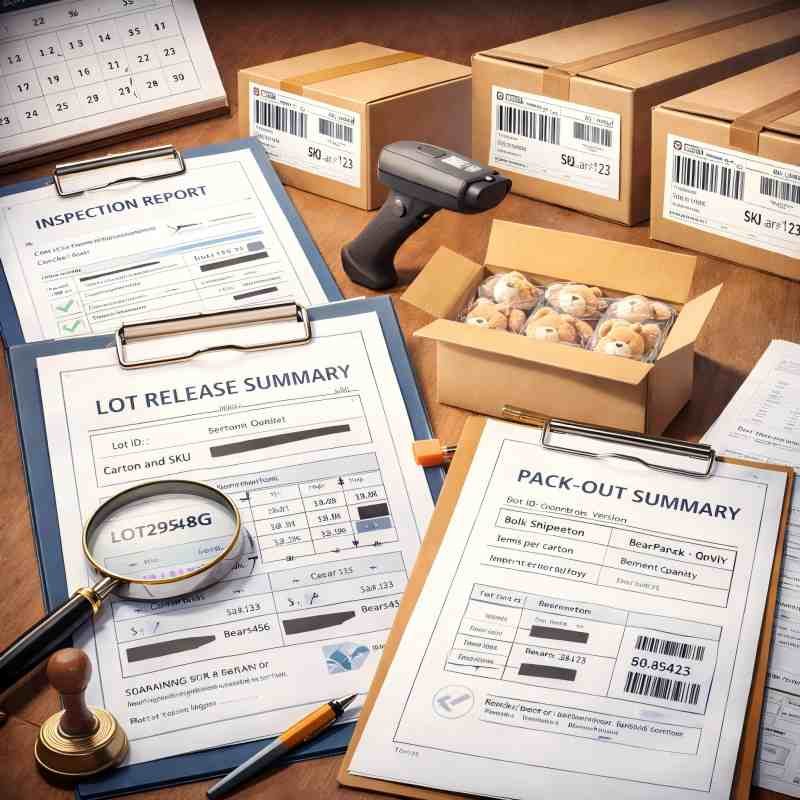
An audit-ready document pack is built for fast verification by procurement, QA, compliance teams, and licensors. It is not a folder of PDFs—it’s a structured, version-linked set where every file is identifiable and traceable to the SKU and shipment.
The structure and naming rules are locked right after sample approval to prevent drift. Lot- and shipment-linked records are appended before release, so audits avoid the two most common failures: missing documents and documents that don’t match the approved version.
1) One naming rule across the entire pack
Every file follows the same identification fields so a reviewer can tell what it belongs to without opening it:
This makes it possible to confirm, at a glance, whether the file belongs to the correct product version and shipment lot.
2) Three-layer structure (so reviews don’t get messy)
Files are grouped into three folders that match how audits are actually reviewed:
This prevents mixing “general certificates” with “product-specific” and “lot-specific” records.
3) A traceability page sits on top (the pack’s control center)
The first page in the pack is a simple control sheet that includes:
This turns the pack into a review tool, not a file dump.
4) IP-safe sharing rules are built in by default
Some documents can be shared in full, while others contain sensitive supplier or internal information. The pack clearly labels what can be provided as:
Sensitive information is masked in a consistent way, so audit needs are met without exposing internal details.
Q1: Can “all compliance documents” be provided for every project?
A fixed “all documents” set does not exist for custom plush. Document scope depends on target market, sales channel, age intent, and product configuration (attachments, magnets/weights, electronics, packaging/labeling). A realistic checklist is aligned early so required items are not missed—and unnecessary testing is not commissioned.
Q2: Can a nominated lab be used and still keep the pack audit-ready?
Yes. Lab choice does not break pack clarity. Reports from a nominated lab can be placed into the same pack structure with version linkage (SKU/spec/pack-out version) and the same top-level index and traceability page, so internal stakeholders can review without re-organizing files.
Q3: What usually causes missing documents at shipment time?
Most gaps come from predictable causes:
Scope not aligned early (market/channel/age intent not confirmed)
Late spec or pack-out changes that invalidate earlier files
Testing not treated as a milestone (lead time and sample readiness not planned)
A stage-mapped checklist prevents these by defining what is needed, when it becomes available, and what must be commissioned.
Q4: Can QC documents be shared inside the pack?
QC evidence can be included in IP-safe form when requested: redacted templates, summary formats, and cropped snapshots that support audit review without exposing sensitive internal details. Scope depends on program requirements and confidentiality boundaries.
Send target market, product type, and key risk features. Receive a project-specific checklist, a stage map, and the pack index format for review.

I am Lumi, our team would be happy to meet you and help to build your brand plush.