Brand mascots · team characters · corporate icons · event giveaways · retail merch · creator mascots · campaign plush
Mascot plush is a brand object. It must read instantly from across a room, look correct on camera, and stay consistent across hundreds or thousands of units. The risk isn’t making one cute prototype—the risk is identity drift: the face shifts, the colors don’t match, the logo moves, the silhouette collapses, and the “same mascot” becomes multiple versions.
A mascot plush that works must deliver:
Last updated:Feb. 28, 2026 · Applies to: Custom mascot plush (brand identity programs) · Channels: Retail / Events / 3PL / Retail DC / DTC / FBA-like · Covers: identity lock → on-model sample approvals → bulk repeatability → logo/label pack-out readiness
From Concept to Production: Brand guidelines → Plush reality
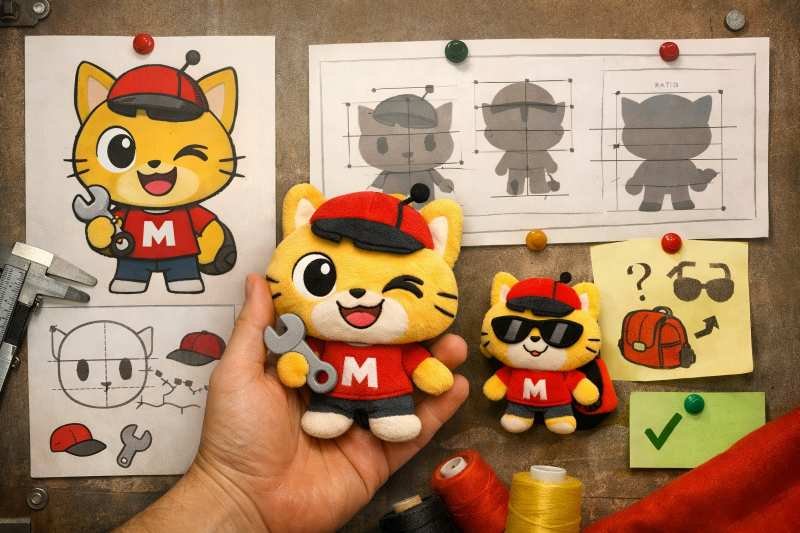
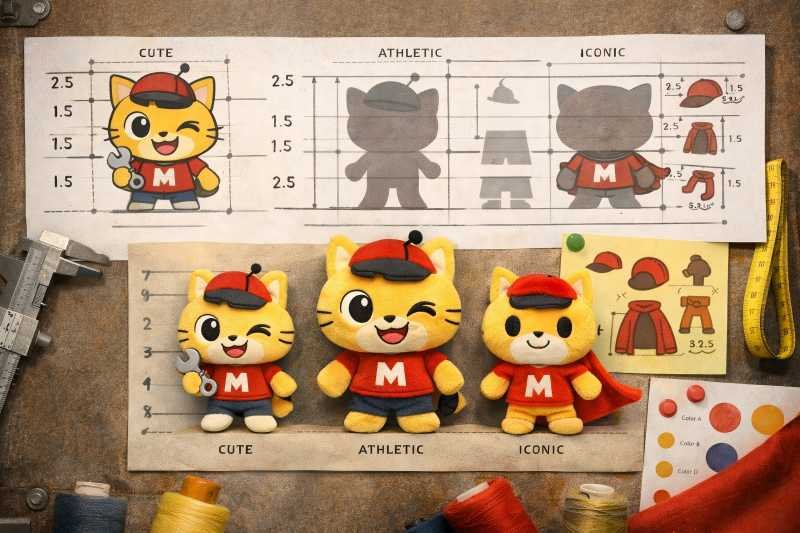
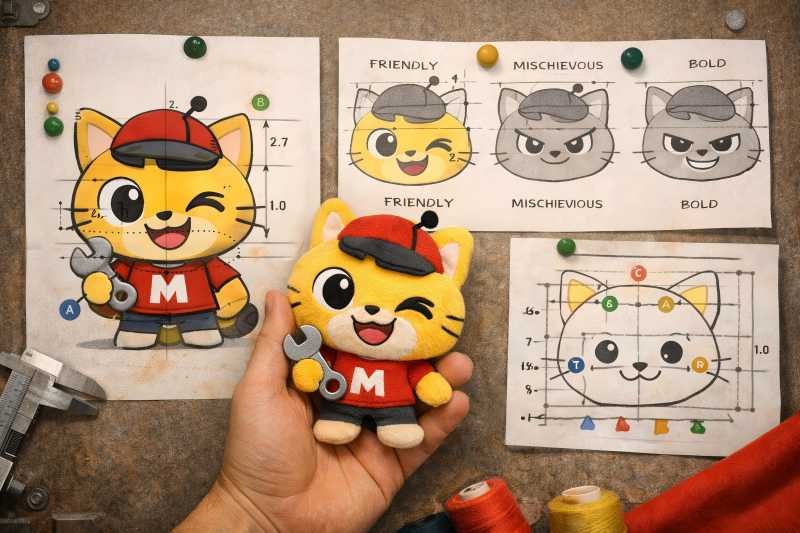
Most vendors can “sew a plush.” A professional plush manufacturer runs a development system so your team can approve confidently—and bulk stays aligned to what you signed off.
These are the checks that typically determine approval speed and whether reorders are possible.
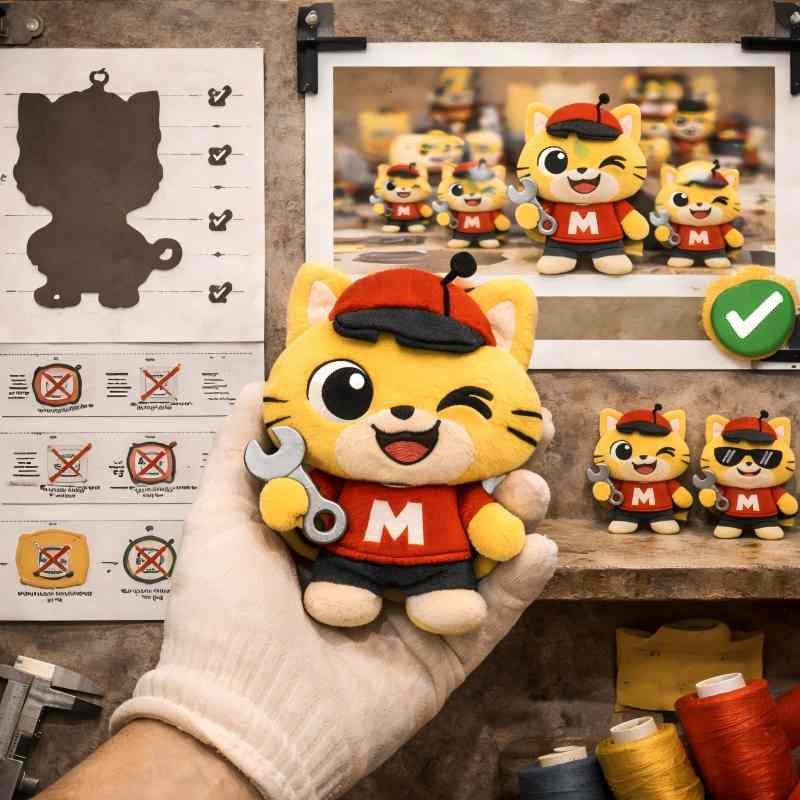
A mascot plush must read correctly in one second—from a shelf, a stage photo, or a fan selfie. The test is not “is it cute,” but “is it unmistakably us.”
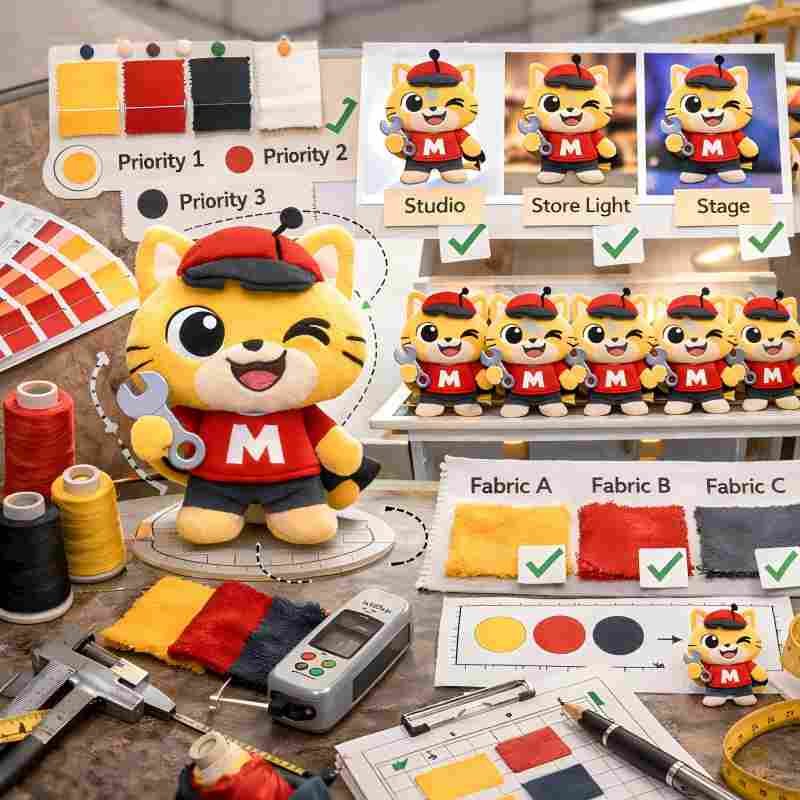
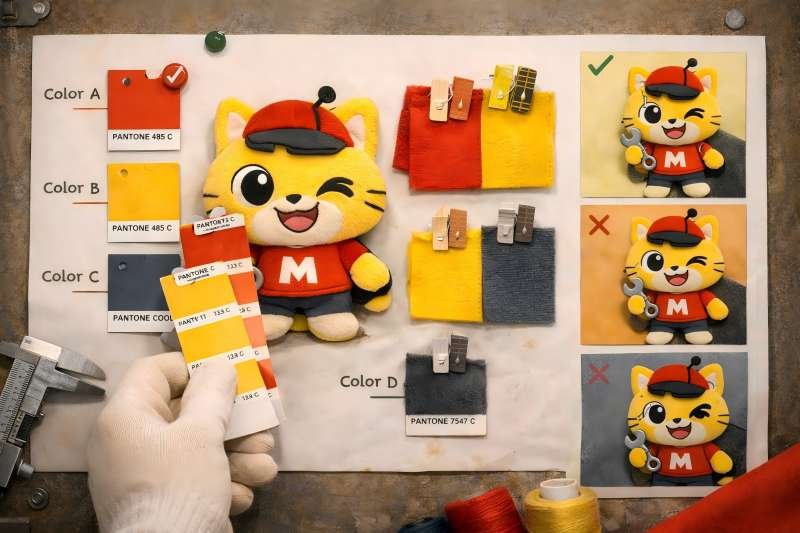
For mascots, color is part of brand code. The real question is: does it look brand-right under real lighting?
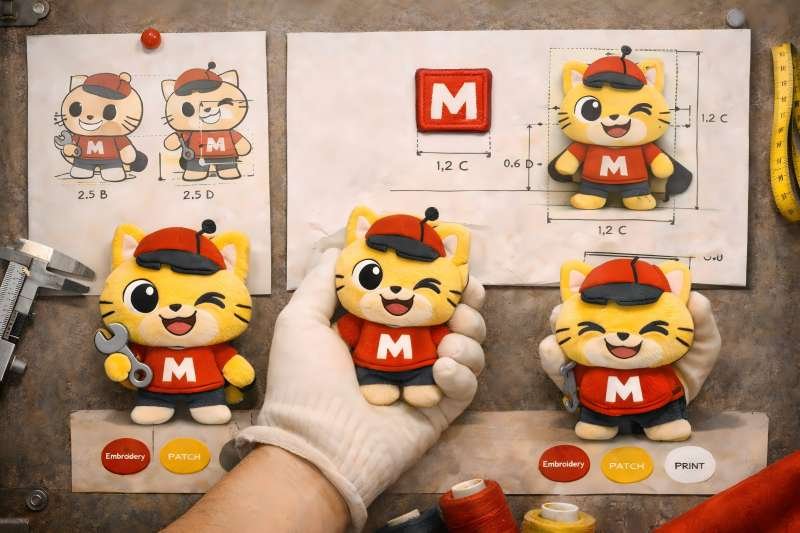
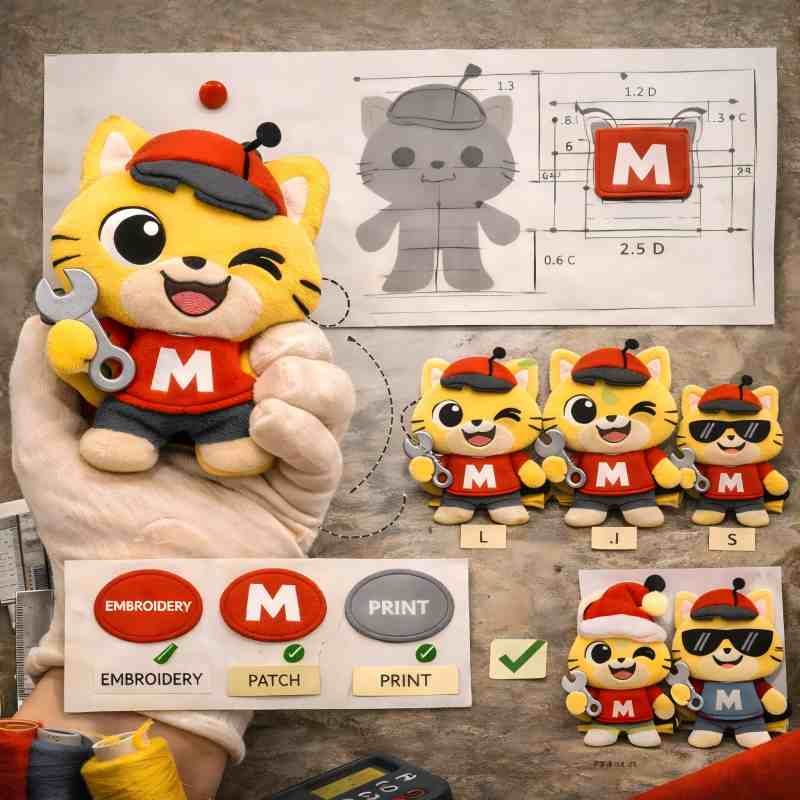
Logo treatment is where brands get hurt, because small drift looks like sloppy brand execution.
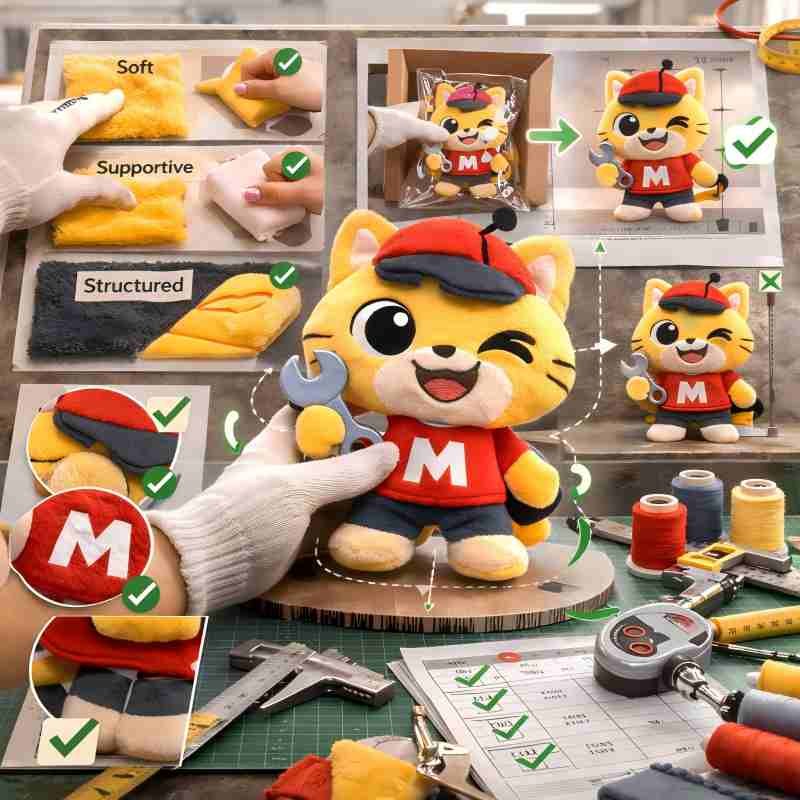
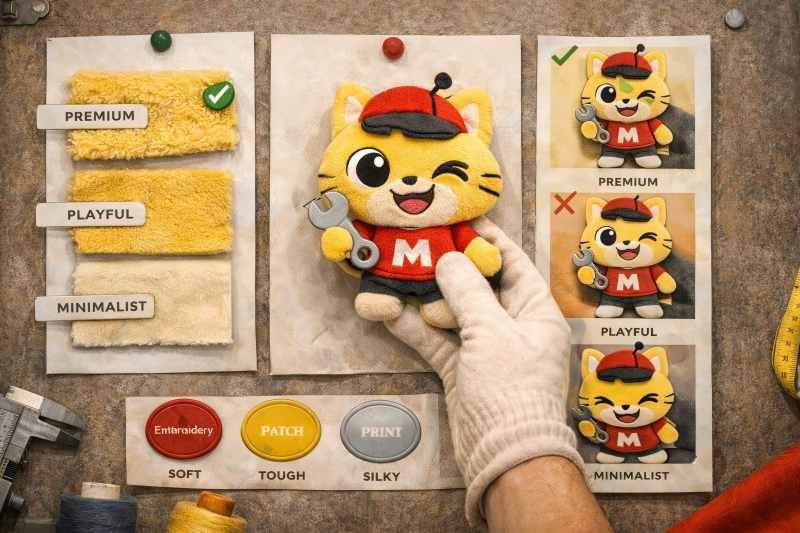
Mascot plush often becomes a gift, a prize, or a collectible. It has to feel premium in hand, not only look good.
High-end buyers evaluate mascots as a program asset. If reorders drift, the brand ends up with multiple “official” versions.
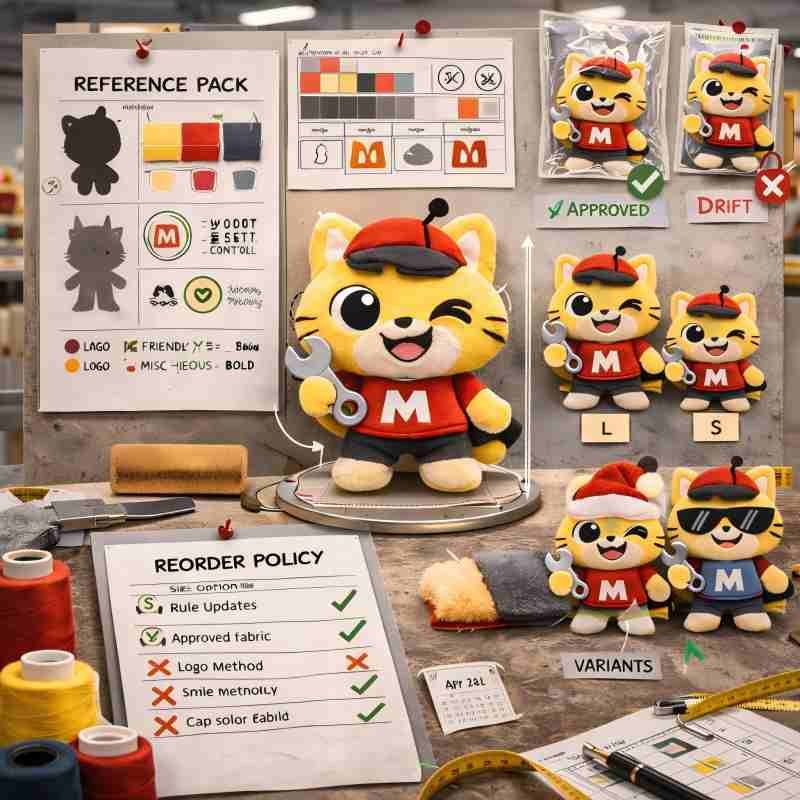
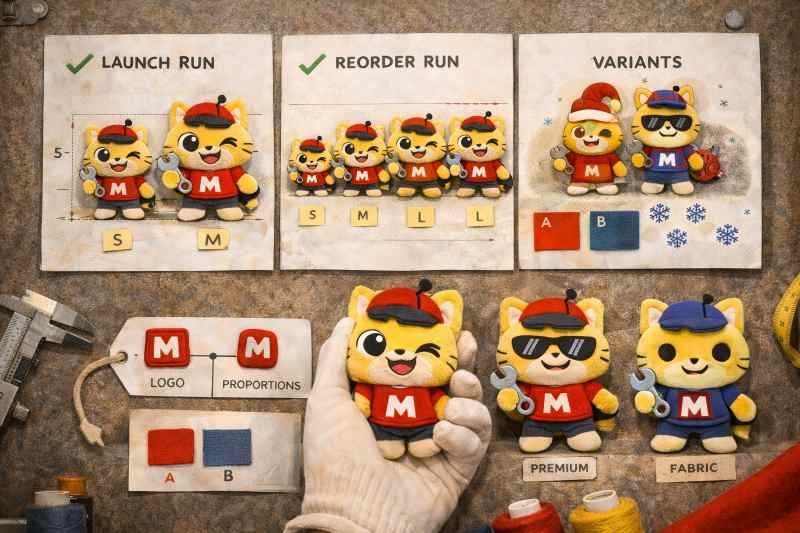
Mascots are used in different programs; the format changes what must be controlled.
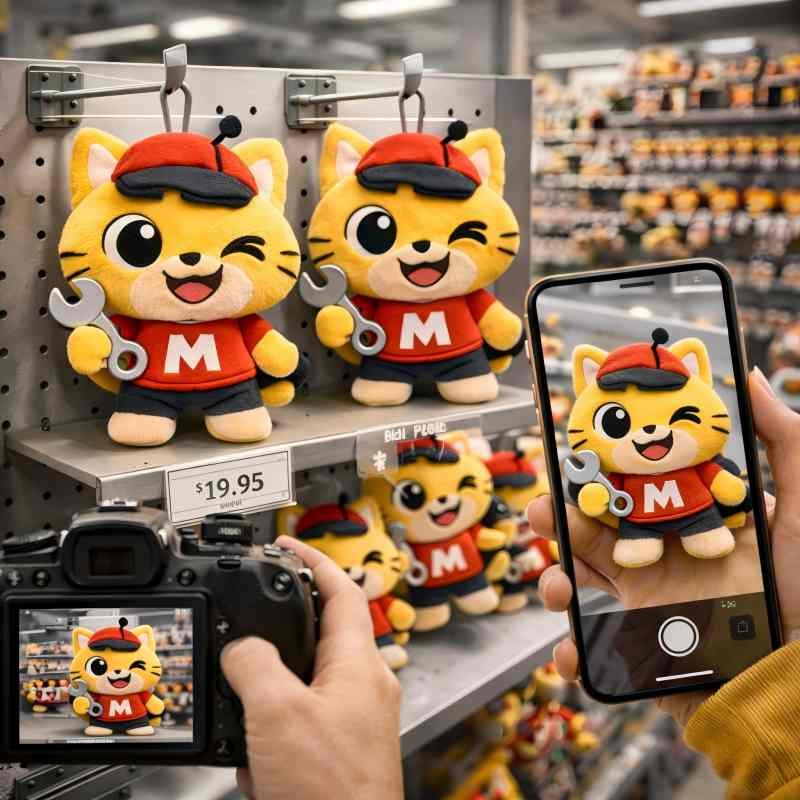
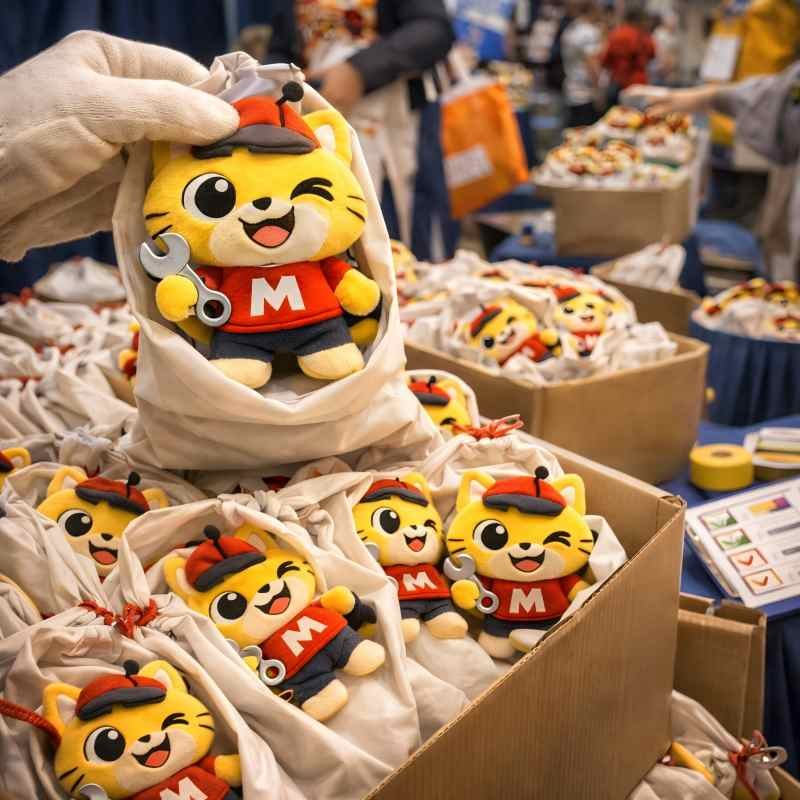
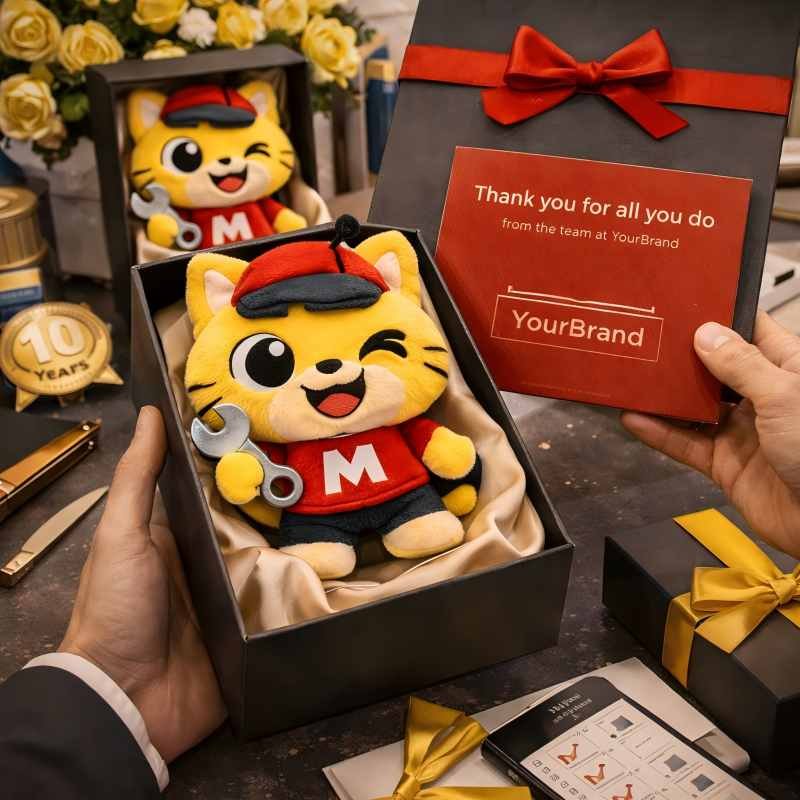
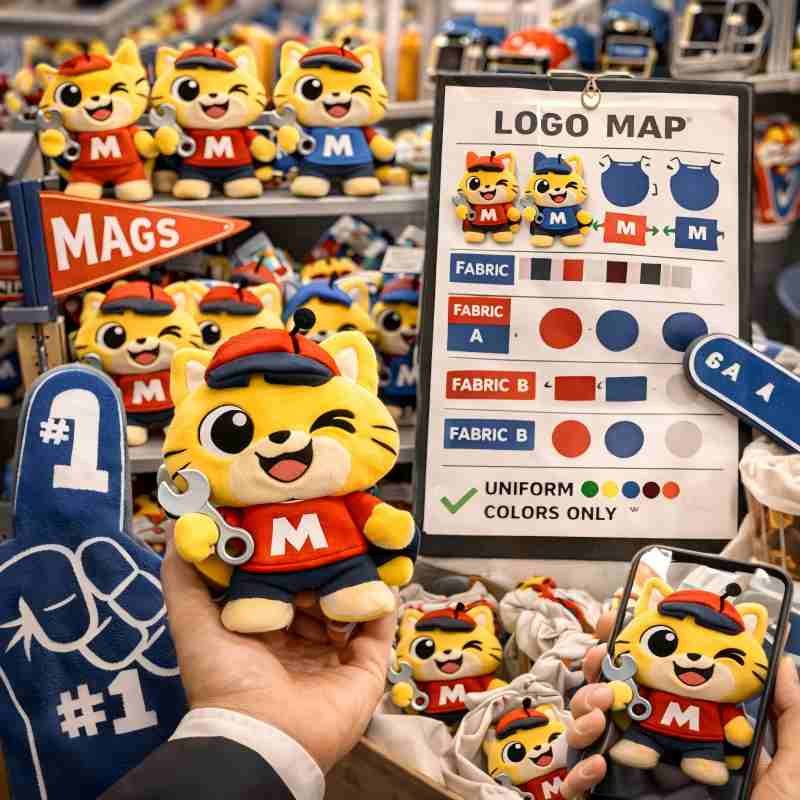
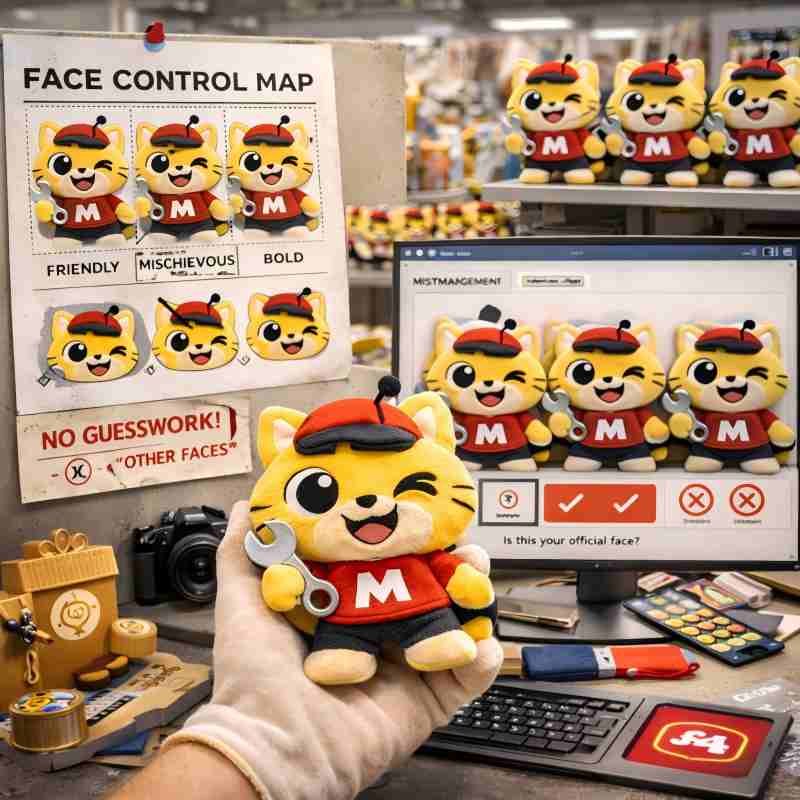
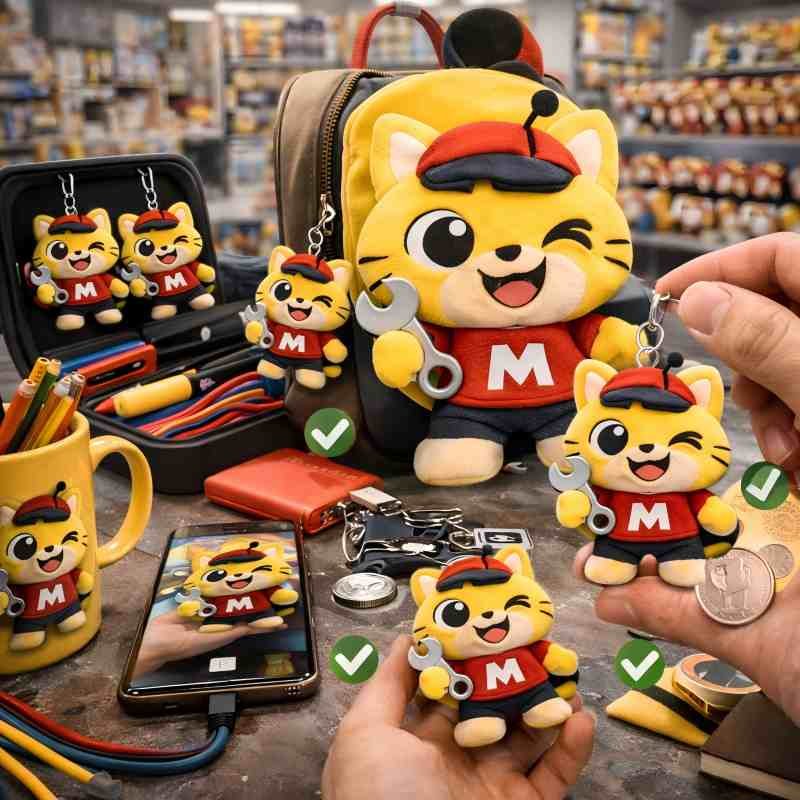
Mascot plush is judged in photos as much as in hand. What matters is not just softness—it’s whether the surface preserves the mascot’s shape language under real lighting, real handling, and real packing pressure.
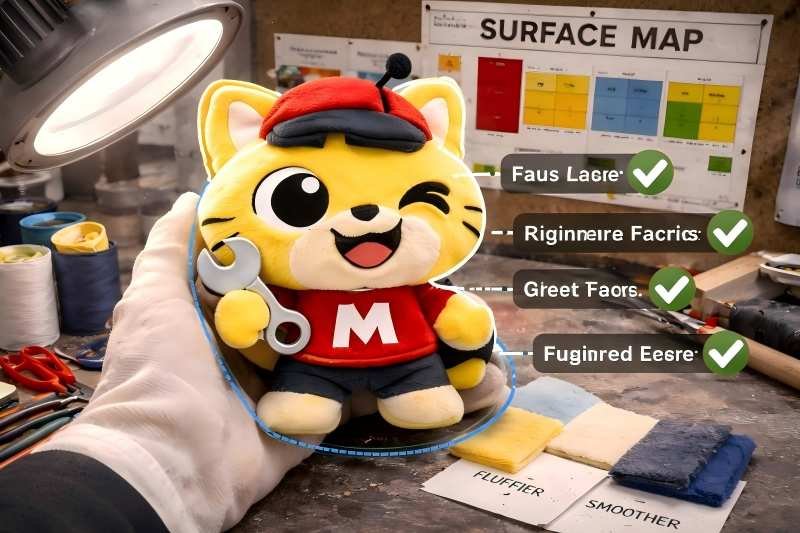
A mascot has areas that must stay visually clean so the character reads instantly (typically the face zone, signature shapes, and key silhouettes). We define which panels must stay camera-clean and which panels can carry more texture.

Pile direction changes how the same fabric looks—left vs right can appear like two different tones under the same light. For mascots, that creates “asymmetry” even when measurements are correct.
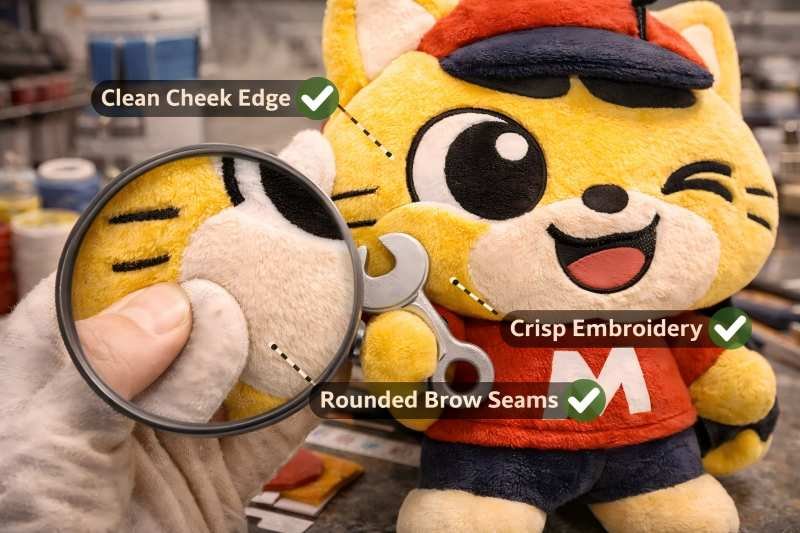
Mascots rely on crisp boundaries: cheeks, brows, mouths, iconic outlines, and signature shapes. The surface must support clean edges without turning the product into a stiff gadget.
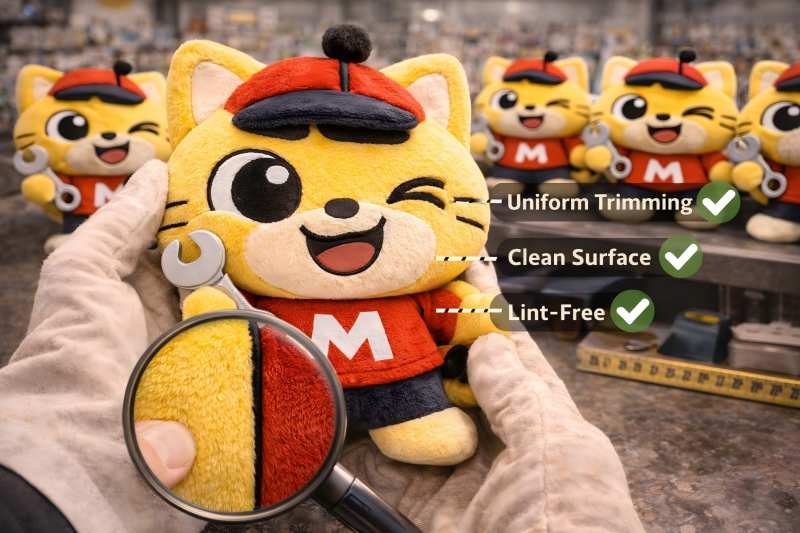
Many mascot projects pass the sample but fail in bulk because finishing is not a controlled standard—trimming depth, brushing pressure, lint removal, and surface cleanup become operator-dependent.
Instead of “looks nice,” we set finishing expectations that are repeatable:
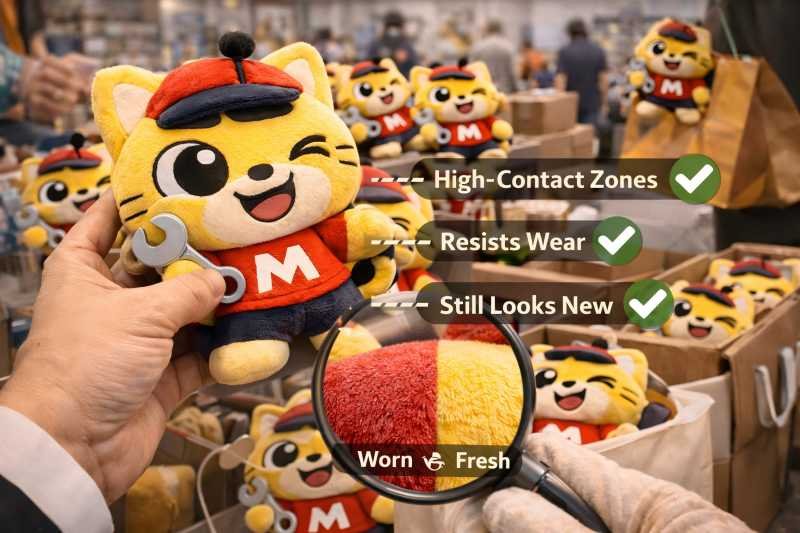
Mascot plush gets hugged, waved, stacked, and handled repeatedly—especially in events and retail. Surfaces must be selected and finished with wear behavior in mind, not only first impressions.
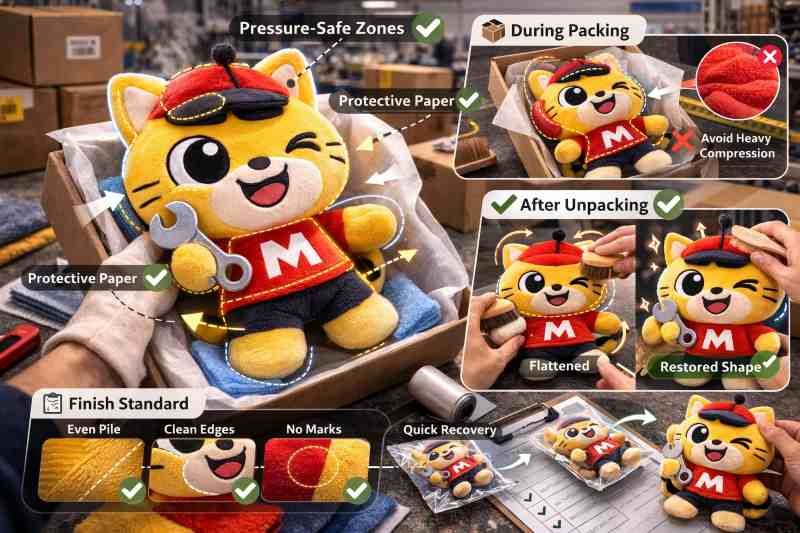
Some premium surfaces show pressure marks, direction change, or flattening after shipping. Mascot plush needs a surface plan that considers how it will be packed and how it should recover.
What this surface system gives you (without adding complexity)
This focuses on mascot-specific customization that affects identity and consistency.
Proportions are the first thing audiences read—often before they see the face. The risk is approving a sample that looks right from one angle, then discovering bulk looks like a different character because posture and ratio drift.
What matters most:
The mascot pack result: A silhouette that reads the same on shelf, on stage, and in a customer’s photo.
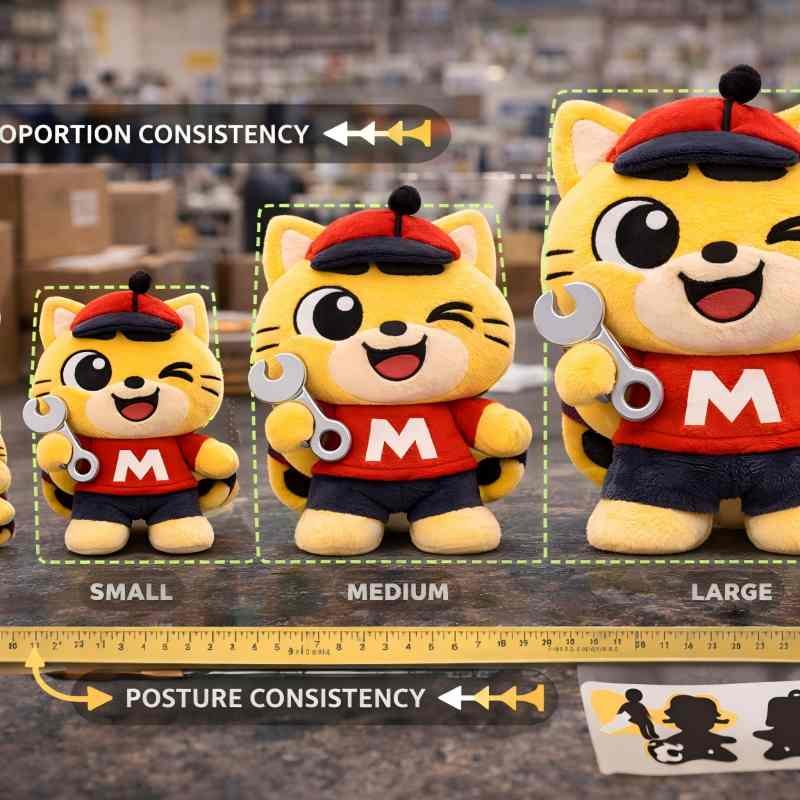
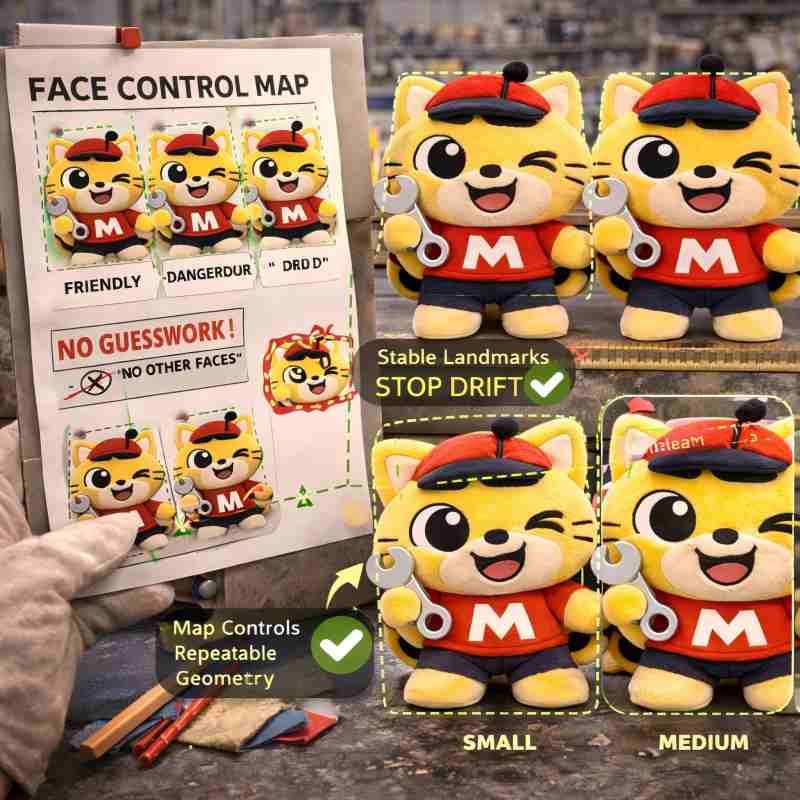
Mascot plush fails fastest when the face becomes “many versions.” Even tiny drift in eye spacing or mouth curve creates different moods—and your brand ends up with multiple “official” mascots.
What gets controlled:
The mascot pack result: A face that stays recognizably the same character, even across different production days and reorders.
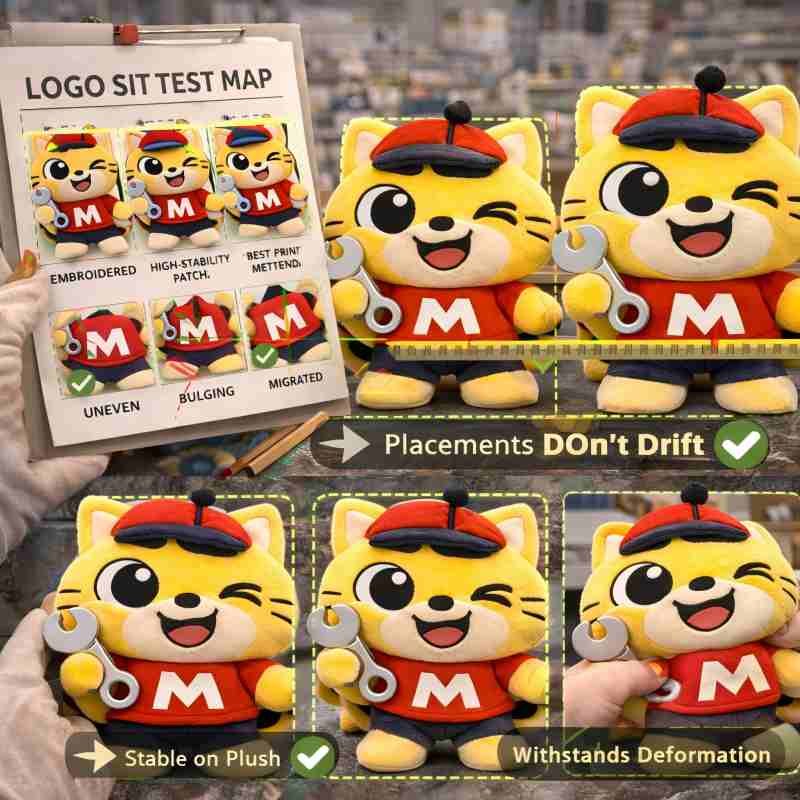
Logos on plush are deceptive: they can look perfect on a flat sample photo and fail in real life once the plush is squeezed, bent, or packed. High-end brands treat logo application as a controlled system, not a styling choice.
How brand teams evaluate it:
The mascot pack result: A logo that looks intentional and consistent, not “applied differently” across units.
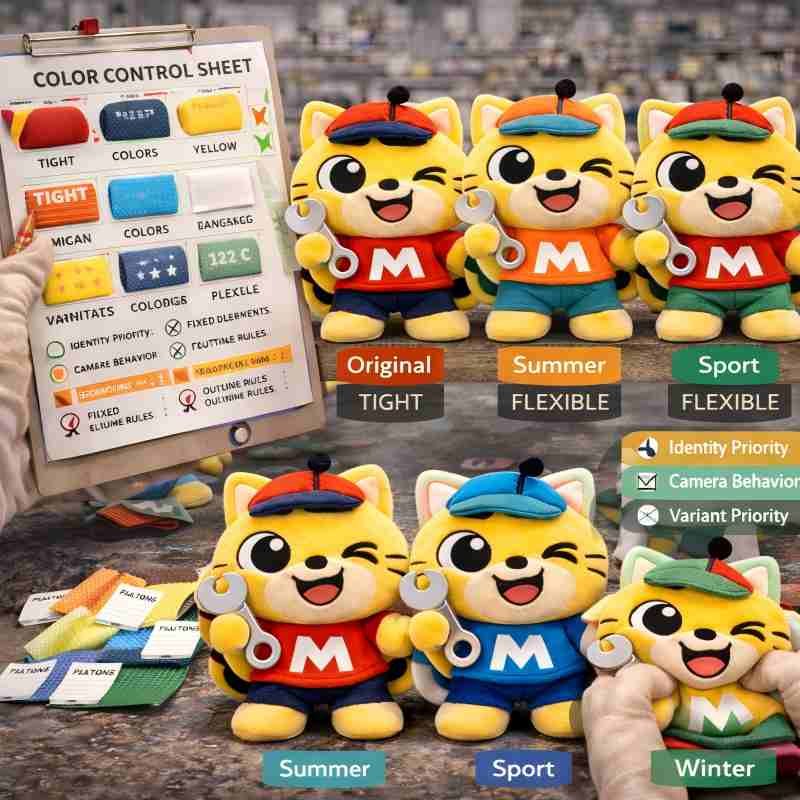
Mascot color is not just aesthetics—it’s brand recognition. Fabric dye reality means “exact Pantone” is not always literal, so the premium approach is to control color with priorities and camera behavior.
What makes color controllable:
The mascot pack result: Color that looks brand-right in real photos and remains stable across bulk and reorders.
Mascot plush often becomes a gift, a collectible, or a campaign artifact. Packaging is part of brand perception—and it’s also where operations fail if channel rules weren’t frozen early.
What gets decided here:
The mascot pack result: A mascot that arrives looking premium, presents like an official brand item, and avoids avoidable receiving issues.

Mascot projects move faster when approvals freeze identity in the right order—so teams don’t approve different versions unknowingly.
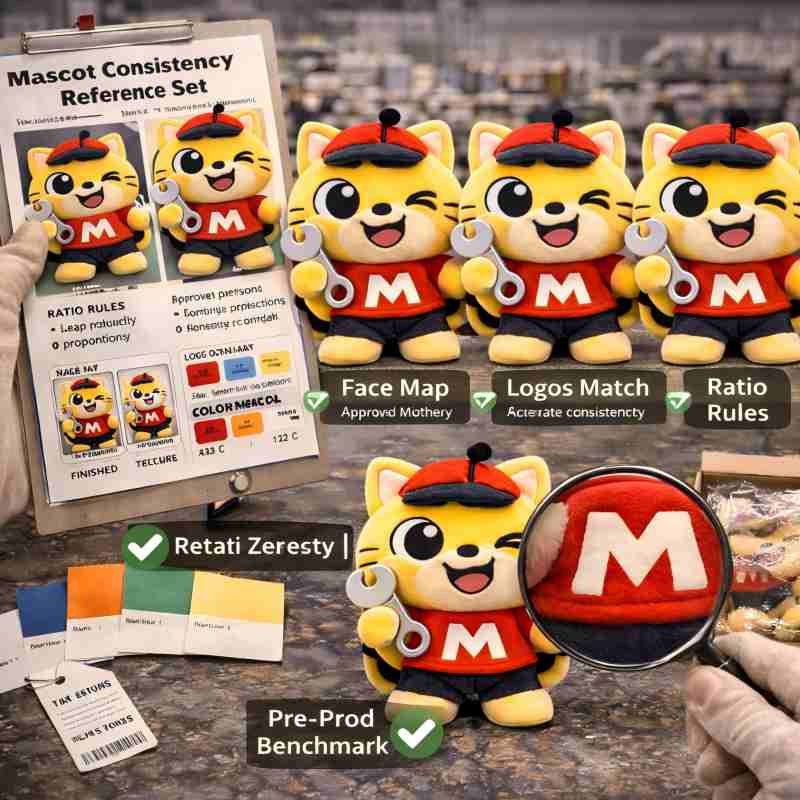
Mascot plush needs “identity QC,” not only general QC.
What gets checked for identity consistency
What your team can keep as proof (Mascot Consistency Pack)
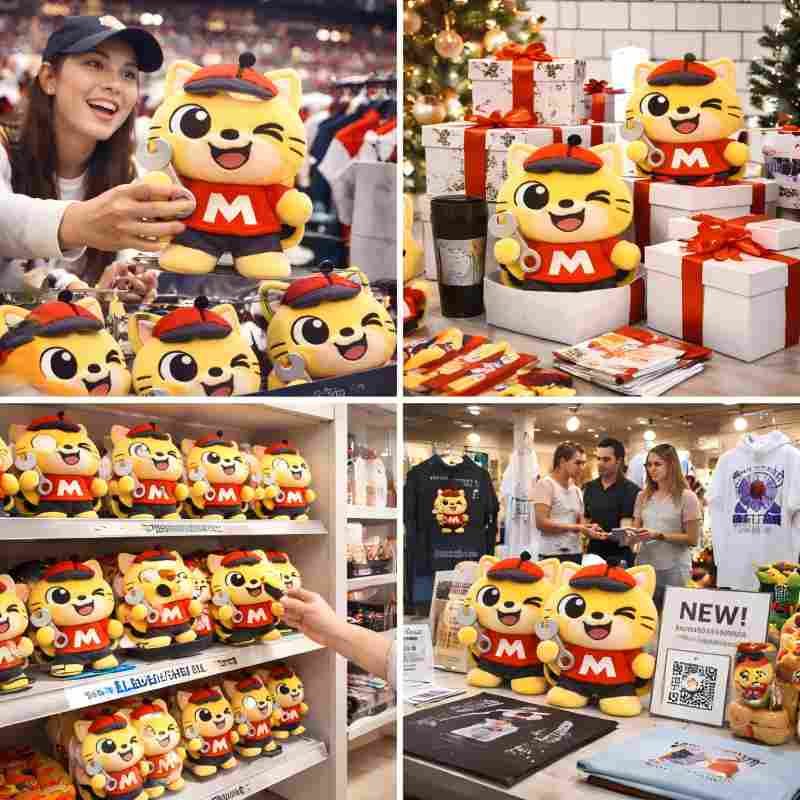
Plush programs show up across many launch patterns and channels:
Common receiving setups include: 3PL warehouses, retail DCs, DTC fulfillment, and FBA-like check-in environments.
1) What’s the most common mascot failure?
Identity drift—face, proportions, or logo placement changes between sample and bulk. That’s why we lock ratio rules and placement maps early.
2) Can you match our brand colors exactly?
We can align closely, but fabric dye reality matters. We recommend a color priority system so the most visible brand colors get the tightest control.
3) How do you keep the face consistent in bulk?
By freezing an expression boundary and using a face placement map with measurable reference points.
4) What’s better for logos: embroidery, patch, or print?
It depends on size, placement, and surface fabric. The best choice is the one that stays stable and clean in bulk.
5) Can we run multiple sizes or variants of the same mascot?
Yes. Ratio rules protect identity across sizes; version control prevents multiple mascot “editions” accidentally.
6) Can we do gift packaging and inserts?
Yes—pack-out is treated as part of the program so it matches your channel and receiving rules.
If your mascot plush must stay on-model across bulk and reorders (and survive internal brand review), use this approval-driven build path. It’s designed to prevent “multiple mascot versions,” logo drift, and late resets.
Step 1 — Align the Mascot Identity (Fast Lock)
You send: mascot artwork + brand guide (colors/logos) + target sizes + where it will be used (retail/event/gift).
You receive: Identity Lock Checklist (silhouette priorities, expression boundary, scale rules) + a “what cannot change” summary.
Step 2 — Prototype for On-Model Proof
We build: a prototype that proves recognition, expression, and surface behavior (camera-read zones).
You receive: Prototype Review Sheet (pass/fail notes + revision scope) so your team can approve one “official” direction.
Step 3 — Freeze Brand Details (Logo + Color + Methods)
We finalize: logo method + measurable placement map + color priority rules for bulk stability.
You receive: Brand Detail Pack (logo placement map, decoration method spec, color priority sheet).
Step 4 — Pre-Production Benchmark + Pack-Out Readiness
We validate: repeatability and finishing standards before bulk; align packaging/labels to your channel.
You receive: Bulk Benchmark Set + Must-Not-Change List + Ship/Receive Checklist (labels, carton mapping rules, pack-out steps).
We reply with the recommended path and input checklist within 1 business day.
This form is built for accurate quoting—size, quantity, materials, accessories, and compliance needs. The more complete your brief, the fewer revisions and the faster your sample can start.

I am Lumi, our team would be happy to meet you and help to build your brand plush.