Custom Holiday Plush Built for Hard Launch Dates and Clean Receiving Windows

Seasonal plush · Christmas · Valentine’s · Halloween · Easter · Lunar New Year · gift sets · ornaments/plush add-ons · retail & DTC

Holiday plush is schedule-driven. The “design” matters, but the winning factor is whether the product is approved, produced, packed, and delivered inside a narrow receiving window—without rework caused by late packaging rules or seasonal material shortages. A strong holiday plush program is built around back-planning, early locks, and pack-out discipline so your launch date stays non-negotiable.

Holiday plush programs work best when they deliver:

  • A holiday look that stays on-brand without slowing approvals
  • A back-planned path to your in-hand week
  • Gift-set readiness that won’t break at scale (variants, inserts, and kitting rules frozen early)
  • Pack-out built for peak receiving cutoffs
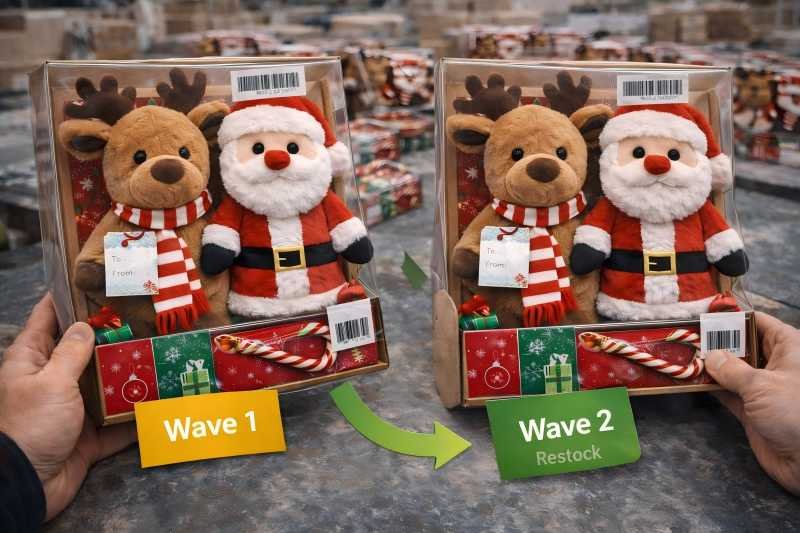
  • A clear “Wave 2” decision (replenish top-sellers fast)
  • A launch plan that treats the date as non-negotiable—miss the window, miss the season

Last updated:Feb. 28, 2026 · Applies to: Custom Holiday Plush (seasonal drops & gift-set programs) · Channels: 3PL / Retail DC / DTC / FBA-like · Covers: back-planning to in-hand week → seasonal trim & variant control → sampling locks → gift-set kitting accuracy → peak-season pack-out & receiving readiness → wave-2 replenishment or close-out plan

What Does a Professional Holiday Plush Manufacturer Control for Launch?

From Concept to Production: The Work Most Suppliers Don’t Show
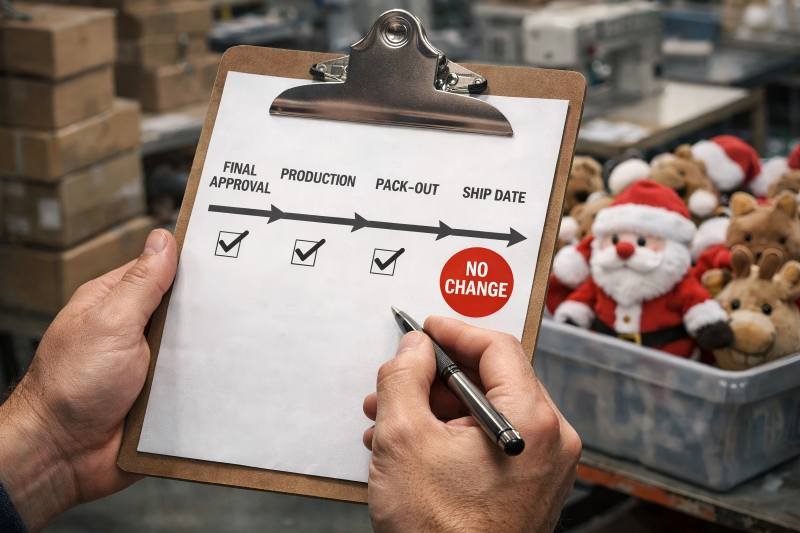
In-Hand Date Back-Plan

  • Confirm the receiving week (when stock must be check-in ready)
  • Back-plan locks: final approval → production start → pack-out freeze → booking cutoff
  • Set no-reset points (changes after this become next-season changes)

Seasonal Trims Reality

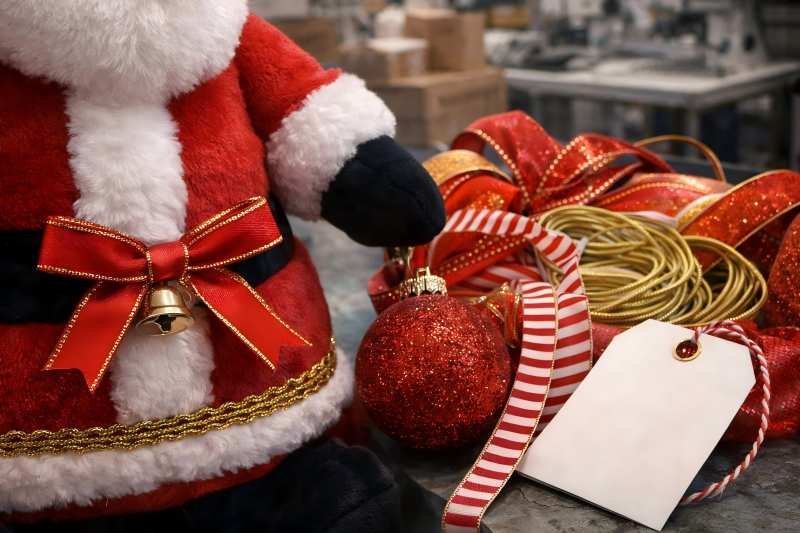
  • Flag holiday risk items early: reds, metallic threads, specialty ribbons
  • Freeze accessory choices that commonly delay: ornaments, hangers, gift tags
  • Prevent bulk substitution drift by confirming trim direction upfront

Sampling Gates Speed

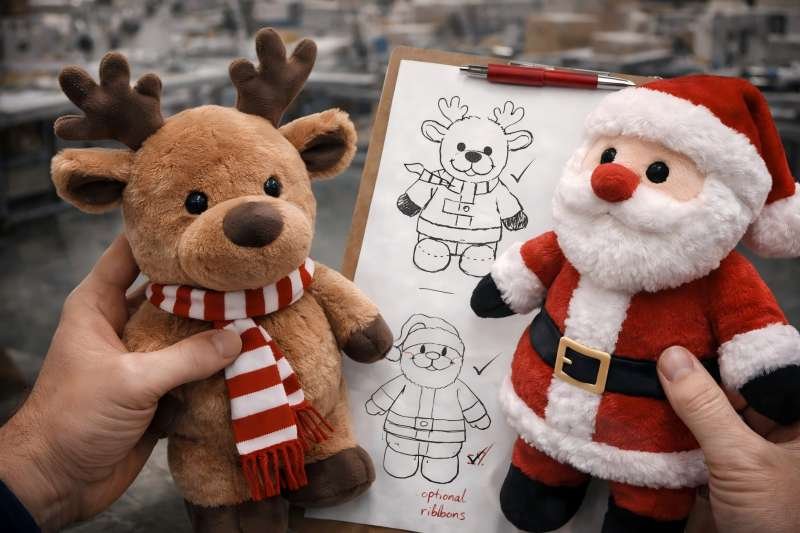
  • Prototype goals focus on season sellability (hero cues, on-brand restraint)
  • Control revisions: must-fix vs optional
  • Option: photo-ready sample for PR and launch content

Gift Set Kitting

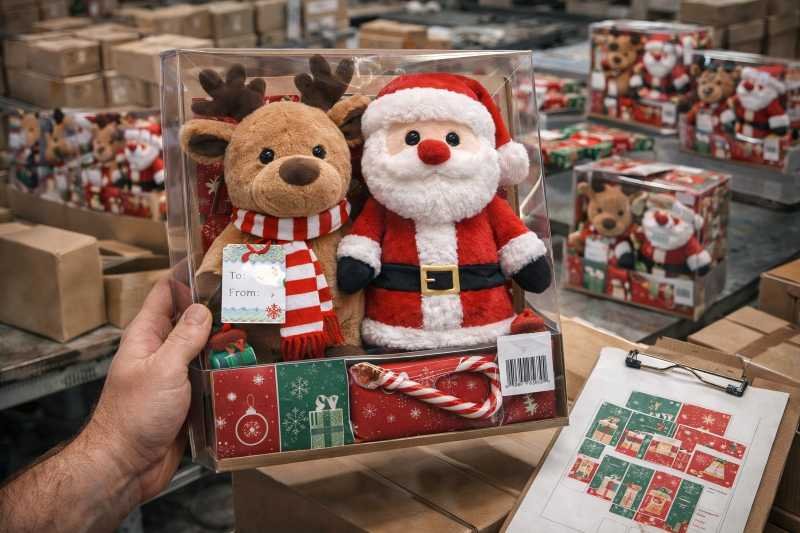
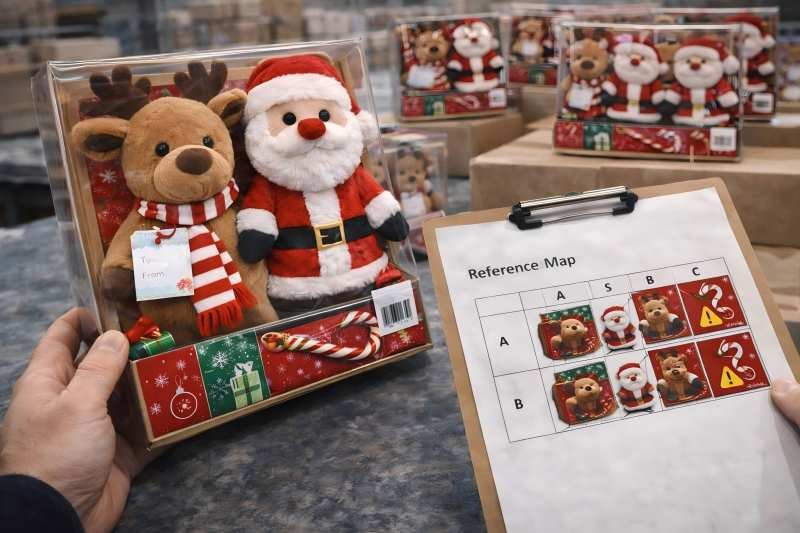
  • Freeze the assortment map (variant → insert → packaging → carton rules)
  • Prevent mis-packs: wrong colorway, wrong tag, wrong insert, wrong count
  • Lock packaging early because it changes kitting steps and timing

Peak Receiving Readiness

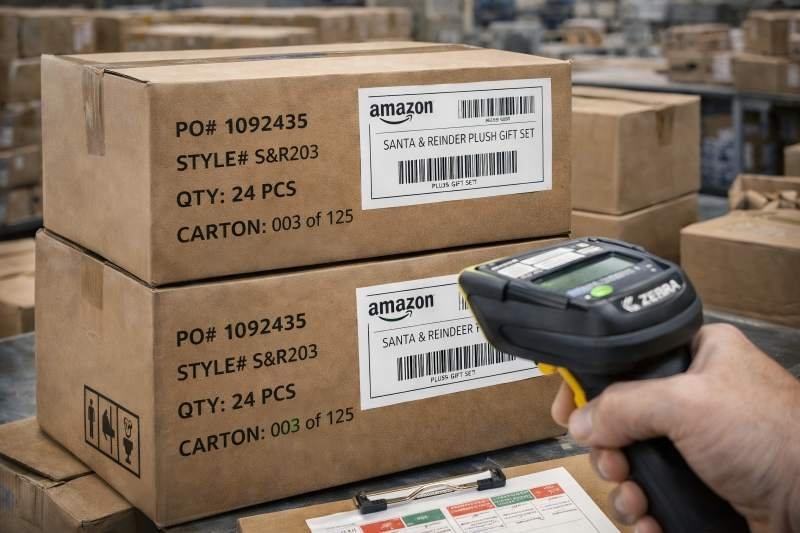
  • Retail DC / FBA-like is pass/fail on labels, carton marks, mapping
  • 3PL requires clean carton mapping (counts, mixed-variant rules)
  • DTC needs consistent bundle integrity (giftable arrival)

Wave-2 Replenishment

  • Decide early: limited one-wave vs top-seller restock
  • Keep materials and benchmarks usable for second runs
  • Avoid “seasonal success penalty” (sold out fast, no repeat path)

Most vendors can “sew a plush.” A professional plush manufacturer runs a development system so your team can approve confidently—and bulk stays aligned to what you signed off.

Where Custom Holiday Plush Projects Usually Break?

When a brand approves a plush partner, the decision rarely hinges on “can you make it.” It hinges on whether the partner can keep the plush consistent, scalable, and channel-ready without resets.

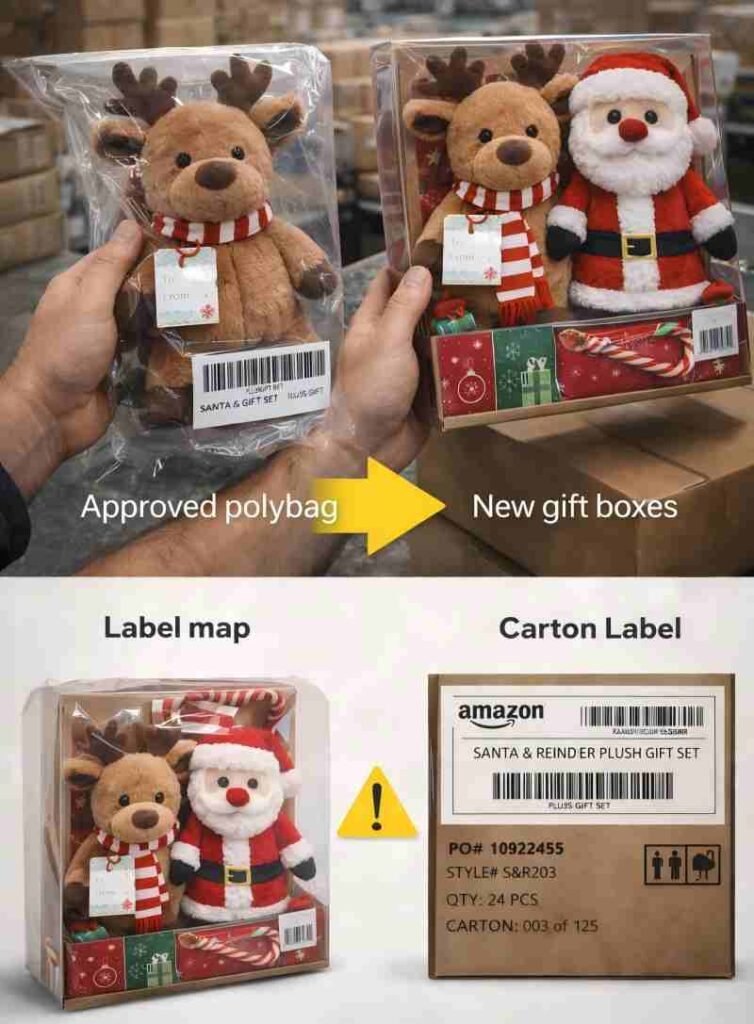
1) Late resets from packaging decisions made “after approval”

Holiday plush often gets approved visually first—then packaging arrives as a separate conversation. That split is what causes late resets: gift boxes change unit dimensions, inserts change kitting steps, and label rules change what the warehouse will accept.

Typical cause: gift box, insert cards, or labeling rules introduced after sampling approval.

What we lock to prevent this:

  • Pack-out format (polybag / gift box / sleeve / set box) before “final sample” approval
  • Label map (unit barcode placement, warnings if needed, carton marks) before printing
  • Kitting boundaries: what can still change late (copy text) vs what cannot (pack size, box structure, barcode positions)

High-end launch discipline: packaging is treated as part of the product, not decoration. If it changes the unit footprint or receiving workflow, it is a “version change,” not a “minor edit.”

2) Seasonal trims become unavailable or inconsistent

Seasonal trims create two risks that don’t exist in normal programs: availability peaks (everyone buys at the same time) and visual drift (metallics, reds, ribbons vary between batches).

Typical cause: specialty ribbons, metallic threads, or themed accessories selected too late.

Holiday-specific controls that matter:

  • A Trim Freeze List: the exact trim family and finish level you’re approving (not just “red ribbon”)
  • A pre-approved substitute rule for high-risk items (e.g., alternative metallic thread family) so the project doesn’t stop if a trim becomes unavailable
  • A “no-surprise” rule: if the trim affects shelf appearance (metal shine, ribbon weave, ornament look), it must be frozen before bulk scheduling

What brands get wrong: treating trims like easy add-ons. In holiday programs, trims are often the longest pole.

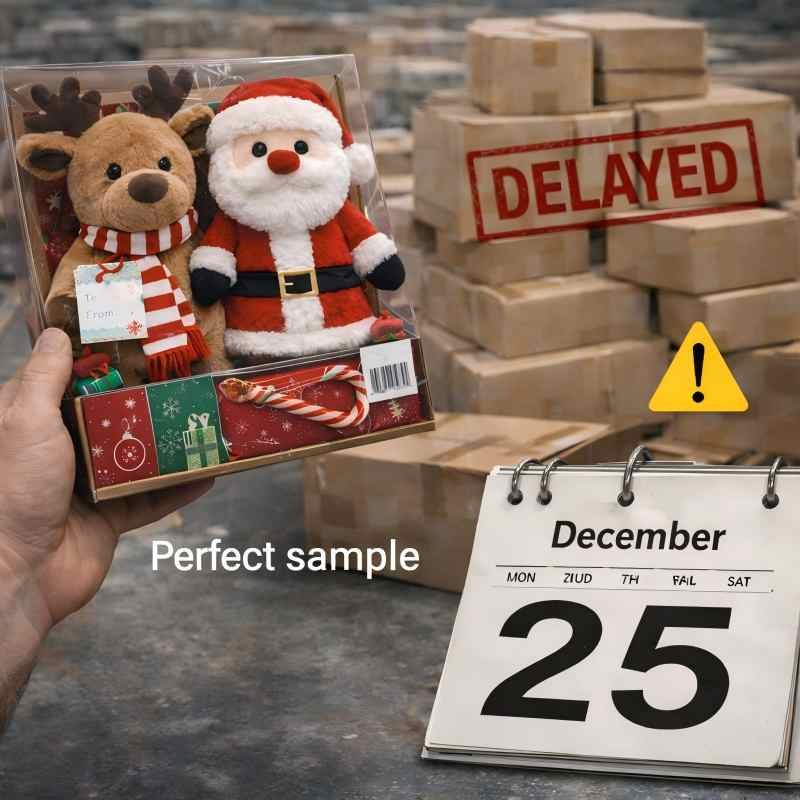
3) “Perfect sample” but bulk arrives too late

Holiday misses rarely come from one big mistake—they come from approval creep: too many “tiny improvements,” late rounds, and booking started after everything is finished.

Typical cause: approvals drift, revision rounds expand, or booking is planned after everything is finished.

The control is not “work faster.” It’s a calendar that enforces boundaries.

  • Define the in-hand week (inventory must be check-in ready—not “departed”)
  • Set “line-in-the-sand” gates where changes become next-season changes
  • Keep revisions inside a defined scope: identity-critical fixes only after a certain gate

High-end clarity: a holiday program has a point where you stop optimizing and start executing. Without that line, you don’t have a launch plan—you have an endless prototype.
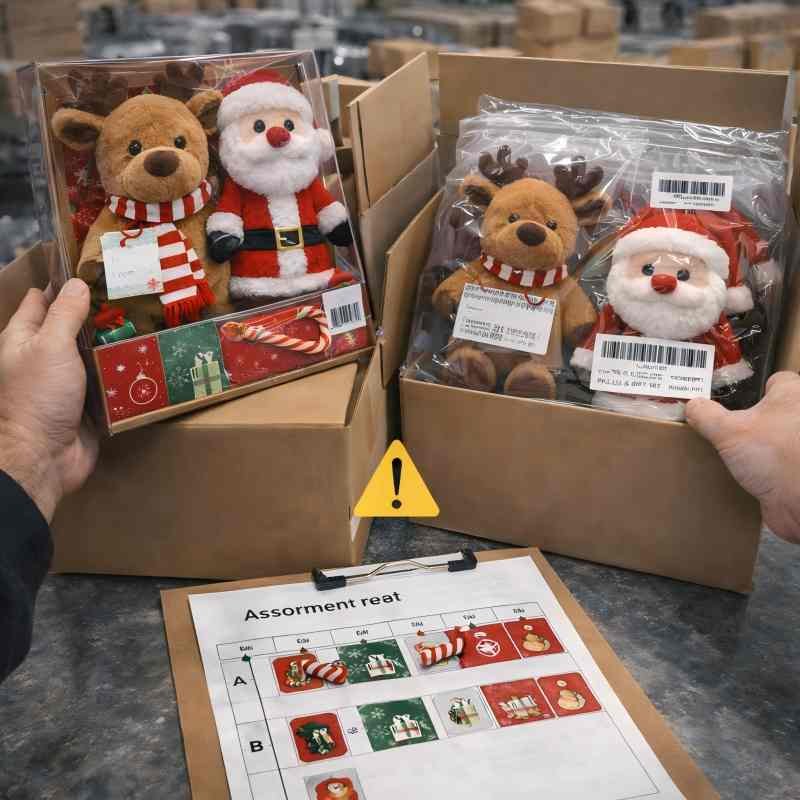
4) Gift sets mis-pack, arrive mixed, or fail receiving

Holiday plush commonly ships as bundles: plush + accessory + card + seasonal insert. This is where operational failure shows up as customer complaints: wrong variant, missing insert, mixed cartons, inconsistent sets.

Typical cause: bundle rules not defined, variants not controlled, carton mapping unclear.

The system solution is an “Assortment Map,” not a reminder.

  • A single mapping that ties together: variant → what’s inside the set → packaging → carton rules
  • A clear mixed-variant policy: allowed vs not allowed (and if allowed, exactly how it is labeled and mapped)
  • A kitting SOP that defines what is verified (count, variant, insert presence) before cartons close

High-end outcome: set accuracy becomes repeatable, not dependent on “careful workers.”

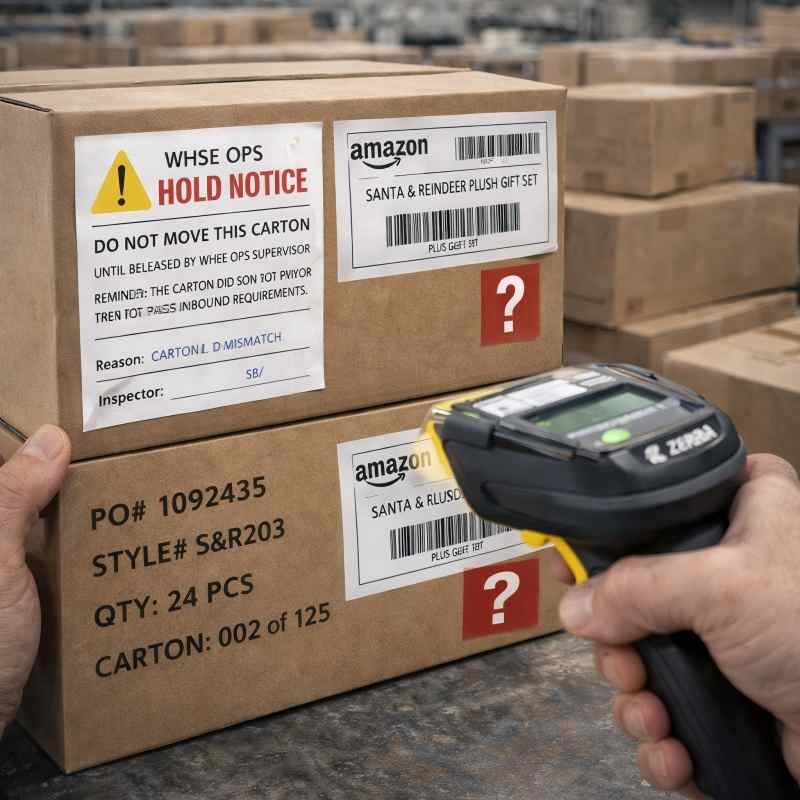
5) Peak-season receiving holds at 3PL / Retail DC / FBA-like

During peak season, warehouses tighten rules because volume spikes. What passes in April might get held in October/November. Holds usually happen for reasons that feel “small” but are pass/fail operationally: barcode placement, carton marks, mapping data mismatch.

Typical cause: carton marks/labels don’t match receiving SOP; mapping data inconsistent.

What we align before labels are printed:

  • Barcode discipline (placement, scannability, one unit = one identifier rules if required)
  • Carton marking rules matched to the receiving SOP (counts, variant, PO/carton ID conventions)
  • Carton mapping dataset that is consistent with what’s physically packed (no guesswork)

Holiday-specific truth: receiving is part of the launch window. A truck that arrives but can’t check in is not “delivered” in holiday terms.
6) The launch succeeds, but replenishment is impossible (or chaotic)

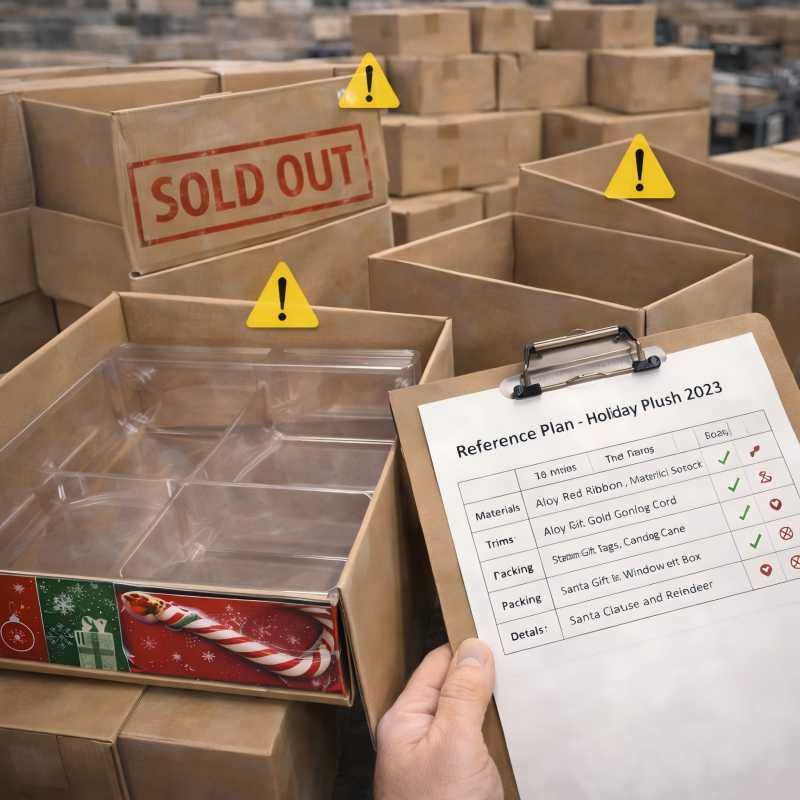
Holiday plush has a unique “success problem”: if it sells out, you may want Wave 2—but seasonal materials, trims, packaging, and capacity windows may no longer be available. Without a plan, “replenishment” becomes a new project with new risks.

Typical cause: no plan for replenishment materials and benchmark references.

The decision you must make early (even if you’re unsure):

  • One-wave limited edition: optimize for the single run, close cleanly
  • Wave-2 top-seller restock: keep a reorder-ready path for the winners
  • Hybrid: limited assortment restock only (pre-defined)

What we preserve if Wave 2 is possible:

  • a reorder-ready reference set (version, trims, packaging direction)
  • clarity on what can repeat vs what may change without damaging brand continuity

High-end framing: replenishment is not “just make more.” It’s a controlled extension of the season—only possible if you kept the path open.

Custom Holiday Plush Formats Brands Build Most Often

6 formats you choose changes cost, speed, and pack-out complexity.
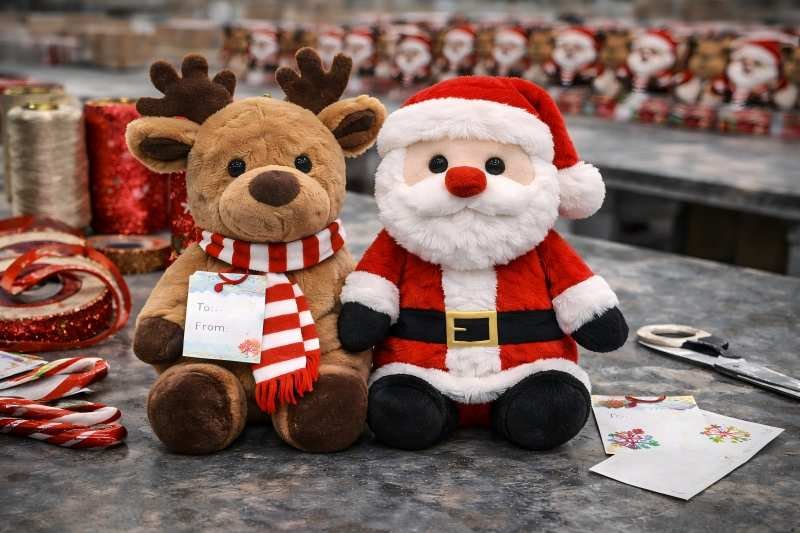
Classic Seasonal Plush

  • Best for: simple launches, broad audience, fast approval
  • Key controls: festive details that don’t slow production, clean finishing

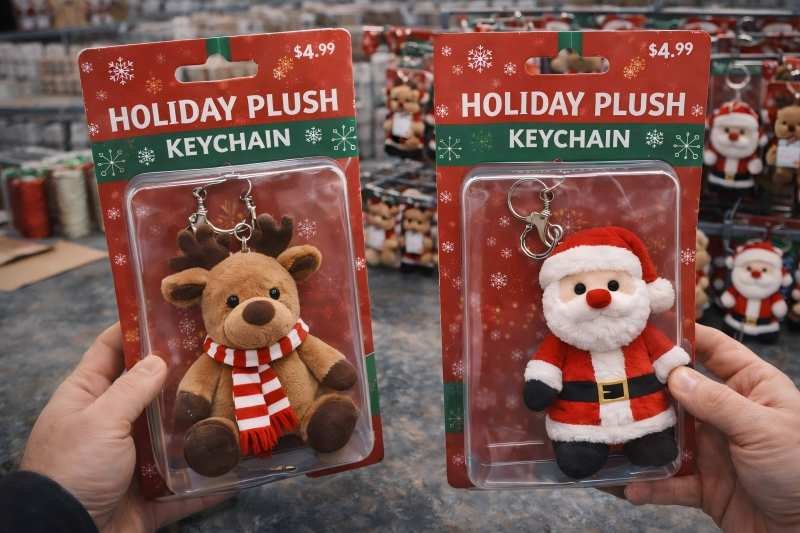
Holiday Plush Keychains

  • Best for: bundles, impulse buys, stocking stuffers
  • Key controls: attachment durability, small-size readability, hang-sell packaging

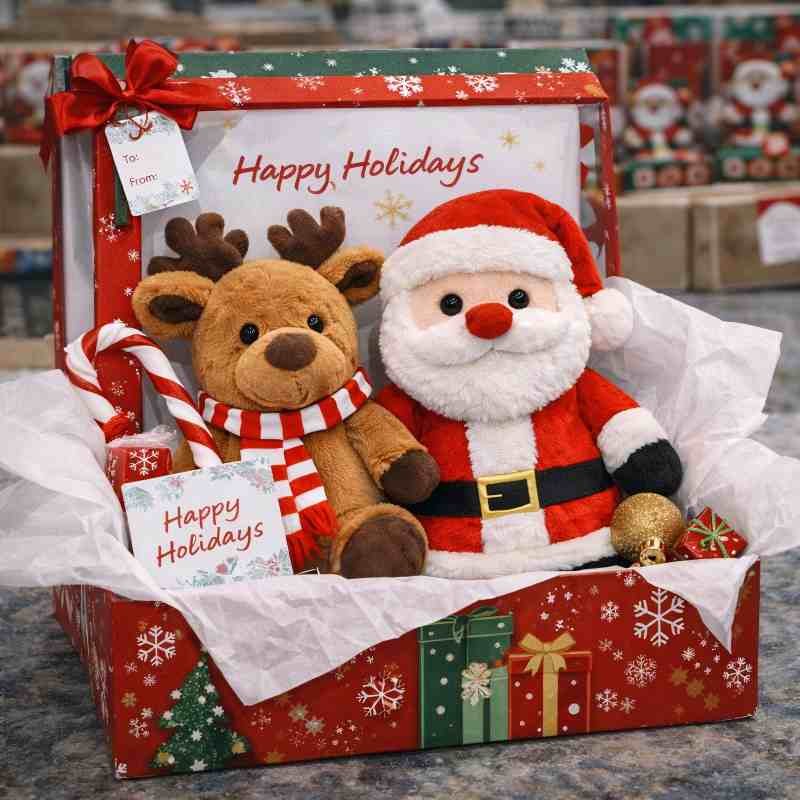
Gift-Set Plush

  • Best for: premium gifts, PR kits, influencer boxes
  • Key controls: kitting accuracy, packaging freeze points, carton mapping

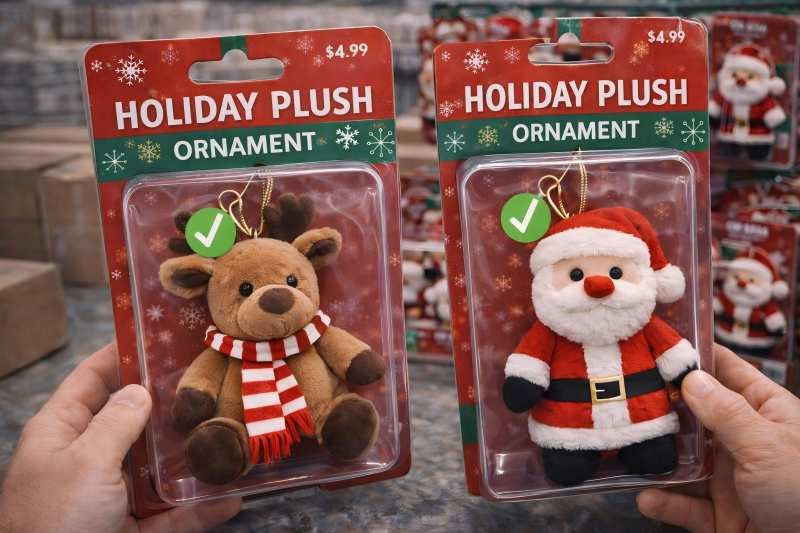
Ornament/ Hangable Plush

  • Best for: seasonal décor programs
  • Key controls: hang point reinforcement, shape stability, packaging protection

Limited Holiday Variant

  • Best for: IP/character programs with seasonal skins
  • Key controls: avoid drifting identity while adding holiday elements

Multi-Character Holiday Collections

  • Best for: retail assortments and display programs
  • Key controls: variant management, labeling discipline, mapping accuracy

Seasonal Plush Materials and Details

Holiday programs are won by premium-looking details that still stay available, repeatable, and pack-out friendly in peak season.

1). Camera-Clean Fabrics

Best-fit product types (holiday plush formats):

  • Classic seasonal plush (single hero item)
  • Stocking stuffer minis (small plush, mini ornaments)
  • Character holiday variants (same character, seasonal skin)
  • Gift-set plush that sits against tissue/box interiors
  • Hangable décor plush (ornament-style, tree-hang, wreath add-ons)
  • Assortment collections (multiple colorways / multiple characters)
  • Plush pillows used as seasonal décor accents (when relevant)
  • Corporate gift plush (premium feel, low return tolerance)
  • Subscription/box inserts (lightweight, camera-forward)

Fabric families that tend to behave best in holiday reality (choose by program tier):

  • Short pile plush / velboa-like surfaces (clean edges, stable look)
  • Medium pile minky-style surfaces (soft + controllable)
  • Velvet / velour-like surfaces (premium visual, smooth hand-feel)
  • Microfleece / coral fleece (cozy, stable, value-to-mid tier)
  • Faux shearling / sherpa (seasonal warmth cue, winter drops)
  • Brushed knit / sweater-look textiles (holiday “cozy” storytelling)
  • Long pile faux fur (statement premium, but only with strict finishing + pack-out)
  • Printed plush fabrics (patterns: snowflakes, hearts, seasonal icons—alignment rules required)

Technical difficulties (holiday-specific failure modes):

  • Red saturation drift across dye lots (holiday reds are notoriously sensitive)
  • Pile direction inconsistency (photography reveals “patchy” shading instantly)
  • Crush marks after compression (gift box pressure + carton stacking)
  • Lint attraction / static in dry-season shipping (white fuzz on dark fabrics)
  • Pilling at high-rub points (gift wrap, tags, frequent handling)
  • Embroidery edge blur on certain piles (small details lose crispness)
  • Pattern alignment risk for prints (especially on shaped silhouettes)
  • Seasonal storage aging (items held for weeks before release must still look fresh)

Brand-facing decisions to lock early (prevents resets):
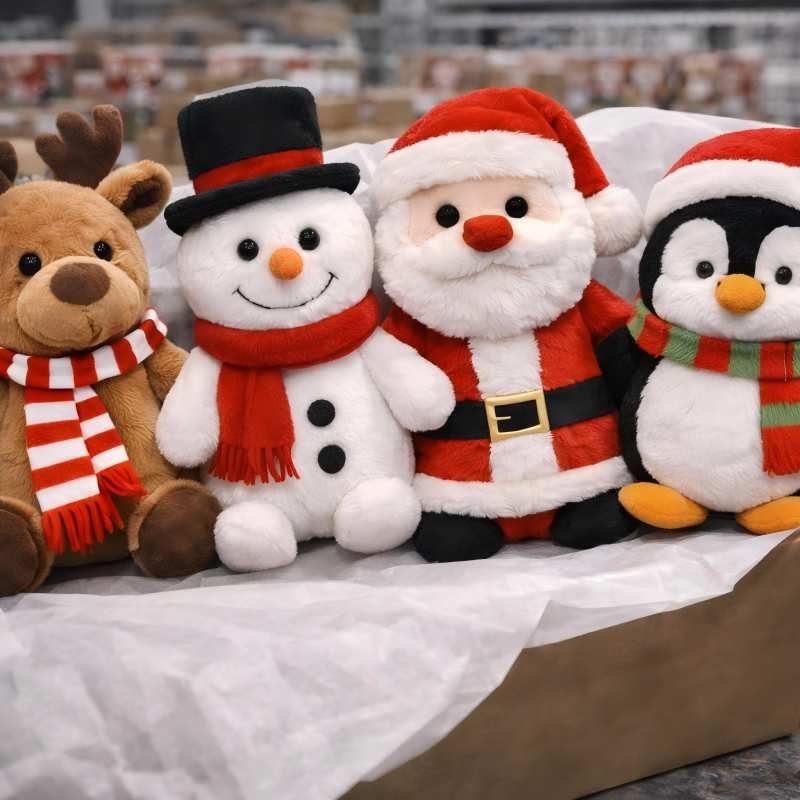
  • Brand tone target: premium / minimal / playful / eco-forward
  • “Hero texture” choice: one signature fabric or controlled mix
  • Color rules for seasonal palettes (especially red + metallic pairing)
  • Photo standard: acceptable pile direction and surface finish reference
  • Pack-out compression tolerance (how much flattening is acceptable on arrival)

2). Festive Trims

Best-fit product types (where trims actually add value):

  • Seasonal plush with 1–2 hero festive cues (scarves, hats, cuffs)
  • Ornament / hangable plush (loops, ribbons, hang cords)
  • Gift-set plush (premium tags, branded ribbons, belly bands)
  • Character variants (seasonal accessories without changing identity)
  • Limited editions (year/date badges, collectible markers)
  • Display assortments (coordinated trims across multiple units)
  • Corporate gifting (premium finishing, hardware color control)

Trim types commonly used in holiday programs (choose with timing discipline):

  • Ribbons: satin, grosgrain, velvet ribbon, metallic-edged ribbon
  • Metallic threads (for embroidery accents; high risk if chosen late)
  • Specialty patches: woven patches, embroidered patches, faux leather patches
  • Hang cords: metallic cord, cotton cord, braided cord
  • Seasonal appliqués: felt shapes, stitched-on icons, layered fabric badges
  • Decorative tapes: jacquard tapes, printed tapes, branded woven tape
  • Pom-poms, tassels, trim borders (use cautiously for shedding/snags)
  • Hang tags / gift tags / branded story tags (paper + finishing options)

Technical difficulties (why trims cause delays):

  • Peak-season sourcing pressure (availability tightens late in the year)
  • Color/finish matching: metallic sheen and red tone drift are common
  • Trim shedding (glitter-like finishes can shed and look “cheap” in-box)
  • Snag risk against plush piles (ribbons and cords can rough up surfaces)
  • Stitch stability at attachment points (loops must not tear out)
  • Wash/handling behavior (some trims deform or crease permanently)
  • Late trim changes often force: new approvals + new pack-out steps

Brand-facing lock list (prevents late resets):

  • Trim Freeze List: exact trim family + finish level (not generic “gold ribbon”)
  • “Safe substitute” pre-approval (if the first-choice trim runs out)
  • One hero trim rule: pick 1–2 key trims, keep the rest stable
  • Hang direction + loop placement rules (for décor/hangables)
  • No late trim swaps after pack-out freeze (swap becomes next-season change)

3). Holiday Graphics

Best-fit product types (where graphics carry the seasonal message):

  • Holiday icon plush (snowflakes, hearts, pumpkins, stars, etc.)
  • Character holiday skins (same face, seasonal graphics)
  • Logo-forward gifting plush (corporate gifting, collaborations)
  • Date/collectible editions (year badge, limited run marker)
  • Assortment collections (consistent graphic language across variants)
  • Plush used in PR kits (camera-first details)

Common graphic methods used in holiday plush (each with trade-offs):

  • Embroidery (premium, durable, but density can slow peak timelines)
  • Appliqué (clean bold shapes; good for seasonal icons)
  • Patches (stable placement; faster approvals for repeated runs)
  • Print (fast visuals; needs abrasion and placement rules)
  • Woven labels / story labels (brand language without busy graphics)
  • Mixed method (e.g., embroidery + patch—use only if scope is controlled)

Technical difficulties (holiday-specific pain points):

  • Dense embroidery slows throughput and can create puckering on soft piles
  • Small icons can disappear on fluffy surfaces (readability collapse)
  • Placement drift across variants (assortments look inconsistent)
  • Print alignment on shaped bodies (front/back registration issues)
  • Metallic thread behavior (shine drift + thread break risk)
  • “Too many micro details” causes late revision loops and missed windows

Brand-facing decisions that protect premium perception:
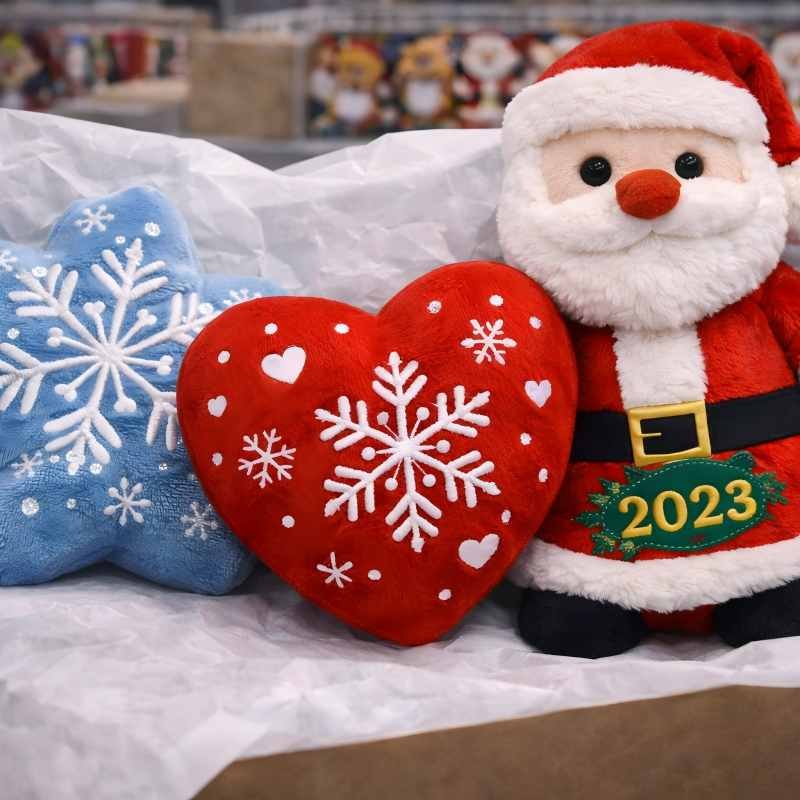
  • Define the graphic hierarchy: what must be crisp vs what can be soft
  • Pick one “hero read” zone (front icon / chest patch / tag story)
  • Set a readability rule: icons must read at shelf distance + on camera
  • Lock placement references early (photo standard for alignment)
  • Avoid last-minute graphic complexity (holiday timelines punish scope creep)

4). Gift Packaging Materials

Best-fit product types (packaging-led holiday programs):

  • Gift-ready single plush (boxed or sleeved)
  • Premium gift-set plush (plush + accessories + cards)
  • PR kit plush (presentation-first, low tolerance for scuffs)
  • Corporate gifting plush (brand finish and inserts are critical)
  • Subscription seasonal bundles (kitting accuracy + protection)
  • Retail-ready hang-sell plush (header cards, facing control, barcode rules)
  • Assortment cartons for retail displays (variant mapping and carton marks)

Packaging material options commonly used (choose by channel and timeline):

  • Polybag + hang tag (fast, simple, often for value lines)
  • Sleeve / belly band (adds brand presence without full box complexity)
  • Window box (display-ready; requires scratch and crush control)
  • Rigid gift box (premium; increases lead time and assembly steps)
  • Magnetic closure box (high-end; must be frozen early)
  • Tissue paper / wraps (adds premium feel; friction control needed)
  • Insert cards / QR cards / story tags (brand narrative + compliance messaging)
  • Header cards (retail hooks; facing + hole position discipline)

Technical difficulties (why packaging causes late resets):

  • Packaging changes unit dimensions → changes carton plan → changes freight
  • Box structure changes pack-out steps → changes kitting labor and accuracy risk
  • Label placement errors cause receiving holds (especially peak season)
  • Window materials scratch; rigid boxes dent if carton plan is wrong
  • Late packaging changes force re-approval and can miss booking cutoffs

Brand-facing lock list (non-negotiable for holiday timelines):

  • Pack-out format + assembly steps (what workers do, in what order)
  • Label map: unit barcode + carton marks + placement photos
  • Assortment map for sets (variant → insert → packaging → carton rules)
  • Carton plan tied to packaging (avoid “perfect box, impossible shipping”)
  • Final “receiving-ready checklist” before printing and bulk pack-out

Customization That Matters Most for Holiday Programs

This section focuses on decisions that directly impact schedule control and pack-out success.
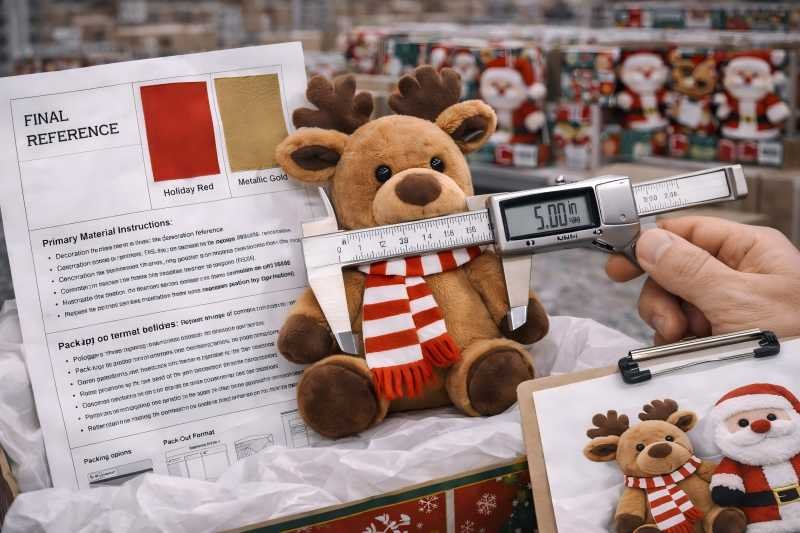
1). What must be frozen early to protect the deadline

Freeze these before you call a sample “final.” If any of them moves late, the timeline usually resets.

  • Identity + footprint: size, key proportions, silhouette (what determines unit dimensions)
  • Material direction: primary fabric family + core color direction (especially holiday reds/metallic looks)
  • Decoration method: embroidery vs patch vs print, plus placement priorities (what must stay perfectly consistent)
  • Pack-out format: polybag vs sleeve vs gift box vs set box (changes kitting steps and shipping volume)
  • Receiving rules: barcode placement, carton marks, mapping expectations (pass/fail in peak season)

Holiday boundary: after pack-out freeze, any change that affects unit dimensions, labeling, or variant mix becomes a next-season change.
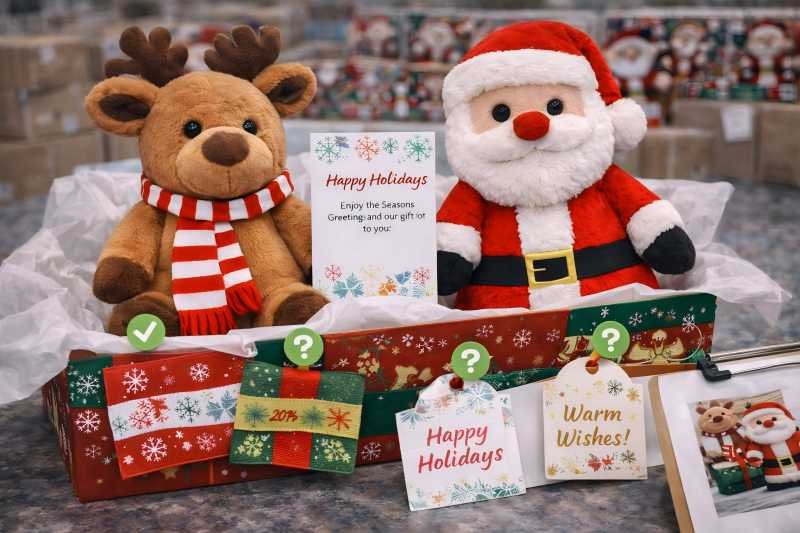
2) What can stay flexible later

These can move later only if the structure and placement are already locked.

  • Minor trim color tweaks within the same trim family
  • Insert card wording updates when layout/size is fixed
  • Small tag text changes when tag type and placement are fixed
  • Light cosmetic adjustments that do not alter: unit footprint, label map, or kitting steps

Think of this as “copy and finish,” not “structure and workflow.”
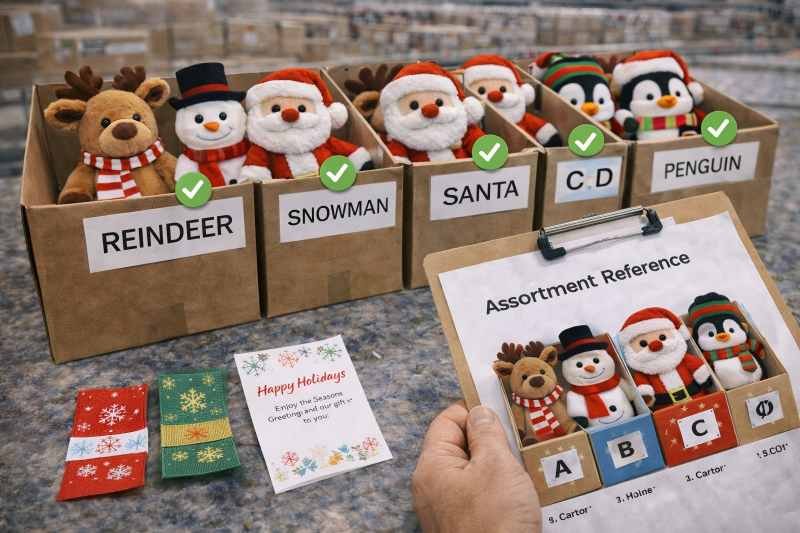
3) Holiday Programs Kitting and bundle rules

Holiday programs often sell as bundles, and mis-packs spike during seasonal volume. Treat the set as a controlled system.

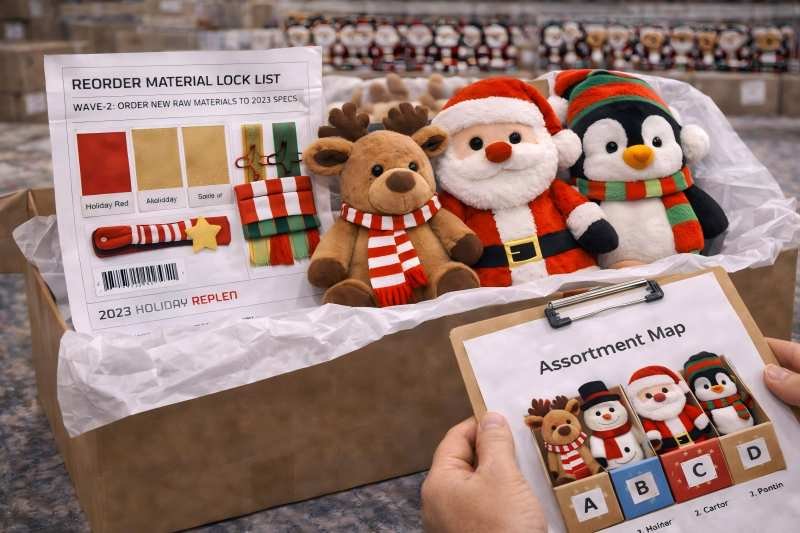
Lock a single Assortment Map that ties together:

  • What goes in each set (exact components, counts, and variant IDs)
  • How variants are separated and verified (what gets checked before cartons close)
  • How cartons are mapped (mixed-variant rules, carton IDs, and check-in data consistency)

If your team can’t explain the set in one clean map, it will drift in bulk.
4) Replenishment decisions

Wave-2 success only happens if the path is kept open before bulk begins.

Choose one strategy early:

  • One-wave limited edition: optimize for a clean close; no restock complexity
  • Planned second wave: keep materials + packaging + references reorder-ready
  • Top-seller restock only: pre-define the winners; lock a lean replenishment scope

What changes with this choice: how tightly you lock materials, how you preserve benchmarks, and whether trims/packaging must remain reorderable.

Deliverable you can file: a reorder-ready reference set (version lock list + assortment map + pack-out rules) so Wave-2 doesn’t become a new project.

A Practical Holiday Build Timeline

6 engineered timeline logic keep brands unique and outstanding

Phase 1

Launch definition

You share: concept references, target sizes, quantity options, channels, and in-hand date.

You receive: a back-planned timeline with lock points.

Phase 2

Festive detail sample

Prototype validates: look, key festive details, and any kitting impact.

You receive: a focused checklist that prioritizes deadline-critical issues.

Phase 3

Controlled revision loop

We revise only what changes sellability or causes bulk risk.

You receive: updated reference + what is now frozen.

Phase 4

Pre-production benchmark

A bulk-like reference confirms repeatability and pack-out readiness.

You receive: measurable checkpoints and a pack-out freeze.

Phase 5

Production pack-out execution

Production runs with version stability. Pack-out follows a fixed checklist.

You receive: mapping and documentation consistency for receiving.

Phase 6

Shipping and receiving

Booking and documents align to your channel.

You receive: carton mapping dataset and receiving-aligned packing files.
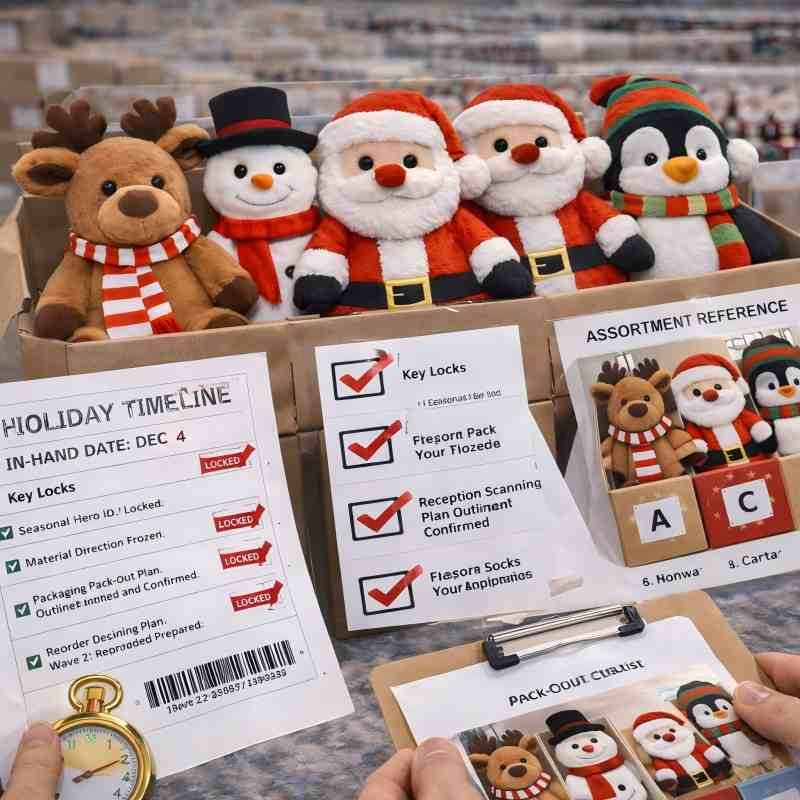
The Controls That Keep Holiday Launches From Slipping

Holiday launches don’t slip because of one reason—they slip because small uncertainties compound late.

What keeps the program controllable:

  • back-planned locks tied to your in-hand date
  • early packaging freeze to prevent late resets
  • seasonal trim decisions made early (or simplified)
  • kitting rules written as part of the product spec
  • receiving rules confirmed before labels and carton marking
  • reorder strategy decided early (even if it’s “no reorder”)

What your team can keep as proof:

  • a launch plan with lock points and deadlines
  • an approved benchmark reference for bulk
  • a pack-out checklist aligned to your channel
  • a carton mapping dataset that supports clean check-in
  • a replenishment decision path (one-wave vs reorder-ready)

Common Holiday Programs Brands Run

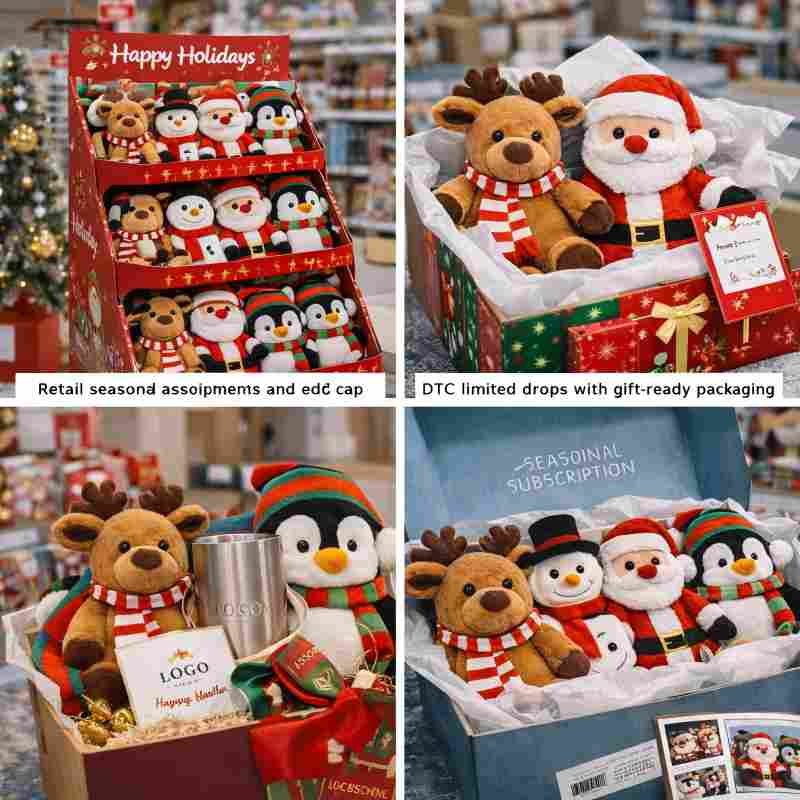
Plush programs show up across many launch patterns and channels:

  • Retail seasonal assortments and end-cap displays
  • DTC limited drops with gift-ready packaging
  • PR kits and influencer bundles
  • Corporate gifting programs with strict deadlines
  • Subscription box seasonal sets
  • Character/IP seasonal variants and collections

Common receiving setups include: 3PL warehouses, retail DCs, DTC fulfillment, and FBA-like check-in environments.
Custom Holiday Plush Manufacturer

1) What should we decide first for a holiday plush project?

Your in-hand date, selling channel, packaging direction, and 1–2 hero festive details. Everything else should protect those.

2) Why do holiday projects reset late?

Packaging and receiving rules were not frozen early, or seasonal trims were chosen too late.

3) Can we do gift sets and bundles?

Yes. Kitting rules must be written early and mapped to cartons to avoid mis-packs and receiving disputes.

4) How do you reduce sampling rounds for holiday timelines?

By defining what matters most for sellability and freezing non-negotiables early, then limiting revisions to deadline-critical changes.

5) What if we want multiple variants or a collection?

That’s common for holiday assortments, but variant control (labels, mapping, pack-out discipline) must be treated as part of the core plan.

6) Can we replenish if the launch sells out?

Often yes, but only if you chose a reorder-ready strategy early and kept materials and references usable.

Ready to start your Custom Holiday Plush Projects?

If you’re planning a seasonal drop with a hard in-hand week—Black Friday, Christmas, Valentine’s, Halloween, Easter, a winter gifting run, or a limited-edition holiday variant—your plush program needs more than “a cute sample.” It needs launch control:

  • Back-planning from your in-hand week (no-reset points, booking cutoffs, approval gates)

  • Seasonal trims + color risk control (trim freeze list + safe substitute rules)

  • Holiday version locks (what must be frozen vs what can stay flexible)

  • Gift-set + kitting discipline (assortment map, insert rules, mis-pack prevention)

  • Peak-season receiving readiness (labels, carton marks, carton mapping for 3PL/DC/FBA-like)

  • Wave-2 decision support (top-seller restock vs clean close-out)

Share your target plan we reply with the recommended path and input checklist within 1 business day.

Tell Us About Your Plush Project (Quote Form)

This form is built for accurate quoting—size, quantity, materials, accessories, and compliance needs. The more complete your brief, the fewer revisions and the faster your sample can start.

Contact Us Today, Get Reply Within 12-24 Hours

I am Nika, our team would be happy to meet you and help to build your brand plush.