Custom Plush Pillows Designed for Hand-Feel, Shape Stability, and Shipping Efficiency

Plush throw pillows · character pillows · shaped cushions · travel pillows · gift-set inserts · retail & DTC

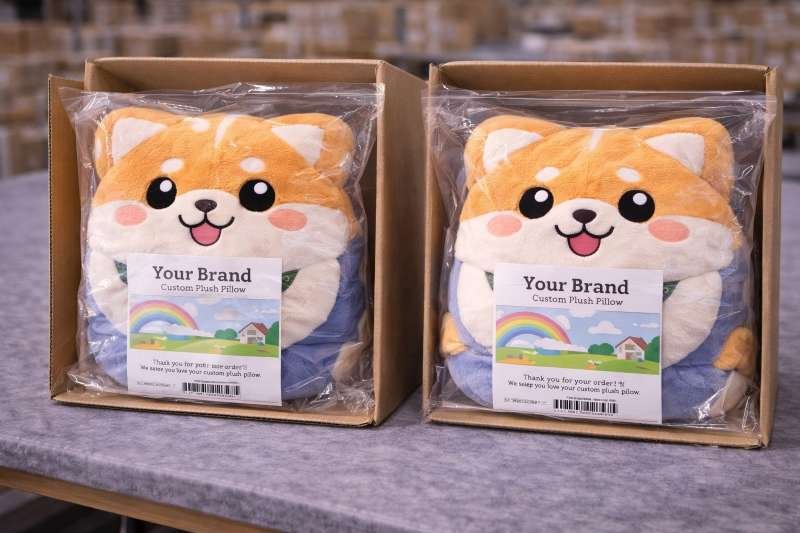
A plush pillow is a “feel product” and a “shipping product” at the same time. Customers judge it by softness, rebound, and how it holds its silhouette on a sofa or in an unboxing video. Brands judge it by freight cost, carton efficiency, and whether the pillow arrives cleanly compressed—or arrives deformed and triggers returns. 

A plush pillow that works must deliver:

  • A clearly defined feel (soft / supportive / squishy / structured) that repeats in bulk
  • A stable silhouette (doesn’t slump, twist, or show lumpy fill)
  • Clean finishing and camera-friendly surface texture
  • Carton and freight efficiency (pillow volume is the cost driver)
  • Packaging that fits your channel (retail, 3PL, DTC, FBA-like)

Last updated:Feb. 28, 2026 · Applies to: custom plush pillow OEM/ODM· Channels: 3PL / Retail DC / DTC / FBA-like · Covers: fill-feel definition → shape & seam controls → prototype approvals → bulk consistency → compression & carton pack-out readiness

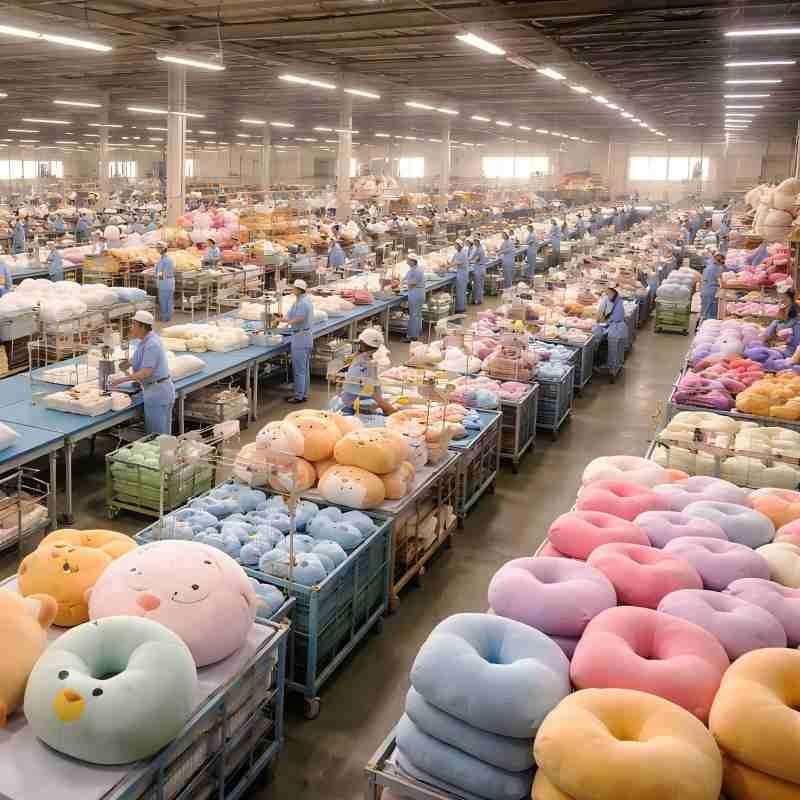
What a professional Plush Pillow Manufacturer Controls?

Many suppliers treat pillows as simple shells + stuffing. In real programs, the pillow must feel right, hold shape, and ship profitably.
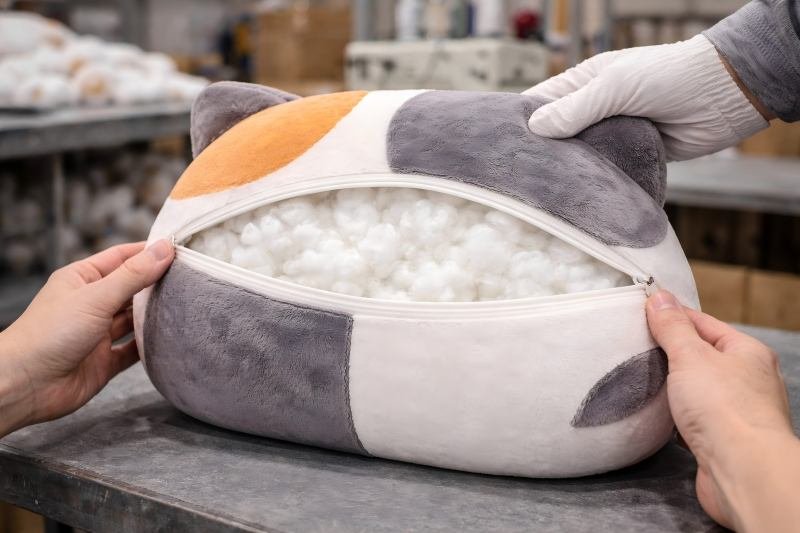
“Feel” definition

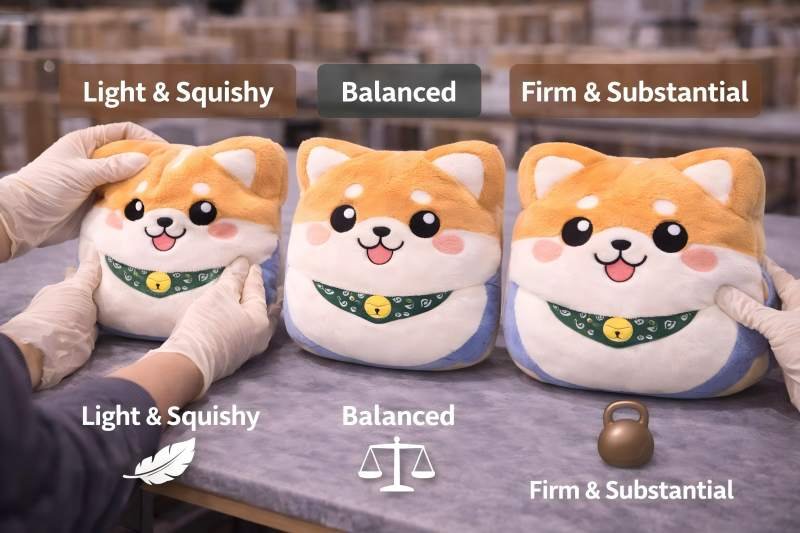
  • Target feel language: cloud-soft / supportive / squishy / structured / lumbar-support
  • Rebound expectation: slow vs quick bounce-back
  • Weight expectation: light giftable vs “premium weight”
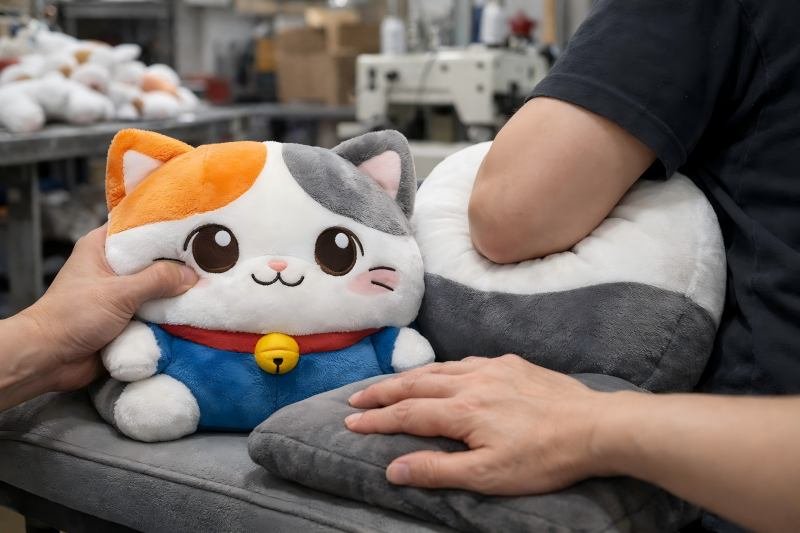
  • How feel is evaluated: hand squeeze, elbow press, sofa sit, photo appearance

Fill system

  • Fill type strategy (polyfill, cluster-like fill, foam pieces, mixed blends where suitable)
  • Fill density targets (how many grams per shell size, and why it matters)
  • Anti-lump plan: how fill is distributed and stabilized
  • Zone filling: softer edges vs supportive center (when needed)

Shape stability

  • Panel layout to hold silhouette (round, square, character outline)
  • Edge and corner strategies to avoid “empty corner” or “bulb corner”
  • Internal construction options (baffles, partitions, or structural layers when appropriate)
  • Design choices that affect long-term shape retention

Seam stress and durability

  • Stress concentration mapping: corners, zipper seams, curved edges, handle points
  • Stitch and reinforcement planning for frequent compression
  • Fabric choice based on abrasion and seam behavior (not just softness)

Surface clarity

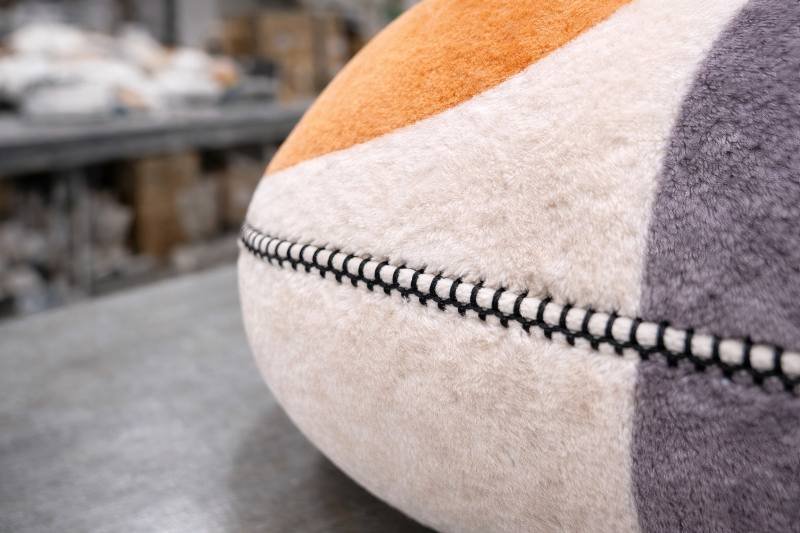
  • Pile selection: how texture reads under light and in close-ups
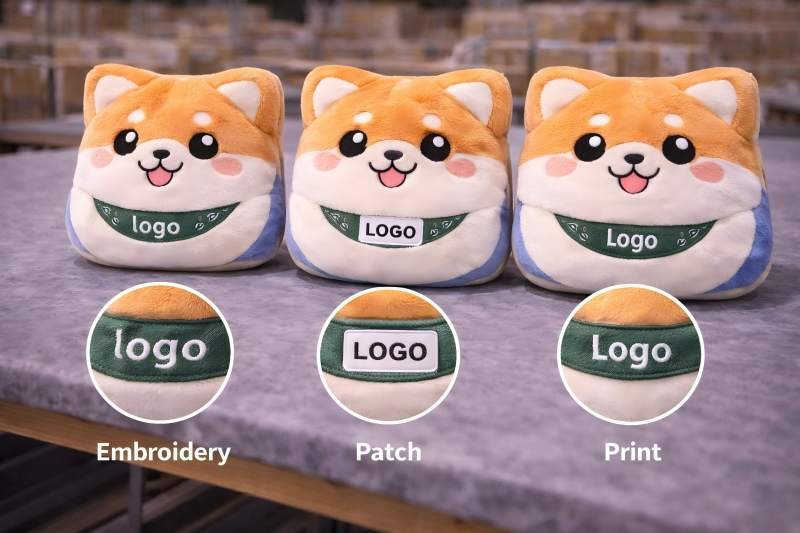
  • Embroidery/patch/print choices for large surfaces (avoid warping)
  • Symmetry and placement controls for character faces and graphics

Zippers, inserts, and cleaning

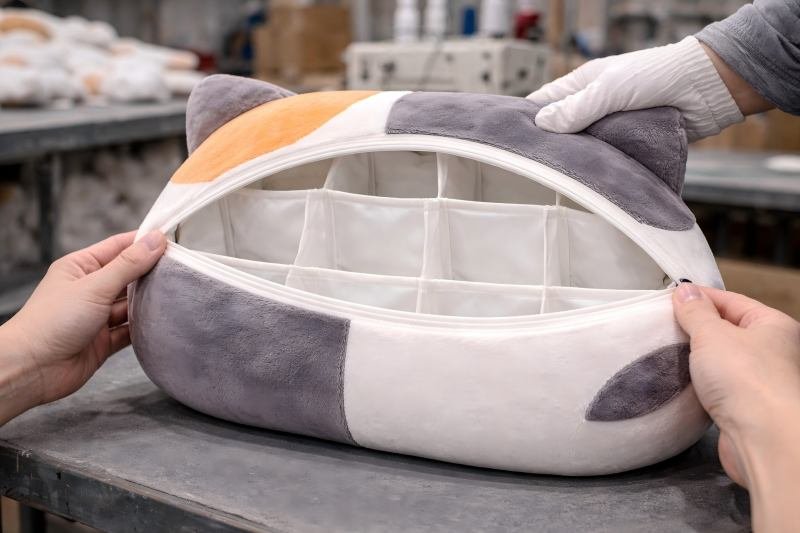
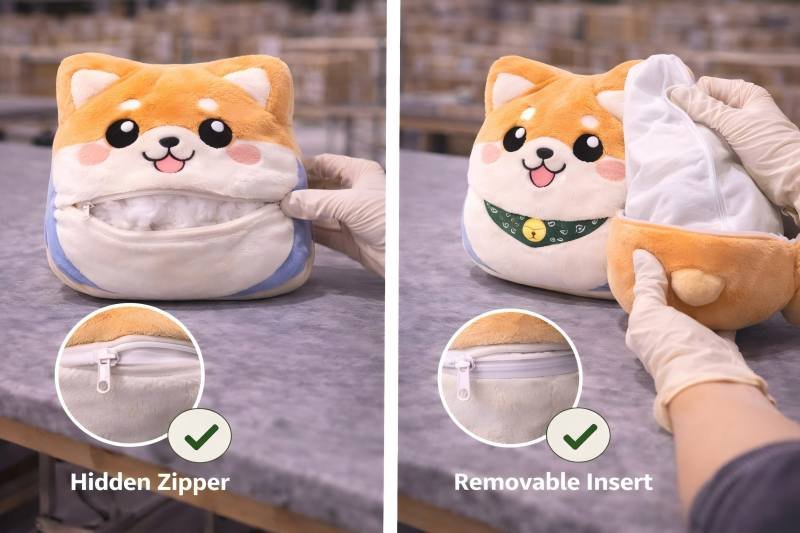
  • Hidden zipper placement that doesn’t distort shape
  • Removable insert vs direct fill (cost/feel/cleaning trade-off)
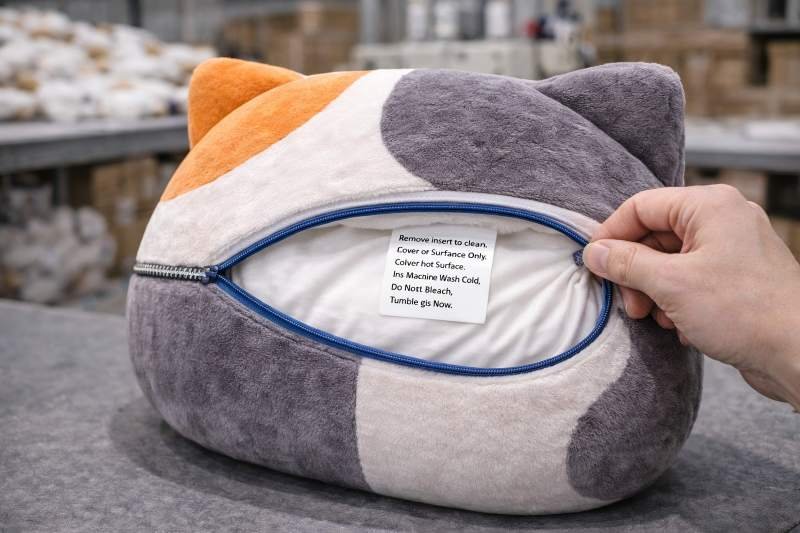
  • Care label strategy (reality-based, channel-friendly)

Packaging and shipping economics

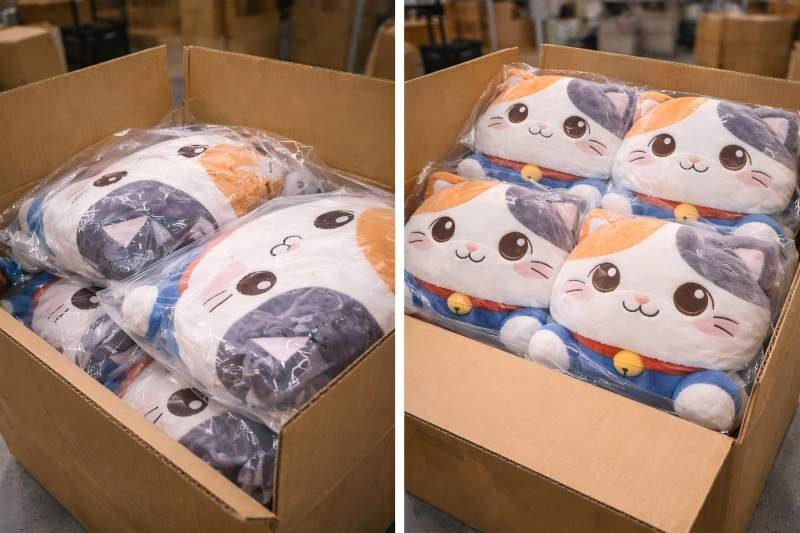
  • Compression approach: light press vs vacuum compression (depending on design)
  • Carton optimization: dimensions, stacking, and crush-risk
  • How pack-out protects shape and surface finish in transit

What Brands Care About Most in Custom Plush Pillows?

When a brand approves a plush partner, the decision rarely hinges on “can you make it.” It hinges on whether the partner can keep the plush consistent, scalable, and channel-ready without resets.

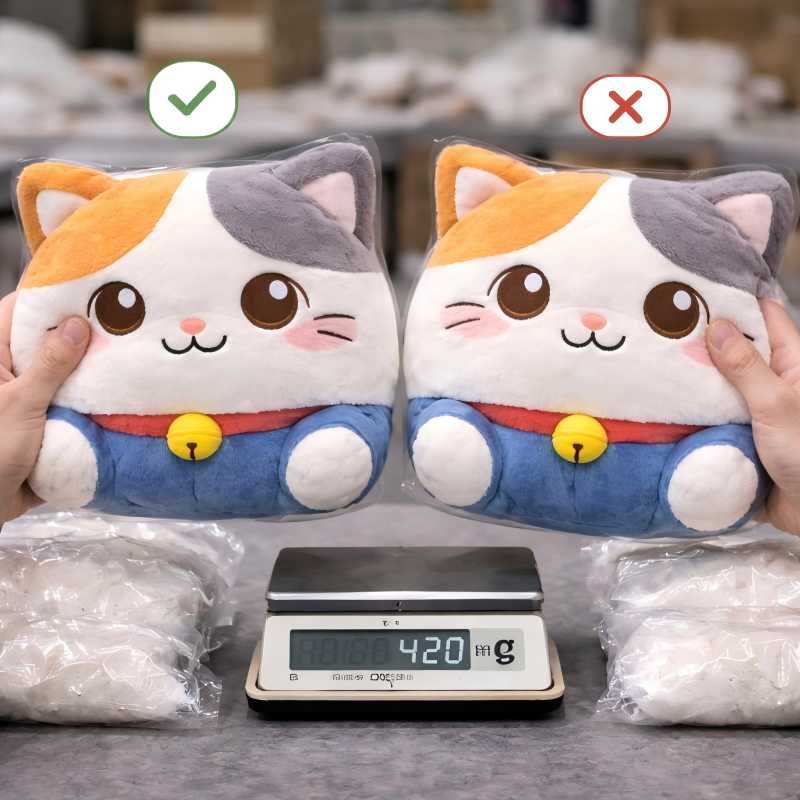
1) The pillow feels inconsistent

What it looks like: some units feel cloud-soft, others feel flat or over-stuffed; squeeze test and rebound don’t match your approved sample.

Typical cause: fill weight tolerance too loose, fill isn’t stabilized (migrates in transit), shell cutting variance changes internal volume.

How we prevent it: we lock a Feel Spec instead of vague adjectives—target loft, squeeze resistance, and rebound behavior—then pair it with size-based fill weights and a fill distribution method (so the center/edges don’t drift). Bulk checks are based on feel + weight, not “looks OK.”
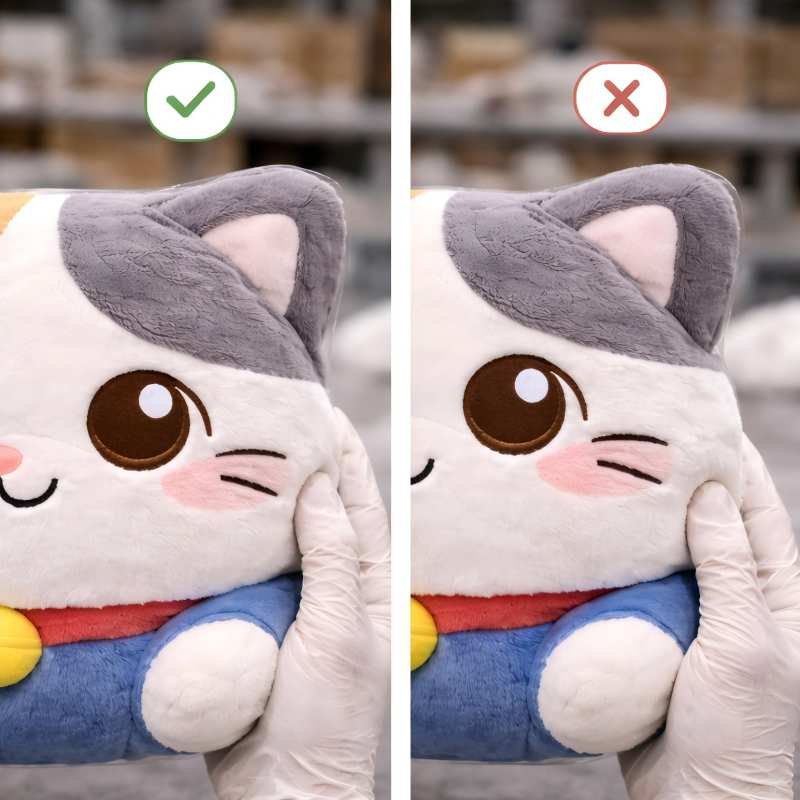
2) Corners look empty or corners “bulb out”

What it looks like: empty corners on shelf photos, or puffy corners that make the pillow look cheap and uneven.

Typical cause: panel geometry not designed for corner fullness; fill migrates away from corners; seam allowance/turning method creates corner distortion.

How we prevent it: we engineer corners as a system—corner geometry + seam strategy + fill retention—and confirm the pillow holds its shape after handling (hug, press, shake). For square/rectangles, corner fullness is treated as a measurable checkpoint, not an aesthetic hope.

3) Shipping compression cannot recovery

What it looks like: pillow arrives “dead,” slow to recover, or never returns to the approved loft—especially obvious in unboxing videos and customer reviews.

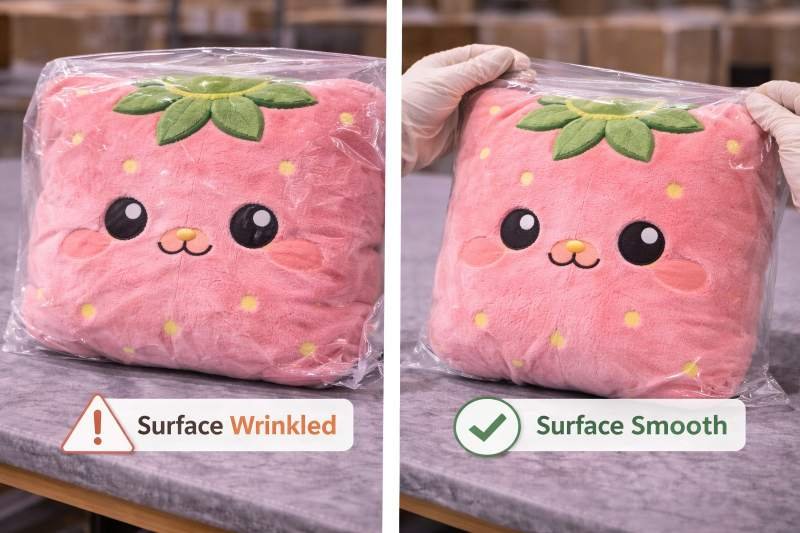
Typical cause: compression level chosen without considering fill type and surface fabric; recovery expectations not defined; cartons stacked in a way that crushes loft; long pile surfaces show pressure marks.

How we prevent it: we choose compression based on pillow type + fill behavior, then define a recovery expectation (how it should look after a set time out of carton). Carton stacking rules protect loft and surface finish, so you don’t trade freight savings for returns.
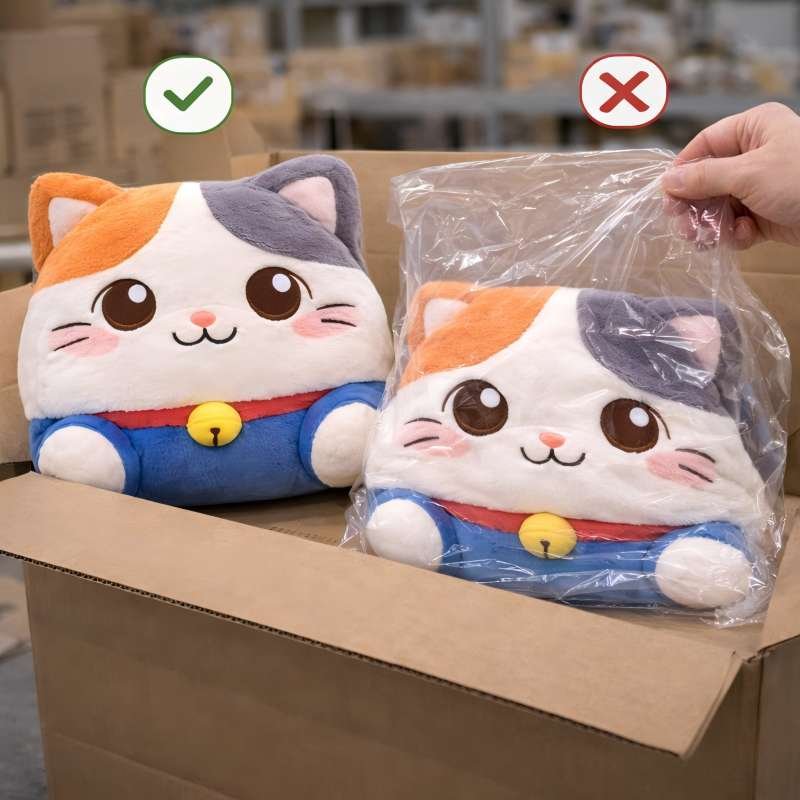
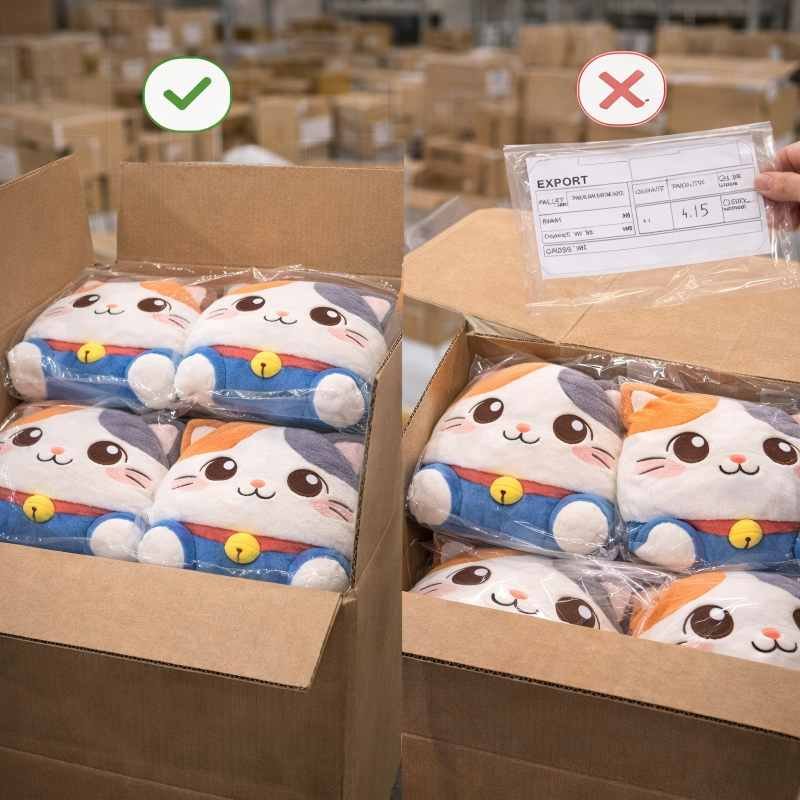
4) Freight cost becomes unexpectedly high

What it looks like: the quote looks fine, but shipping becomes the profit killer because pillows are volume-driven.

Typical cause: thickness and loft not engineered for carton efficiency; no carton plan early; pillow dimensions don’t align to practical carton footprints; compression feasibility discovered too late.

How we prevent it: we lock a carton reality early—target carton footprint, units per carton, max weight, compression allowance—then design the pillow’s loft and pack-out around it. Your program is built to ship profitably, not just to sample beautifully.

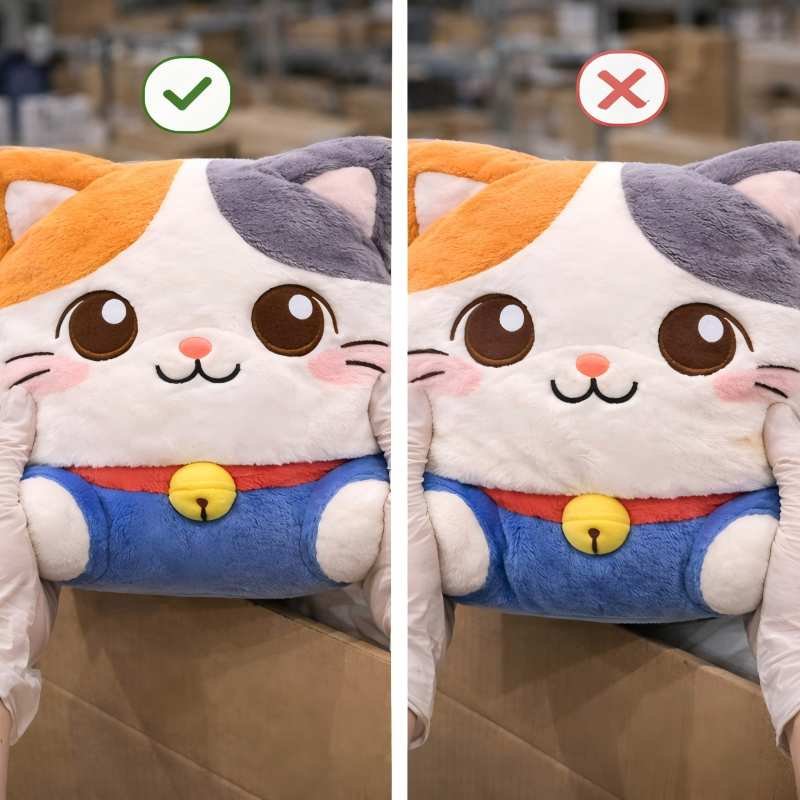
5) Large-face graphics warp or drift

What it looks like: character faces stretch when the pillow is filled; embroidery/print sits on a flexible area and looks distorted; alignment drifts between units.

Typical cause: decoration placed across high-tension zones; surface art wasn’t planned around seam lines; large coverage on plush stretches differently by fill density.

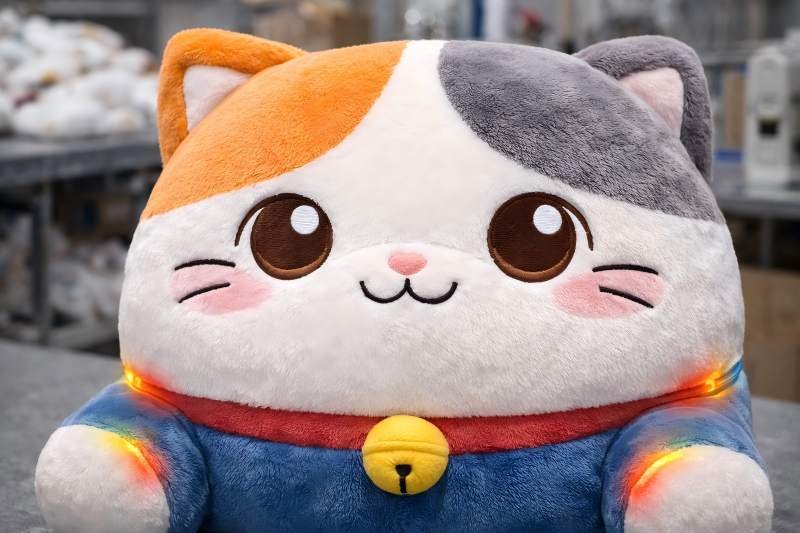
How we prevent it: we define stable decoration zones and map placement to panels that don’t deform under fill pressure. For character pillows, we lock a photo reference standard for face alignment (front-on camera read), not just a flat artwork position.
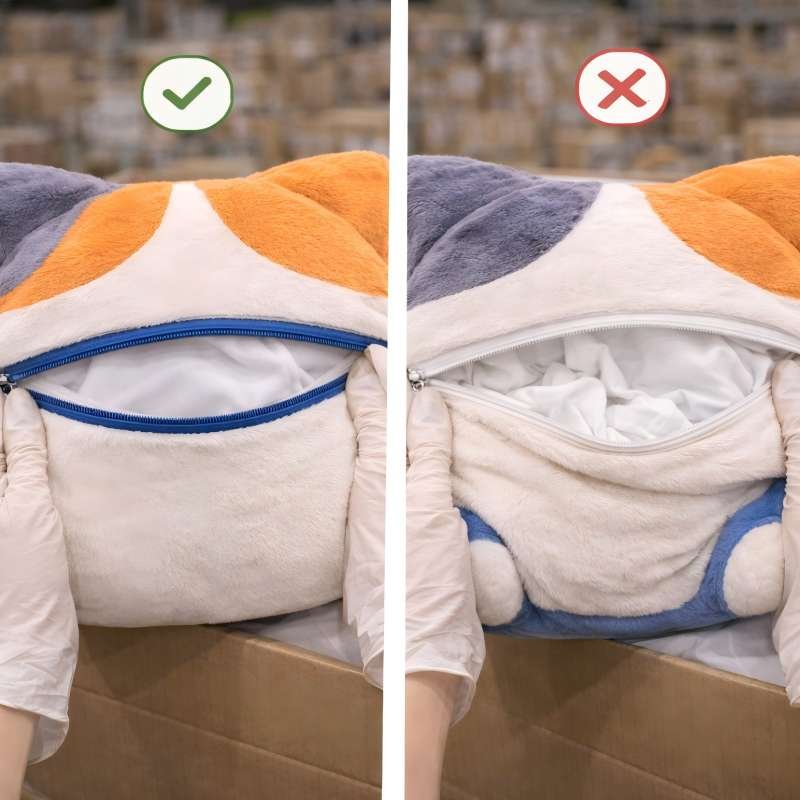
6) Zipper and Insert Without Distortion

What it looks like: zipper line waves, silhouette bends, one side sits higher; insert bunches, corners wrinkle.

Typical cause: zipper placed on a tension edge; zipper tape stiffness fights the shell; insert dimensions don’t match shell volume; stitch line pulls the surface.

How we prevent it: we place closures where they won’t fight the silhouette, match insert sizing to shell volume, and lock a zipper finish standard (alignment, smoothness, no rippling). The result is a pillow that looks premium on shelf and stays premium after use.

Plush Pillow Styles Brands Build Most Often

A Controlled plush developement System From Sample to Scale
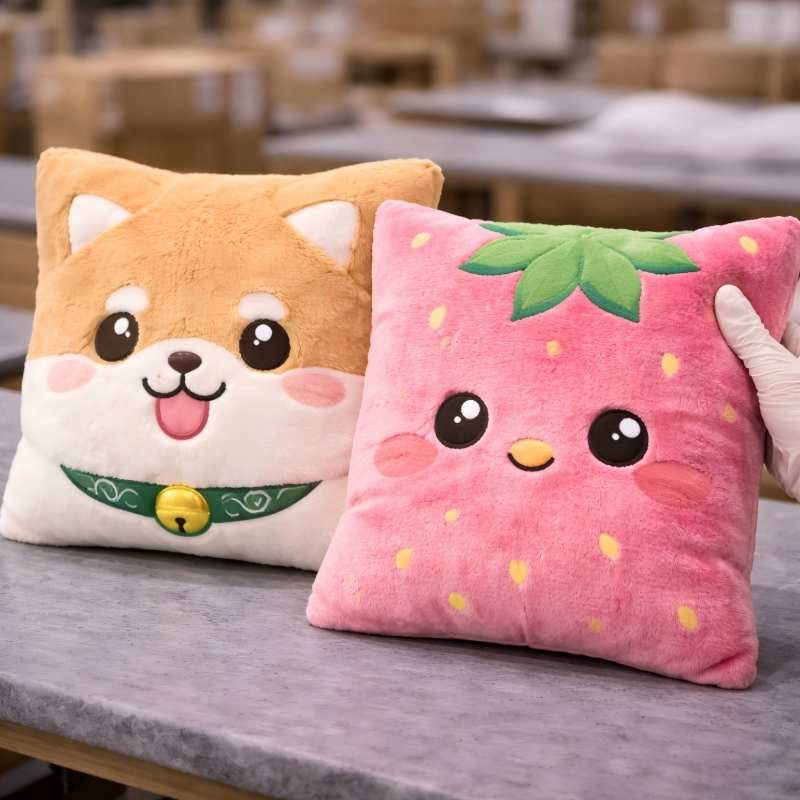
Classic Throw Pillow (Square / Rectangle)

Best for: home lines, lifestyle drops, retail shelves, DTC bundles

What makes it feel premium: even loft, clean edges, full corners, “same squeeze” across cartons

Must Lock:
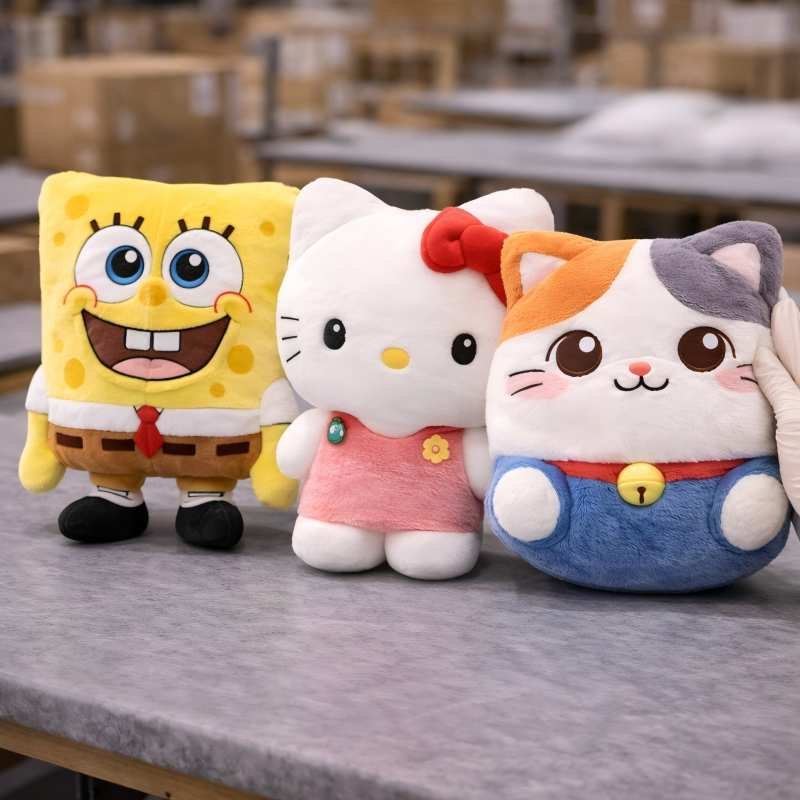
  • Feel spec: soft vs supportive + rebound speed
  • Loft window: finished thickness range (no “flat batch / puffy batch”)
  • Corner standard: full corners, clean edge read (photo + hand check)

Shaped Character Pillow (Die-cut Silhouette)

Best for: IP brands, creator merch, kids lines, drop culture cushions

What makes it premium: silhouette reads instantly, face stays aligned on a filled pillow, arrives uncrushed

Must lock:
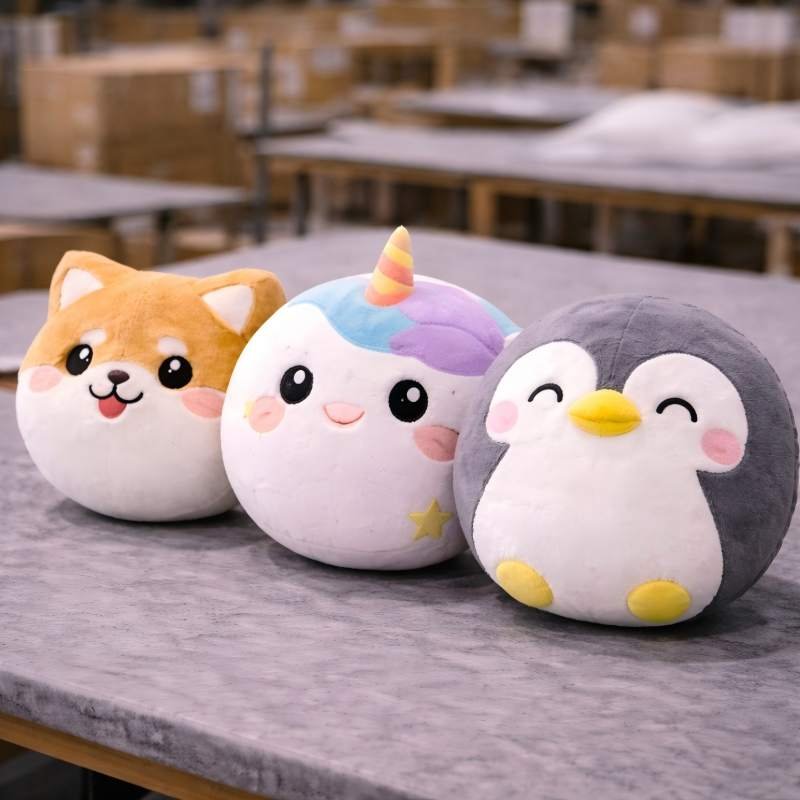
  • Silhouette priority points: what must stay sharp in the outline
  • Face/graphic safe zones: features won’t warp when filled
  • Recovery target: compression level + how it must look after unboxing time

Round / Sphere Cushion (“Ball” Pillow)

Best for: playful décor, giftable drops, cozy collections

What makes it premium: true roundness, smooth seam lines, consistent “hug feel” without lumps

Must lock:
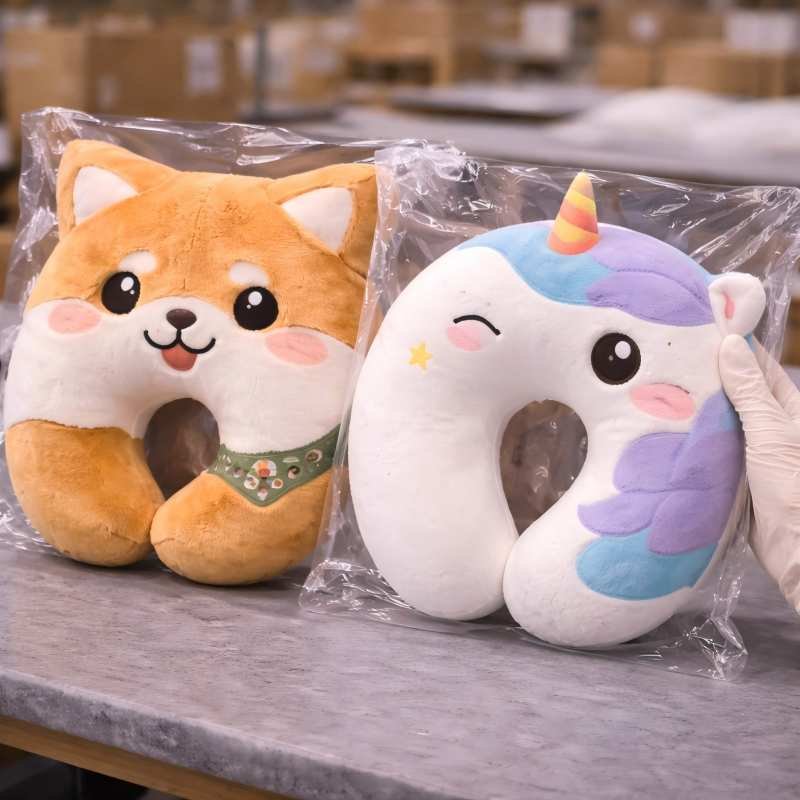
  • Roundness check: approved photo angles + “true round” expectation
  • Fill distribution rule: prevents lumps and flat spots
  • Seam smoothness standard: clean curves, no ridges under light

Neck / Travel Pillow (Ergonomic Curve)

Best for: travel brands, gift bundles, seasonal promotions, convenience retail

What makes it premium: holds ergonomic curve, rebounds after use, stays hygienic in packaging

Must lock:
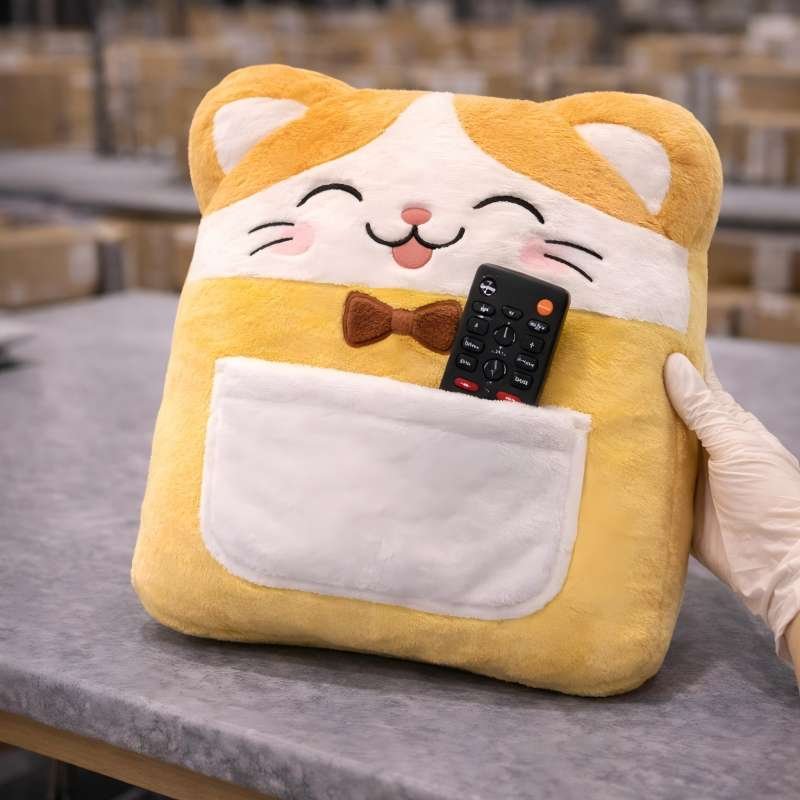
  • Curve integrity: inner opening + support thickness
  • Support feel: supportive vs soft + rebound expectation
  • Hygiene presentation: sealed pack standard + clean handling

Pillow With Pocket / Functional Feature

Best for: functional merch (remote pocket, small storage), couch accessories, gifting

What makes it premium: pocket sits flat, doesn’t distort silhouette, survives repeated use

Must lock:
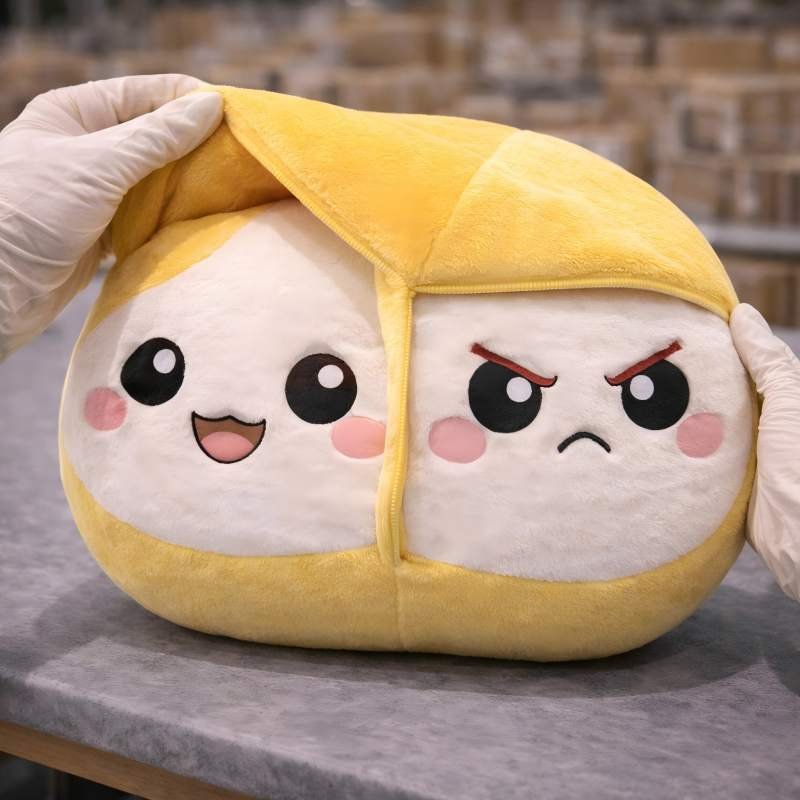
  • Feature placement: pocket sits flat without pulling the silhouette
  • Stress reinforcement: pocket corners and load points won’t tear
  • Distortion rule: feature must not warp faces/graphics or edge lines

Reversible / Two-Face Pillow (Flip Style)

Best for: novelty lines, mood products, seasonal drops, social-content items

What makes it premium: flips smoothly, aligns cleanly, looks intentional on both sides

Must lock:

  • Seam alignment: both sides centered and clean
  • Flip tension: smooth flip, clean edge, no fighting the shape
  • Two-face mapping: features stay photo-true on both sides

How Pillows Ship Efficiently Without Going Flat

Plush pillows are volume-driven. Compression can protect margin—but only if loft recovery is designed and verified. This section defines how we choose compression levels, set recovery expectations, and prevent surface crush, so pillows arrive premium in unboxing and stay premium on the couch.
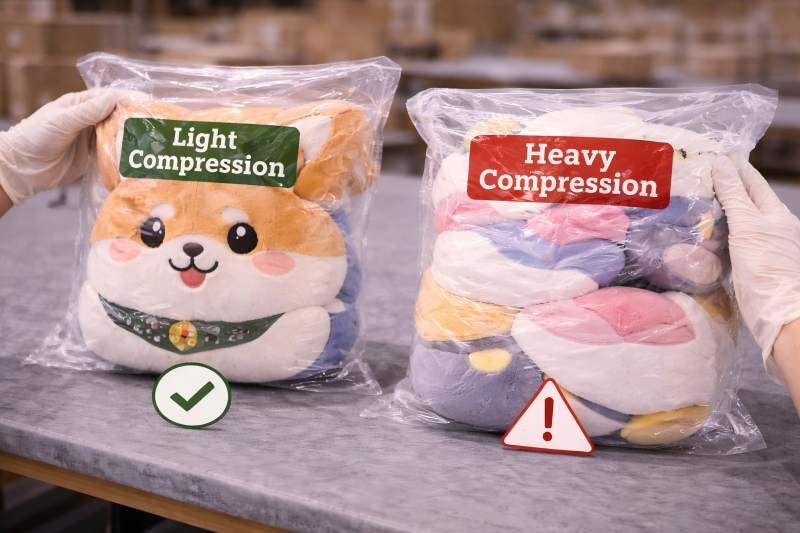
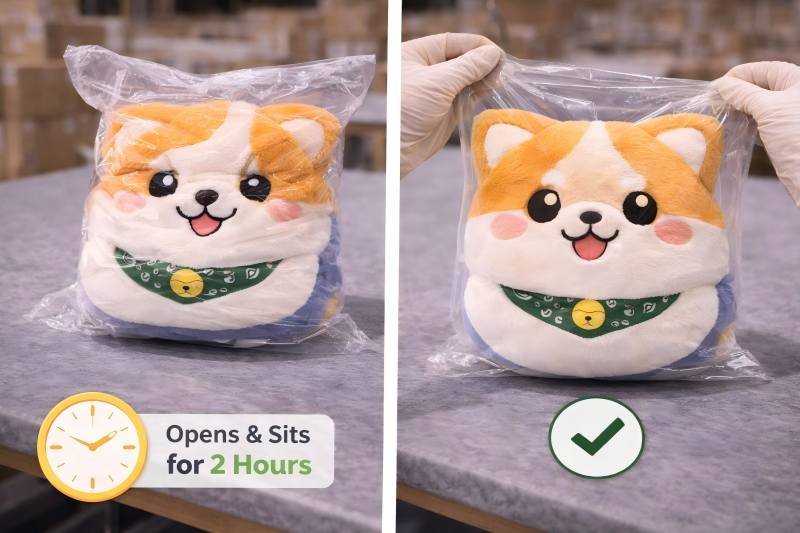
1). Choose compression by pillow behavior, not by habit

  • Light press works when the pillow’s loft rebounds quickly and the surface doesn’t mark
  • Stronger compression only works when fill and shell are designed to recover cleanly
  • “One rule for all pillows” is how programs end up with flat arrivals and returns

2). Define a recovery expectation your team can approve

  • Recovery is not “it looks fine eventually”
  • We set a clear expectation: what the pillow should look like after a set time out of carton
  • The benchmark reference includes loft appearance and edge/corner read after recovery

3). Prevent surface crush on camera-sensitive fabrics

  • Long pile and velvet-like surfaces can show pressure marks even when loft recovers
  • We lock handling and packing rules that protect the surface during compression and stacking
  • The goal is “camera-clean out of the box,” not “needs grooming to look acceptable”

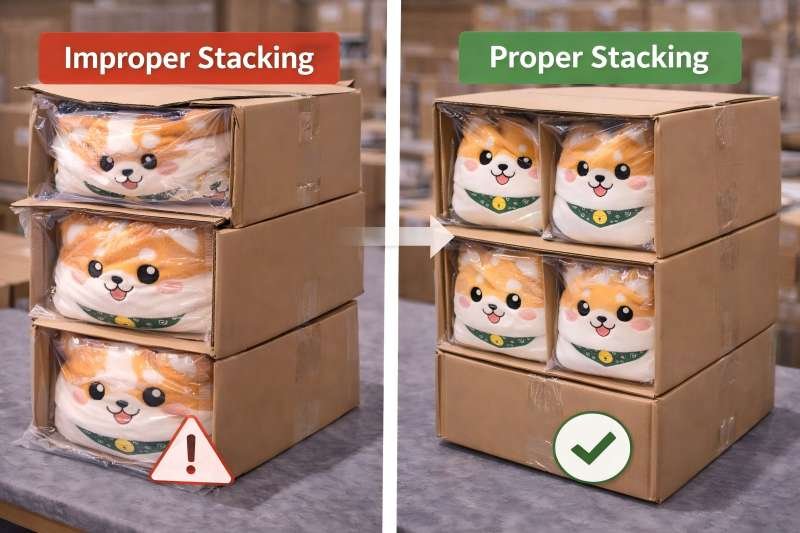
4). Carton stacking rules that protect loft and edges

  • Pillows get damaged by stacking patterns long before customers touch them
  • We align carton footprint, stacking orientation, and limits so edges don’t wave and corners don’t collapse
  • This reduces deformation risk without adding unnecessary packaging cost

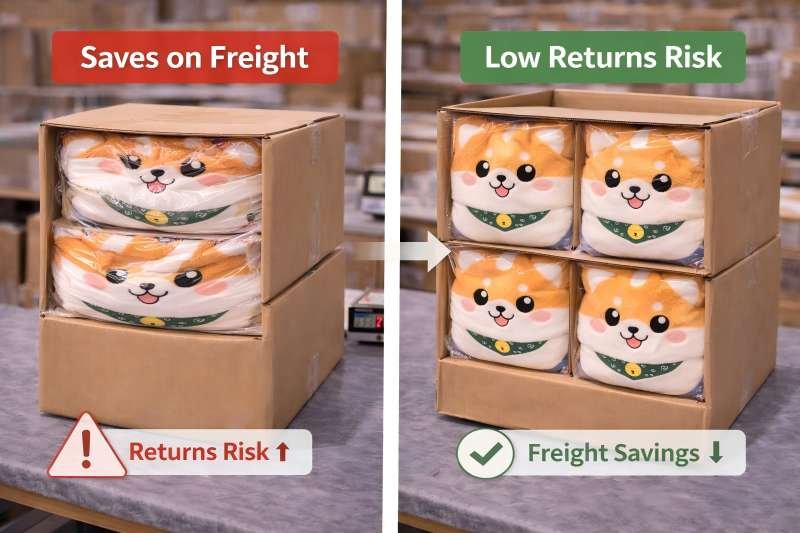
5). Cost control without return risk

  • Freight savings only matter if returns stay low
  • The program is built around a simple trade-off: cube efficiency vs loft integrity
  • Compression level is treated as a locked production decision, not a last-minute shipping trick

Customize options for Plush Pillow

6 custom plush pillow options
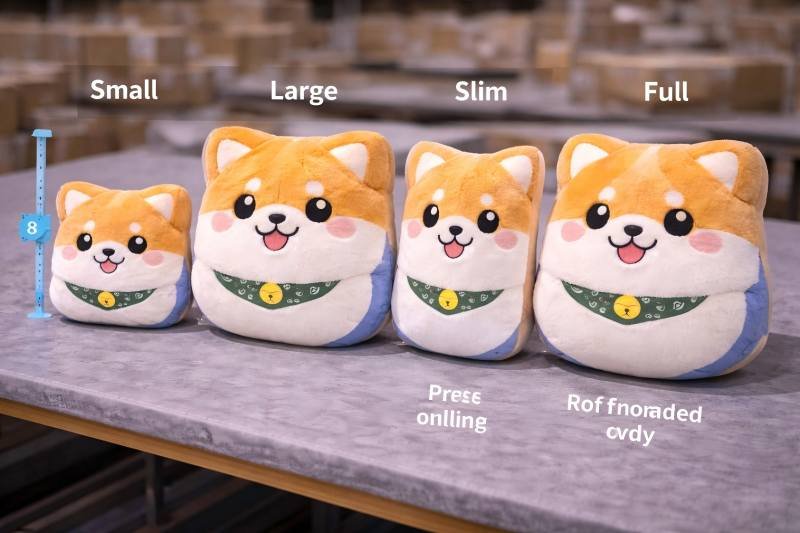
1. Size and thickness (changes feel + freight)

  • Options you can set:
    • finished width/height + thickness profile (slim décor vs full cuddle)
    • “edge look” preference: crisp outline vs soft rounded edge
  • Lock early (premium-critical):
    • a loft target window (so bulk doesn’t drift flat or over-puffy)
    • the intended use posture: decorative lean vs hug/sleep support
  • Premium pitfalls to avoid:
    • changing thickness late (it alters feel, silhouette, and packing assumptions)

2. Fill feel and weight (the real product spec)

  • Options you can set:
    • cloud-soft / supportive / squishy / structured
    • fast rebound vs slow rebound (the “luxury recovery” feel)
    • weight impression: light giftable vs premium weight
  • Lock early (premium-critical):
    • a feel definition your team can approve (what “right” feels like in hand)
    • size-based fill targets so every unit squeezes the same
  • Premium pitfalls to avoid:
    • “just add more fill” fixes (often causes bulging edges and uneven feel)

3. Shell construction (holds silhouette)

  • Options you can set:
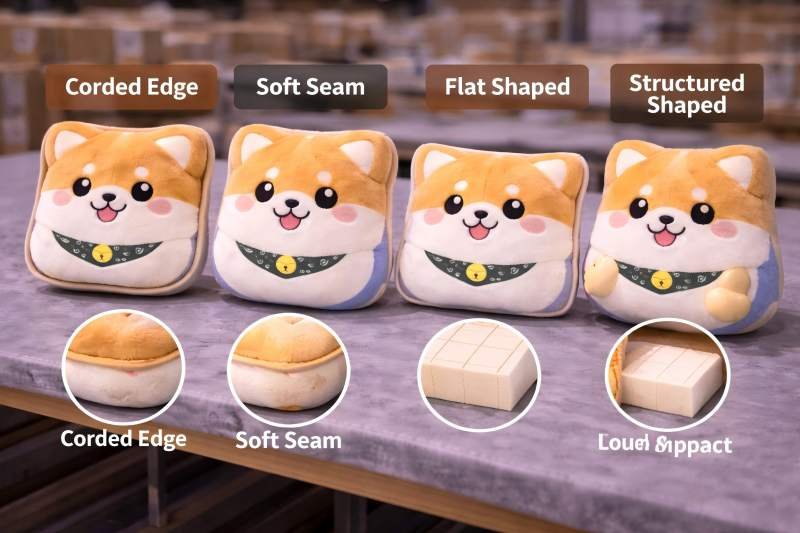
    • square/rectangle/round/shaped outline with silhouette priorities
    • edge style: piping/corded edge/clean seam (chosen for the look you want)
    • internal structure when needed (to prevent corner collapse and lumping)
  • Lock early (premium-critical):
    • corner fullness standard (no empty corners, no balloon corners)
    • edge straightness expectation (prevents “wavy pillow” on shelf)
  • Premium pitfalls to avoid:
    • treating the shell as “just a cover” (shell geometry decides silhouette)

4. Surface branding decoration (visibility and stability)

  • Options you can set:
    • embroidery / patch / print decisions based on scale and camera requirements
    • placement priorities: what must align perfectly vs what can float
    • “face discipline” for character pillows (features must read correctly when filled)
  • Lock early (premium-critical):
    • stable decoration zones that won’t warp under fill pressure
    • a photo reference angle that defines “approved alignment”
  • Premium pitfalls to avoid:
    • placing critical facial features across deformation zones (warped expressions on camera)

5. Closures and inserts (premium & convenience)

  • Options you can set:
    • hidden zipper vs no-zip construction
    • removable insert vs direct fill
    • cleaning expectation aligned to real consumer behavior
  • Lock early (premium-critical):
    • zipper placement that won’t create wavy edges or silhouette bending
    • insert fit that supports the shell volume (prevents wrinkling and corner issues)
  • Premium pitfalls to avoid:
    • zipper tape stiffness fighting the silhouette (creates “cheap edge” look)

6. Packaging and presentation (prevents returns)

  • Options you can set:
    • individual protection (polybag/box) + insert cards/story tags
    • bundle/kitting rules for gift sets and PR drops
    • barcode and label placement that matches your receiving flow
  • Lock early (premium-critical):
    • a consistent presentation standard: clean, protected, camera-ready on arrival
    • kitting rules that prevent variant mix-ups and mis-packs
  • Premium pitfalls to avoid:
    • treating packaging as an afterthought (it’s where scuffs, crush marks, and mis-labeling happen)

The Path From First Sample to Bulk

8 engineered steps lock decisions and keep brands unique and outstanding.

Step 1

Confirm feel target

You share: size, channel, “feel words,” and your in-hand date.

You receive: a fill + pack-out direction designed around carton efficiency.

Step 2

Build plan (shell+fill)

We choose a shell construction that holds shape and a fill strategy that matches your feel.

You receive: a practical build direction (what must not change later).

Step 3

Fabric selection

Fabric is chosen for surface uniformity and handling behavior.

You receive: fabric direction and finishing expectations.

Step 4

Prototype sample

Prototype review focuses on feel, rebound, corner fullness, silhouette, and surface finish.

You receive: a review checklist aligned to pillow realities.

Step 5

Controlled revision

We adjust fill weight/distribution or shell geometry before locking.

You receive: updated reference and what is now frozen.

Step 6

production benchmark

A bulk-like reference confirms repeatable feel and shape stability.

You receive: measurable checkpoints for fill weight and silhouette.

Step 7

Pack-out confirmation

Compression level and carton plan are confirmed based on your channel.

You receive: packing rules that protect shape and reduce freight.

Step 8

Bulk production

Shape-critical points (corners, thickness, symmetry) are checked consistently.

You receive: consistency evidence that supports reorders.
Why plush pillow Brands choose Uniomy as parnter?

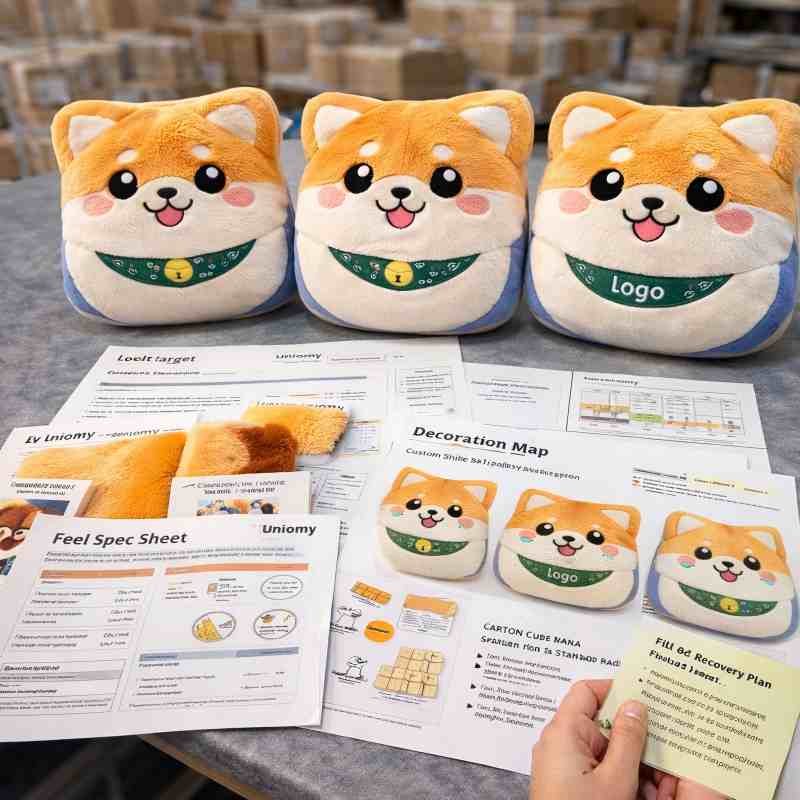
Premium pillow programs don’t scale on “memory.” They scale on a filed reference set your team can reuse—so new teammates, new seasons, and new reorders don’t change how the pillow feels, looks, or ships.

What we build for you (so the program is governable):

  • Feel Spec Sheet: loft target window + squeeze/rebound expectation your team can approve (not adjectives)
  • Fill Control Notes: size-linked fill targets + distribution rules that prevent corner collapse and lumping
  • Edge & Corner Standard: what “clean edge read” means on shelf and on camera (with reference angles)
  • Decoration Map: stable zones for large-area faces/graphics so alignment stays photo-true after filling
  • Insert & Closure Fit Rules (if used): zipper placement that avoids ripples + insert sizing rules that preserve silhouette
  • Compression & Recovery Standard: the approved compression level + the recovery expectation after unboxing (time + appearance)
  • Carton Cube Plan: carton footprint logic + stacking rules that protect loft and prevent surface crush
  • Change-Control Rules: what requires re-approval vs what doesn’t (so “small tweaks” don’t silently drift the program)

Common Pillow Programs Brands Run

6 common pillow program patterns brands run—each with different priorities.
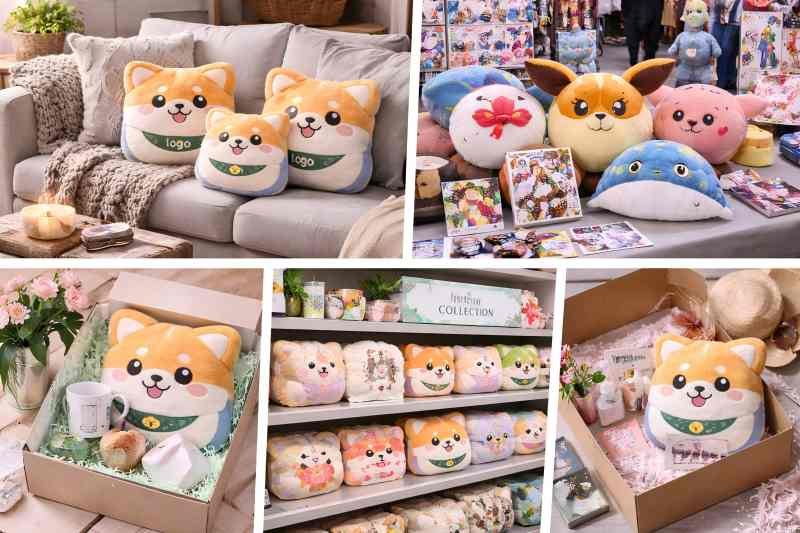
  • Home décor drops and lifestyle collections
  • Character pillow launches for IP and creator merch
  • Gift-set inserts and PR kit pillows
  • Travel brand bundles and seasonal promos
  • Retail throw pillow replenishment programs
  • Subscription box or limited-edition sets

Custom Plush Pillow Manufacturer

1) What causes pillows to feel inconsistent?

Fill weight variation and distribution variation. That’s why we lock fill targets and distribution rules early.

2) Can you control corner fullness and prevent lumps?

Yes—through shell geometry choices, fill planning, and checkpoints during production.

3) Can pillows be compressed for shipping without damage?

Often yes, but compression level must match the pillow type and surface fabric, with recovery expectations defined.

4) Why is freight cost such a big deal for pillows?

Because pillows ship as volume. Carton efficiency and compression rules directly shape landed cost.

5) Can we do shaped pillows with character faces?

Yes—silhouette stability and decoration placement must be engineered so faces stay clean and aligned.

6) Do you offer removable inserts and zippers?

Yes. Zipper placement and insert sizing must support shape rather than distort it.

7) Can we match a full plush character and a pillow version?

Yes. Identity can stay consistent while the construction is redesigned for pillow stability and shipping efficiency.

Stop Custom Pillow Returns Before They Start

Plush pillows don’t fail in sampling—they fail after compression, stacking, and real handling. Send a few inputs and we’ll run a pillow-specific risk screen, then return a build plan that locks hand-feel, silhouette, and carton economics before bulk.

Share these fast inputs:

  • Pillow type + target finished size(s) + thickness preference
  • Feel target in 3 words (e.g., cloud-soft / supportive / squishy) + any reference pillow link
  • Channel + receiving style (Retail / 3PL / DTC / FBA-like) + in-hand date
  • Artwork/face placement (if any) + “must stay aligned” areas
  • Packing preference (boxed / bagged / compressed) + any carton limits you already know

We reply with the recommended path and input checklist within 1 business day after receiving the 3 points above.

Tell Us About Your Plush Project (Quote Form)

This form is built for accurate quoting—size, quantity, materials, accessories, and compliance needs. The more complete your brief, the fewer revisions and the faster your sample can start.

Contact Us Today, Get Reply Within 12-24 Hours

I am Nika, our team would be happy to meet you and help to build your brand plush.