Embroidery, Applique & Printing — Decoration That Stays Clear and Durable at Scale

Plush decoration isn’t just about looks—it’s about staying readable and intact in production.

We support multiple decoration methods for plush projects and focus on how each performs on different fabrics, shapes, and production volumes—so approved designs remain consistent, durable, and brand-readable at scale.

What Decoration Methods We Support for Plush Projects?

4 proven plush decoration methods—choose fast, scale consistently.
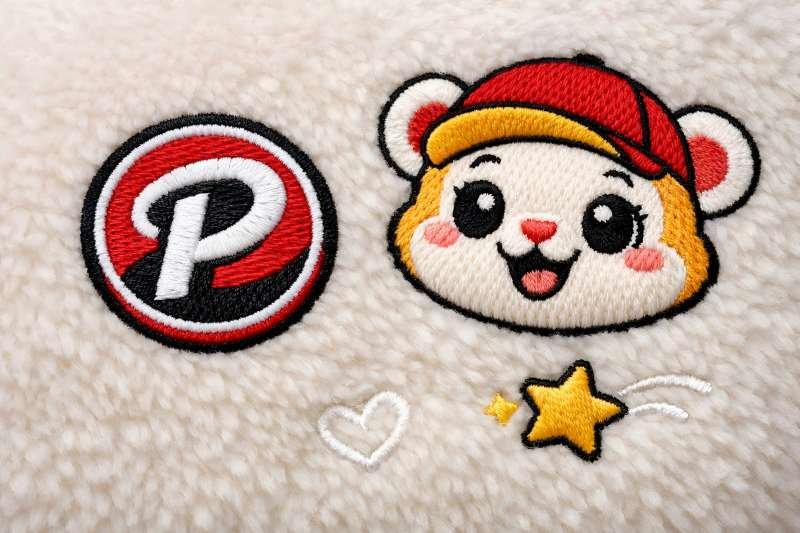
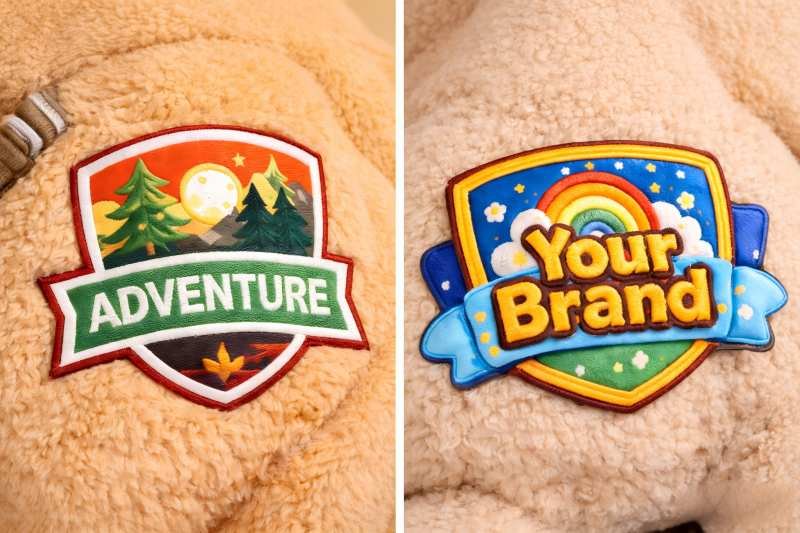
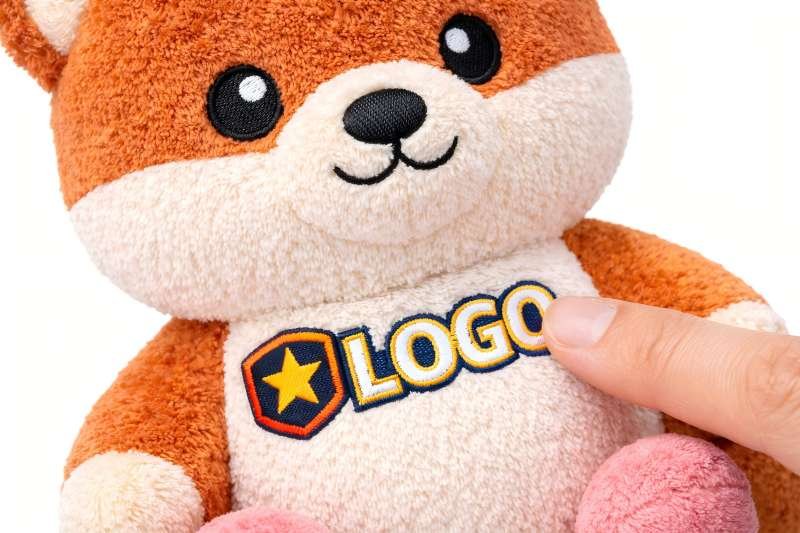
Embroidery (Logo / Face Details / Outlines)

Best when:logos, line art, facial outlines, small-to-medium color counts, designs that must stay readable on textured plush.

Pros (what you gain)

  • High logo readability on pile fabrics when artwork is simplified.
  • Durable stitching for frequent handling and long-term display.
  • Premium, dimensional look that photographs well for branding shots.

Cons (trade-offs to know upfront)

  • Very small text can lose clarity on fluffy fabrics (needs simplification).
  • Large filled areas may add stiffness or distortion on soft plush surfaces.
  • Fine gradients are not the strength of embroidery.

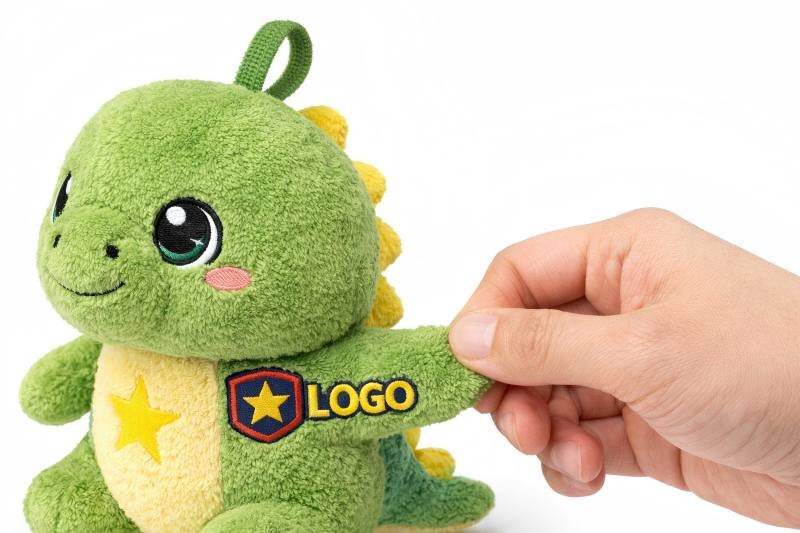
Applique (Patch / Layered Parts / Felt or Fabric Pieces)

Best when:bold color blocks, large shapes, badges/patch looks, designs that need strong contrast and clean borders.

Pros

  • Crisp shapes and strong contrast even on fluffy plush.
  • Works well for large color areas without heavy stitch density.
  • Great for brand patches and layered character elements.

Cons

  • Edges are a durability focus (requires secure attachment choices).
  • Not ideal for tiny details or micro-text.
  • More components can mean more approval points in sampling.

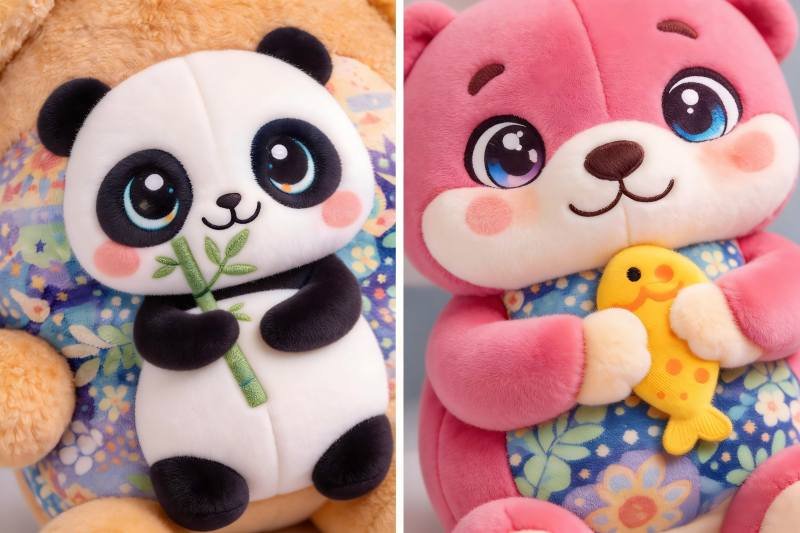
Printing (Face / Patterns / Color Areas)

Best when:full-color faces, gradients, complex patterns, large artwork areas that should remain soft.

Pros

  • Supports complex colors (including gradients and multi-color patterns).
  • Keeps plush hand-feel softer than dense stitching in big areas.
  • Good for character facial expressions and repeated pattern designs.

Cons

  • Pile direction & fabric texture affect sharpness (needs the right base fabric).
  • Ultra-fine lines and tiny text may be less forgiving than stitches.
  • Best results depend on artwork setup + fabric choice (confirmed during sampling).

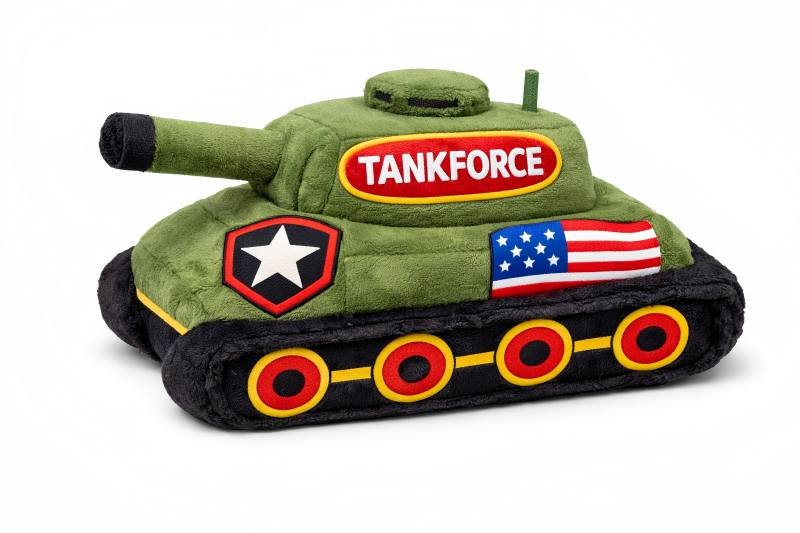
Mixed Methods (Embroidery + Applique + Printing)

Best when:you need both brand readability and rich color, or you want a premium “layered” look without sacrificing softness.

Pros

  • Balances readability + color richness (e.g., embroidered logo + printed face).
  • Allows strong branding while keeping large areas soft.
  • Often reduces revisions by assigning each artwork part to its best method.

Cons

  • Requires a clear division of artwork elements (what’s stitched vs printed vs layered).
  • More methods = more alignment/placement control needed (handled in later modules).
  • Sampling may include one extra round to lock final balance.

Beyond embroidery supply—an innovation system for consistent decoration.

Which Decoration Method Fits Which Plush Use Case?

Match the decoration method to artwork type, plush size, fabric texture, and end use. This section maps each option to the most stable outcome—logo readability, face expression, color coverage, and durability—so the project stays clear and consistent from sample to bulk.
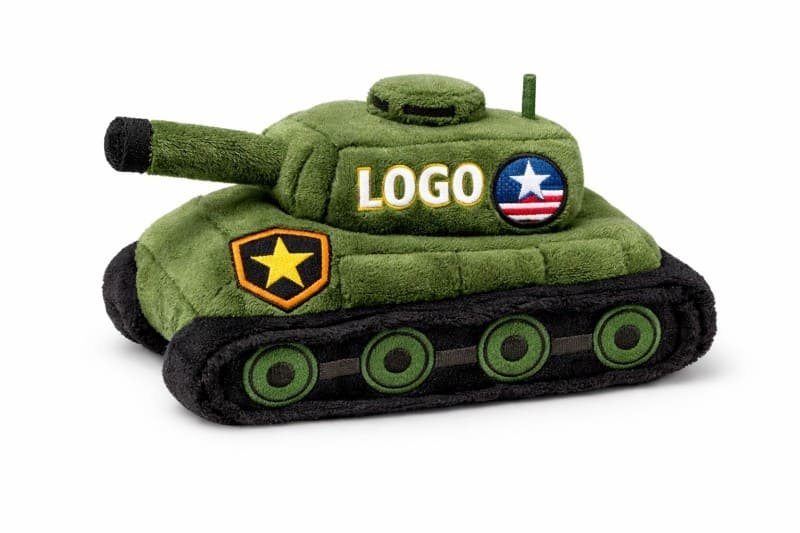
1) If the priority is logo readability

Best fit

  • Embroidery: simple logos, outlines, badges, clean edges on textured plush
  • Appliqué (patch style): bold logos, strong contrast, large shapes, “badge/label” look
  • Mixed: embroidery for key lines + appliqué for large blocks

Avoid when possible

  • Printing on high-pile plush for small text (texture can soften edges)

Decision factors

  • Small text and thin lines should be simplified for stable bulk readability.

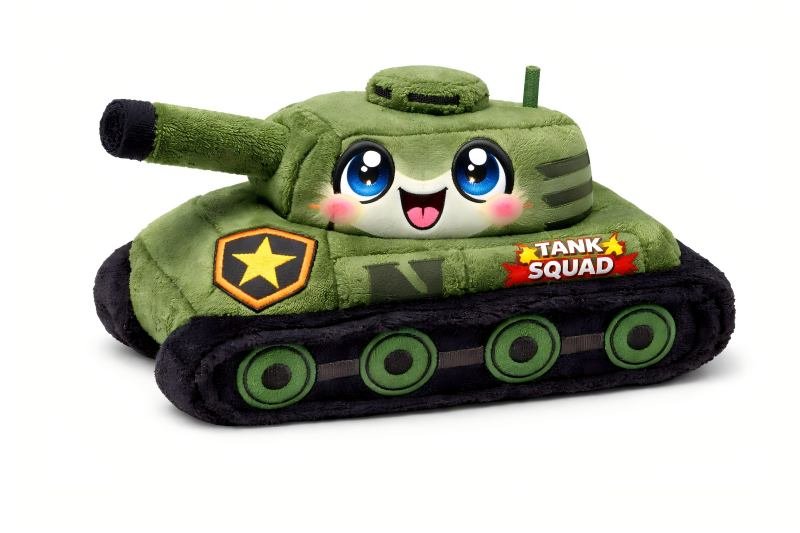
2) If the priority is face expression & character detail

Best fit

  • Printing: complex facial expressions, gradients, multi-color details
  • Mixed: printed face + embroidered outline/eyelash details for definition

Avoid when possible

  • Dense embroidery fill across large facial areas (can stiffen or distort soft plush)

Decision factors

  • Facial clarity depends heavily on fabric surface; smoother plush surfaces keep printed expressions sharper.

3) If the priority is large color areas or bold shapes

Best fit

  • Appliqué: layered parts, clean borders, strong contrast, large shapes
  • Printing: wide color coverage or repeat patterns without extra thickness
  • Mixed: appliqué for main shapes + embroidery for borders

Avoid when possible

  • Embroidery fill for very large solid blocks when softness must be preserved

Decision factors

  • Large areas should stay soft and stable—choose the route that avoids excessive density.

4) If the priority is photo impact & e-commerce visuals

Best fit

  • Embroidery: dimensional, premium look; strong edge definition in product photos
  • Mixed: embroidery for crisp branding + printing for rich color
  • Appliqué: high-contrast shapes that read clearly on camera

Avoid when possible

  • Overly detailed micro-elements that won’t read at listing image size

Decision factors

  • The best decoration is the one that remains readable at thumbnail scale.

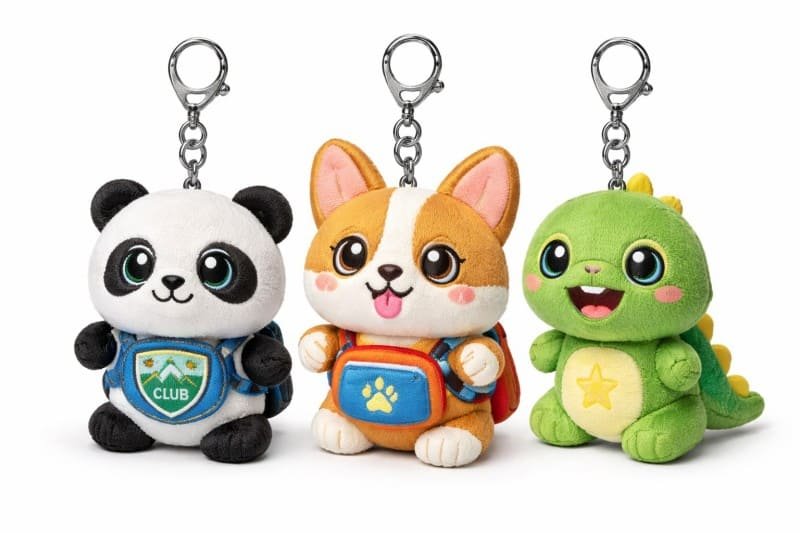
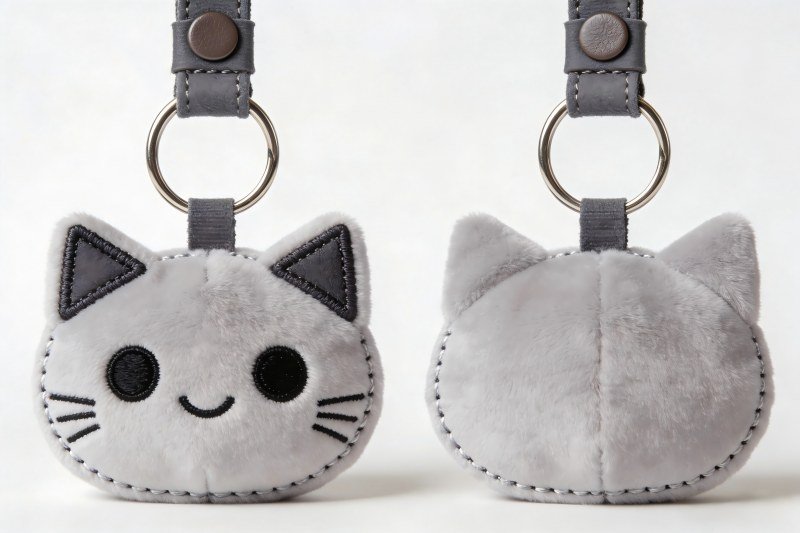
5) If the plush is small (keychains, 10–15 cm)

Best fit

  • Embroidery for simplified logos/lines
  • Printing for facial features where small details matter
  • Appliqué only for clean, larger shapes (avoid tiny layered pieces)

Common risk

  • Too much detail becomes “noise” on small plush; simplification beats complexity.

6) If the plush is large (display, mascot, 30 cm+)

Best fit

  • Appliqué for big shapes and bold branding
  • Printing for large faces, patterns, gradients
  • Embroidery for key outlines and premium details (not full-area fill)

Common benefit

  • Larger size allows clearer separation of methods: outline vs fill vs pattern.

7) If the fabric surface is high-pile / fuzzy / textured

Best fit

  • Embroidery for logos and outlines (with artwork simplified)
  • Appliqué for crisp edges and strong contrast
  • Mixed to keep key lines readable

Use carefully

  • Printing for fine lines or tiny text (texture can soften edges)

8) If the plush needs higher wear tolerance (kids play, frequent handling)

Best fit

  • Embroidery for secure long-term readability
  • Appliqué when edge reinforcement is planned
  • Mixed when combining durability + color is required

Decision factors

  • Method selection should avoid high-stress zones and reduce edge lifting risk (covered in H2-4 durability module).

Decoration Method Fit Matrix

Use-Case Comparison / Decision FactorEmbroideryAppliquéPrintingMixed Methods
Logo readability (small text / crisp edges)✅ Best for outlines & simplified logos✅ Best for bold logos & patch look⚠️ Texture may soften small text✅ Best balance (logo lines + color fill)
Face expression (multi-color, gradients)⚠️ Limited for complex facial color⚠️ Good for simple shapes only✅ Best for facial detail & gradients✅ Print face + embroidered outline
Large color blocks (soft hand-feel needed)⚠️ Dense fill may stiffen✅ Great for large shapes✅ Great for wide coverage✅ Use each method where strongest
Patterns (repeat graphics, full coverage)⚠️ Not ideal for dense patterns⚠️ Better for large motif pieces✅ Best for patterns✅ Print patterns + add stitch accents
High-pile / fluffy fabrics✅ Strong option (with simplification)✅ Crisp edges, strong contrast⚠️ Fine lines can blur✅ Choose per artwork zones
Small plush (keychains 10–15cm)✅ Simplified logos & key lines⚠️ Avoid tiny layered pieces✅ Sharp faces if fabric allows✅ When both branding + face needed
Large plush / mascots (30cm+)✅ Premium accents & edges✅ Big shapes, badges✅ Large faces & color areas✅ Most “brand-ready” for scale
Photo impact (e-commerce thumbnails)✅ Dimensional, reads well✅ High contrast, clean shapes✅ Rich colors; clarity depends on fabric✅ Best overall readability + richness
Wear tolerance (frequent handling)✅ Generally strongest for long-term✅ Strong when edges reinforced⚠️ Depends on fabric & placement✅ Plan durability by zoning methods
Revision risk (artwork sensitivity)⚠️ Needs simplification for micro-detail⚠️ Needs clear shape separation⚠️ Needs correct fabric pairing✅ Lowest when artwork is zoned correctly
Best forLogos, outlines, premium definitionPatches, bold blocks, layered shapesFaces, gradients, patternsBrand-ready balance for bulk consistency
Watch-outsTiny text, huge solid fillsEdge durability, small partsHigh pile softens edgesNeeds clear artwork zoning

Pick by outcome: Embroidery for crisp branding, Printing for expressive faces, Appliqué for bold shapes, and Mixed when both readability and color must stay consistent from sample to bulk.
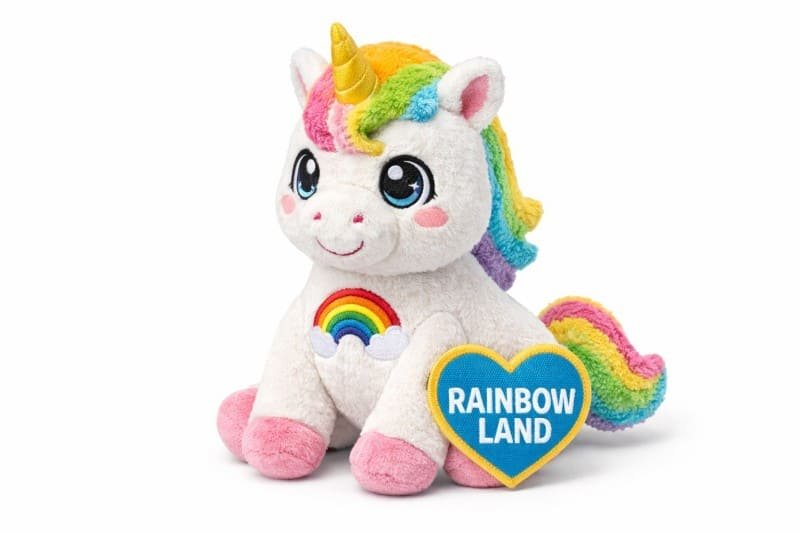
How Decoration Readability Is Kept Consistent

Readability Consistency = Controlled Inputs + Controlled Execution

“Clear” on plush usually breaks for four reasons: scale drift, placement drift, edge blur, and operator interpretation. The consistency system below removes interpretation and anchors execution to the approved reference.

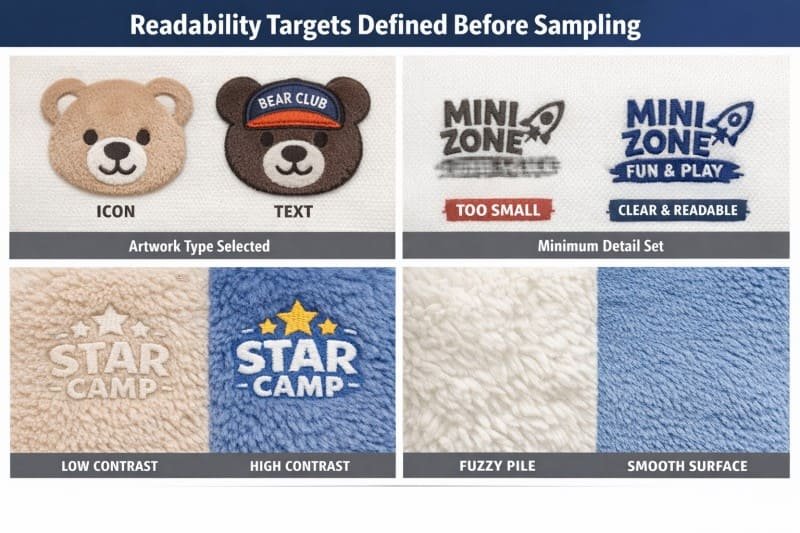
1). Readability Targets Are Defined Before Sampling (Not After Problems)

What gets locked first (decision inputs)

  • Artwork type: text vs icon vs line art vs filled shapes
  • Minimum readable detail: smallest line weight / smallest letter height that must remain legible
  • Contrast expectation: thread/patch/print color against the chosen fabric color and pile
  • Surface reality: high-pile vs smooth plush (readability limits differ)

Decision Factors

  • Tiny text + fluffy pile = simplify early to protect bulk consistency.
  • If readability matters at thumbnail scale, “less detail” wins.

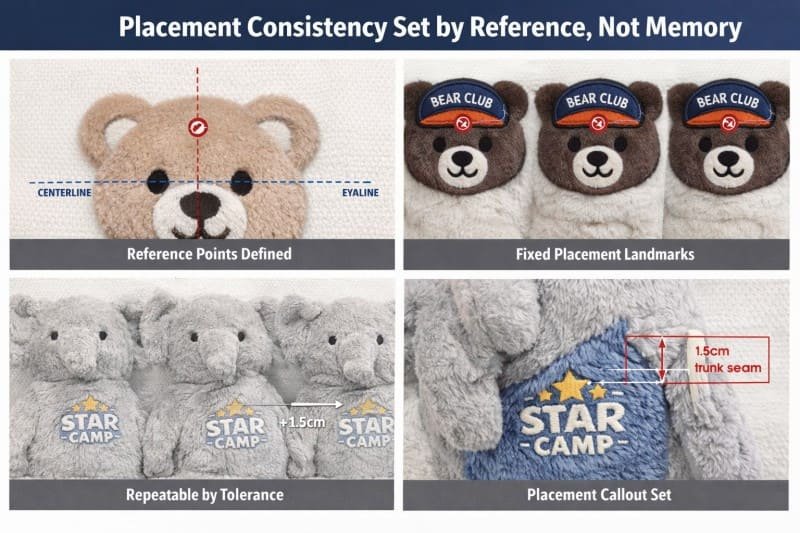
2). Placement Consistency Is Set by Reference, Not Memory

How placement is kept repeatable

  • Placement reference points are defined (centerline, seam lines, facial axis, key landmarks)
  • Fixed location rules per style/SKU (same method across repeat orders)
  • Tolerance thinking is built in: placement is measured against reference, not eyeballed

Decision Factors

  • Plush bodies vary slightly by stuffing and sewing tension; references keep “visual position” consistent even when fabric moves.

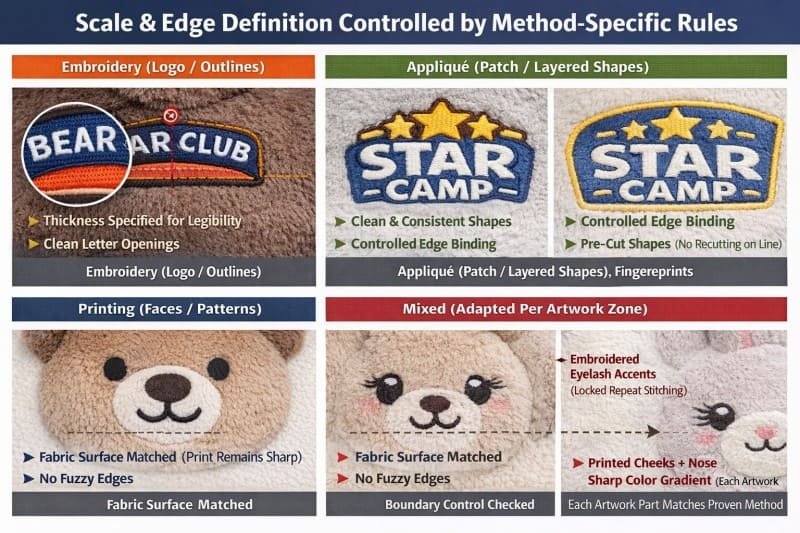
3). Scale & Edge Definition Are Controlled by Method-Specific Rules

Readability fails most often when scale changes or edges soften.

For Embroidery (logo / outlines)

  • Scale stays consistent via locked artwork size and edge-definition target
  • Density and stitch direction are used to protect letter openings and line separation
  • Micro text is managed by simplification rules, not “try harder” on the machine

For Appliqué (patch / layered shapes)

  • Edge clarity depends on clean shape boundaries and edge treatment choice
  • Layered parts follow a repeatable shape set—not recut decisions on the line

For Printing (faces / patterns)

  • Sharpness relies on fabric surface choice + print boundary control
  • Fine lines are assigned only when the surface can hold them consistently

Decision Factors

  • If the method cannot hold a detail reliably in bulk, that detail should be reassigned (mixed methods) or simplified.

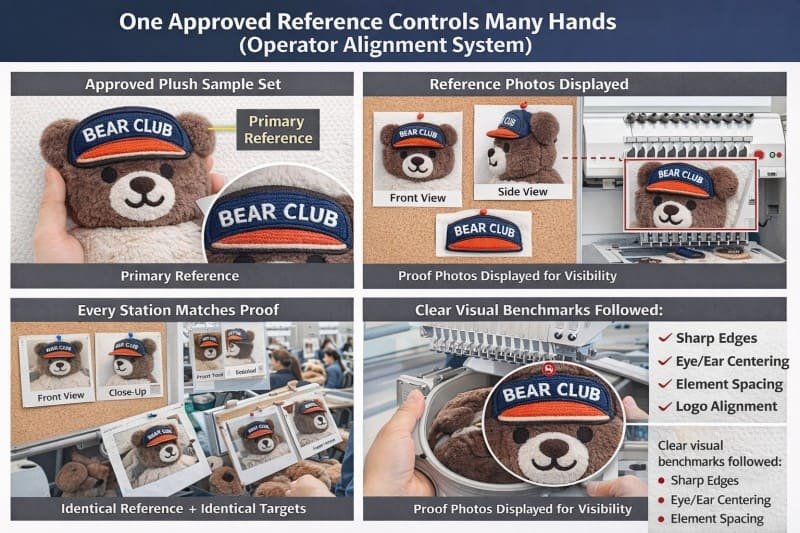
4). One Approved Reference Controls Many Hands (Operator Alignment System)

Consistency is strongest when every station sees the same “approved truth.”

How line interpretation is removed

  • The approved sample becomes the primary reference
  • Reference photos are displayed at workstations (front/side/close-up)
  • Operators follow the same visual benchmarks for:
    • edge sharpness
    • spacing between elements
    • alignment to facial axis / seams
    • logo orientation

Decision Factors

  • “Looks about right” is not a system. Visual benchmarks are.

How Decoration Durability Is Considered in Production?

Durability Starts with Method–Fabric Compatibility

Decoration failures usually come from predictable interactions: stretch, pile movement, friction, folding, and seam tension. Durability improves when wear is designed in early—before bulk begins—so the approved look remains stable in real-world handling, not only on a perfect sample.

1). Fabric × Decoration Compatibility Is Checked First

Durability considerations by method

  • Embroidery: avoids excessive density on soft or stretchy bases that can pucker, distort, or lose edge definition over time.
  • Appliqué: confirms the base fabric can hold edge stitching and layered parts securely without lifting or fraying at borders.
  • Printing: confirms the surface can hold clean boundaries without fuzzing as pile moves and fibers rise.

Decision Factors

The best-looking option on a screen can fail on the wrong plush surface. Compatibility prevents rework later.
2). Stress Zones Are Avoided or Re-Engineered

Wear concentrates in repeatable locations. Durability planning starts by mapping stress and keeping decoration out of failure zones whenever possible.

High-stress areas to treat carefully

  • Grab/pull zones: ears, tails, arms, handles, hanging loops
  • Packing fold zones: head/neck bends, seam intersections
  • Constant rub zones: belly front, under-chin, side seams

Durability choices that reduce failure

  • Shift decoration away from stress points when possible
  • Use mixed methods to keep heavy/dense work off flexible zones
  • Keep borders away from seam ridges where distortion and lifting start

Decision Factors

If a spot is pulled, folded, or rubbed daily, decoration should be treated like a wear part—not a display graphic.

3). Edge Management Is the Core of Long-Term Durability

Most durability problems appear at edges: lifting, peeling, fraying, cracking, or fuzzing. Edge choices are durability choices.

For embroidery

Edge durability comes from clean borders and stable stitch structure—lines stay separated, borders don’t collapse as pile shifts.

For appliqué

Edge durability depends on edge treatment and secure stitching paths—borders resist lifting and fray.

For printing

Edge durability depends on boundary control and surface suitability—edges stay visually clean instead of fuzzing out on high-pile fabrics.

Decision Factors

Clean edges are not just aesthetics—edges are where wear starts.

4). Attachment Choices Follow Use Intensity

Decoration is selected by use scenario, not by appearance alone.

Use intensity examples

  • Display/collector: prioritize photo impact and crisp branding
  • Kids/frequent handling: prioritize secure edges, reduced snag points, simplified detail
  • Keychains/bag charms: treat as high-friction items; avoid fragile micro elements

Decision Factors

Higher friction and pulling require more reinforced, repeatable execution choices.

5). Production Execution Focuses on Repeatability, Not “One Perfect Piece”

Durability improves when execution stays stable unit to unit—variation creates weak points.

Execution priorities during bulk

  • Keep the approved method and layout unchanged (no on-line reinterpretation)
  • Maintain consistent placement and scale to avoid thin spots, edge drift, or partial attachment
  • Prevent finishing/packing steps from damaging decoration (folds and compression considered)

Decision Factors

A durable result is a consistent result—batch stability protects long-term wear.
From Approved Decoration Sample to Production Execution

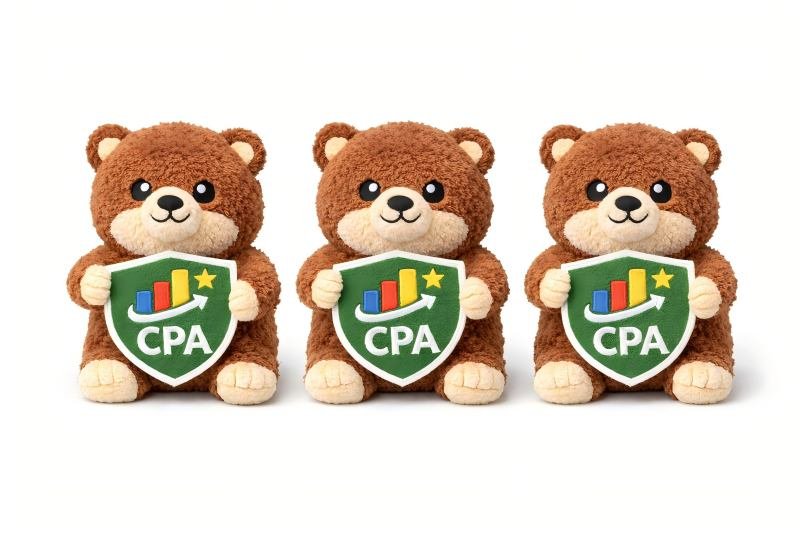
Once decoration is approved, the objective is not “make it similar.” The objective is make it match—locked artwork, locked placement, locked scale, and workstation-visible proof photos. Production follows a repeatable execution pack, preventing “reinterpretation” and keeping the approved look intact.

1. The Approved Sample Becomes the Primary Execution Reference

What gets frozen after approval

  • Final decoration method (embroidery / appliqué / printing / mixed)
  • Final artwork version (no silent redraws)
  • Final scale (size locked)
  • Final placement view (front/side/close-up angles)

Decision Factors

  • If the “approved truth” is unclear, bulk drift becomes inevitable. One reference prevents drift.

2. A “Decoration Execution Pack” Connects Sample to Production

A production line needs repeatable inputs, not messages passed by memory.

Execution pack typically includes

  • Artwork file + method notes (what goes embroidered/printed/appliqué)
  • Placement reference photos (front view + close-up, with key landmarks)
  • Scale callouts (logo width/height, patch size, print boundary size)
  • Edge/clarity benchmarks (what “sharp” means visually)
  • Do-not-change notes (no element resizing, no moving, no re-centering decisions)

Decision Factors

  • Most bulk inconsistency comes from missing references, not capability limits.

3. Workstation Visual References Keep Everyone Aligned

References are only useful if they’re visible where work happens.

How alignment is maintained

  • Reference photos displayed at the decoration station(s)
  • Close-up view available for edge definition and spacing checks
  • One consistent “pass/fail look” for readability and placement

Decision Factors

  • Consistency improves when the operator can compare in real time, not after defects appear.
  •  

4. First-Article Confirmation Locks the Bulk Baseline

Before full run, the first produced piece is checked against the approved reference.

What gets confirmed

  • Placement matches the reference view
  • Scale matches locked callouts
  • Edge definition matches the benchmark
  • Element spacing matches the approved look

Decision Factors

  • A controlled first piece prevents a full batch from drifting in the same direction.

5. In-Process Checks Keep the Approved Look Stable Across the Run

During bulk, checks focus on buyer-visible consistency.

In-process checkpoints

  • Readability at normal viewing distance
  • Thumbnail readability (photo impact)
  • Edge cleanliness and line separation
  • Placement alignment against reference landmarks

Decision Factors

  • The goal is not “perfect once,” but “repeatable every time.”

FAQs about Decoration Methods & Limitations

Q1: Can small logo details stay readable on a tiny plush?

Feasibility depends on target size and fabric pile. When micro-details fall below a stable threshold, a simplified version protects readability and prevents bulk drift.

Q2: Which method looks the most premium?

Embroidery and well-finished appliqué often deliver the most premium, dimensional look. The best choice depends on fabric texture and how much of the area needs coverage.

Q3: Can printing handle gradients and complex artwork?

Often yes—especially for faces and multi-color artwork. Results depend on fabric surface and boundary sharpness requirements; a safe recommendation can be mapped once artwork and fabric type are confirmed.

Q4: How is placement kept consistent across batches?

Placement is locked to the approved reference (front/side/close-up), then checked against the same visual landmarks during production—so bulk pieces match the approved look, not a new interpretation.

Q5: Will decoration choices affect lead time and cost?

Yes. High stitch density, multi-layer appliqué, or mixed-method workflows add steps. Early feasibility review prevents last-minute changes that create delays and rework.

Q6: Does fabric choice change decoration clarity and durability?

Yes. High-pile plush can soften fine lines and small text, while smoother surfaces hold sharper boundaries. Method selection should follow fabric behavior to keep clarity stable in bulk.

Q7: Can methods be combined on one plush (mixed decoration)?

Yes—mixed methods are often the safest way to balance logo readability and rich color. Each artwork zone is assigned to the method that holds up best in bulk.

Ready to Lock Decoration Clarity Before Bulk?

Match Decoration method to fabric—now.

Send your brand artwork from share:

  • Product type (plush / keychain / mascot)
  • Target size (cm)
  • Fabric type (high-pile / short-pile / smooth)
  • Decoration priority (logo clarity / face detail / durability / photo impact)
  • Quantity range (optional)

Contact Us Today, Get Reply Within 12-24 Hours

I am Nika, our team would be happy to meet you and help to build your brand plush.