
Tiered pricing is not “discount magic.” It happens when fixed costs are spread across more units and production runs become more efficient at higher quantities. This page provides copy-ready tier structures (not public price promises) so you can estimate budgets, plan launches, and choose a realistic MOQ and quantity tier.
Uniomy’s controlled costing system prevents tier confusion:
“MOQ shock” → fixed-cost logic
“discount disappears” → SKU/pack-out drift
“re-quote loops” → locked specs
Three cost buckets explain most plush price breaks, fixed vs variable
Most custom plush pricing can be grouped into three buckets: (1) fixed and semi-fixed setup costs, (2) variable materials and labor per unit, and (3) packaging/handling rules. Higher quantities mainly reduce fixed-cost impact and stabilize production efficiency—creating real price breaks.
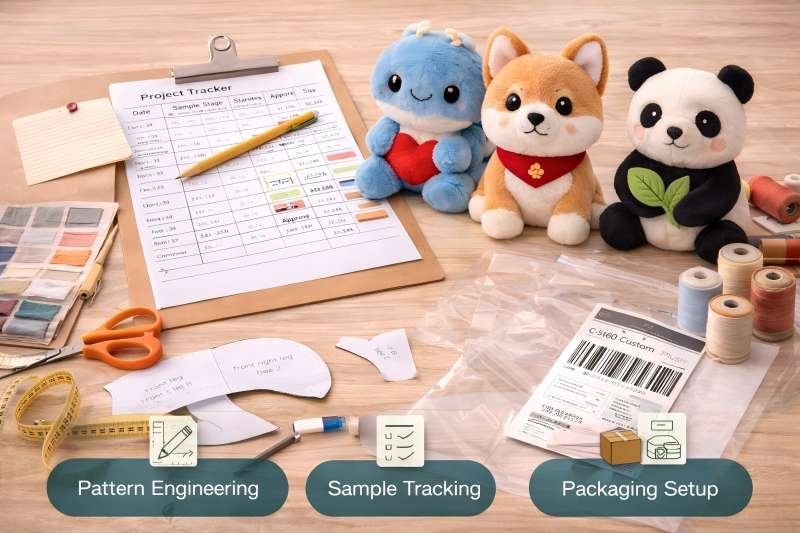
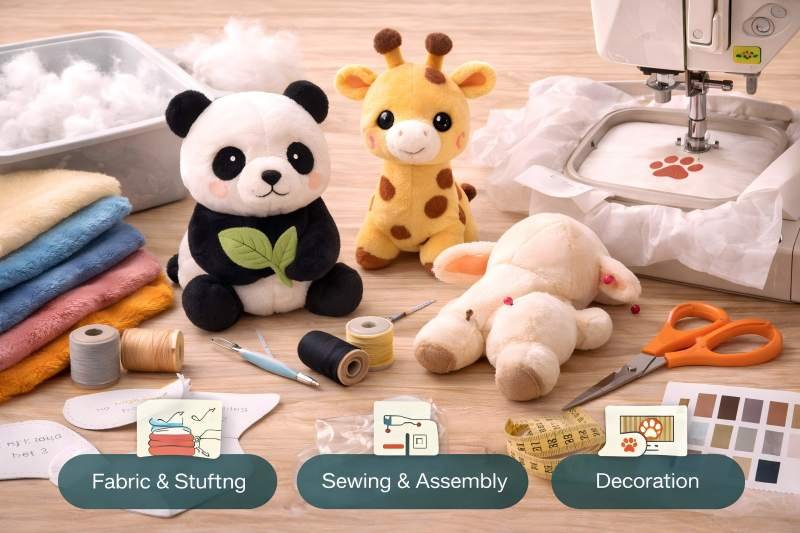

Important note: These examples are illustrative structures to help you understand how tiers behave. Actual pricing depends on size, complexity, materials, decoration, accessories, packaging, and compliance requirements.
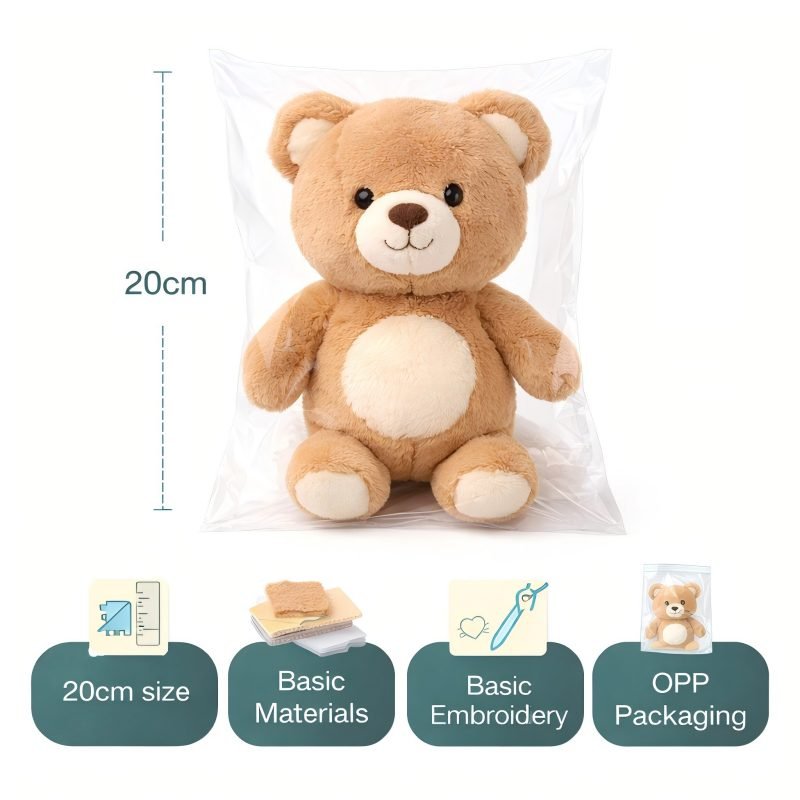
A simple 20cm bear shows the clearest price breaks as fixed costs spread and line efficiency improves.
Example Tier Table (20cm Simple Bear, EXW China — illustrative)
Important: This is a structure example, not a public price promise. Final pricing depends on spec, fabric grade, embroidery size, packing rules, and QC scope.
| Quantity Tier | Est. Unit Cost (CNY) | Est. Unit Cost (USD)* | What this assumes (simple program) |
|---|---|---|---|
| 300 pcs | 42.62 | 6.128 | Single SKU, basic embroidery, polybag, standard carton |
| 500 pcs | 36.72 | 5.28 | Same spec; less setup per unit; slightly smoother line rhythm |
| 1,000 pcs | 31.86 | 4.581 | Better cutting/sewing efficiency; less handling variance |
| 3,000 pcs | 28.20 | 4.055 | Fixed cost impact is minimal; materials + line speed dominate |
Cost model snapshot (so your team can sanity-check the table)
To keep this buyer-friendly, we model labor using a “loaded” factory rate above minimum wage. Shanghai’s minimum wage level (monthly and hourly) gives a floor reference, but real factory pay + social costs typically price higher than minimum wage.
Illustrative fixed cost pool (allocated across tiers): ~3,000 CNY total
(pattern/setup + sampling/admin + basic packaging setup)
Illustrative labor efficiency change: ~18 min/unit → ~15 min/unit (as quantity increases)
Illustrative overhead/QC: ~12%–15% (decreases slightly with stability)
This example shows a buyer-friendly tier table for a 20cm low-complexity plush bear (single SKU, basic embroidery, polybag). It illustrates how unit cost drops from 300 → 500 → 1,000 → 3,000 pcs as fixed costs are allocated across more units and labor efficiency stabilizes.
What’s included in this example:
Product assumptions
Pricing scope
Why the price drops across tiers?
Brand Plush With Packaging, Packaging rules and SKU count decide tier priceing
Brand Retail Packaging Tier Table (EXW China)
Ranges reflect fabric grade, decoration area, and packing labor variance.
| Quantity Tier | Kraft Paper Box (500+) | Color-Printed Box (500+) | Window Box (3,000+) | What changes across tiers |
|---|---|---|---|---|
| 500 pcs | US$4.60–5.40 / unit | US$5.10–6.10 / unit | — | Higher setup impact per unit; packing is less “stable” with variants |
| 1,000 pcs | US$4.05–4.80 / unit | US$4.55–5.40 / unit | — | Better line planning; less downtime; packaging handling becomes repeatable |
| 2,000 pcs | US$3.75–4.45 / unit | US$4.20–5.05 / unit | — | Material utilization and packing rhythm stabilize; fewer micro-stops |
| 3,000 pcs | US$3.65–4.35 / unit | US$4.10–4.95 / unit | US$4.25–5.20 / unit | Window-box setup becomes viable; packing labor increases but is predictable |
| 5,000 pcs | US$3.55–4.25 / unit | US$3.95–4.80 / unit | US$4.05–4.90 / unit | Savings depend more on SKU control + pack-out discipline than “more quantity” |
How to read this table:
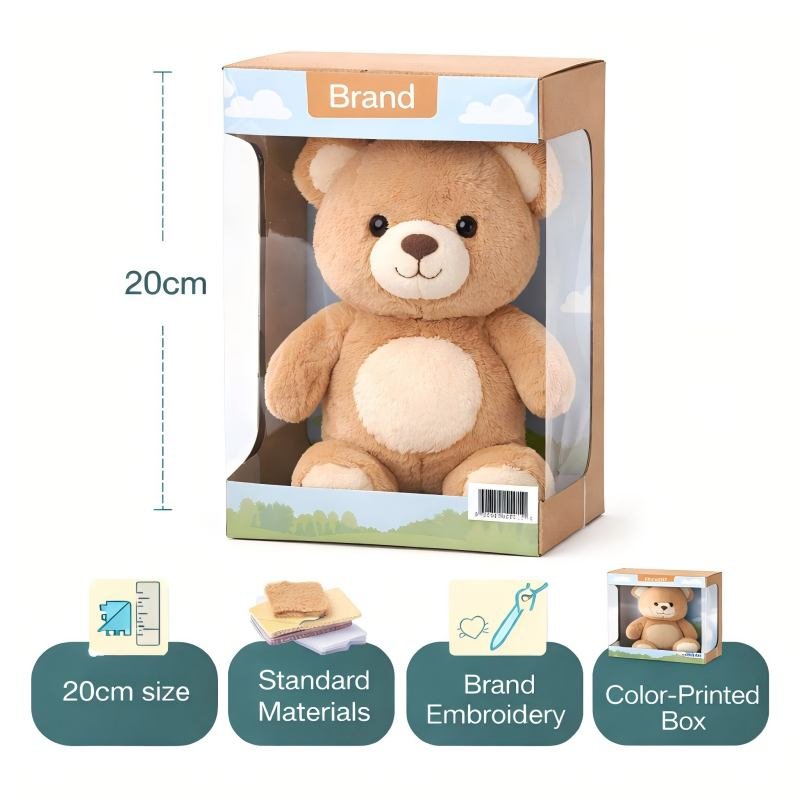
This example tier table uses a 20cm simple bear (2–3 variants, mixed decoration, labels/barcodes, retail packaging) to show how unit cost and price breaks behave at 500/1,000/2,000/3,000/5,000 pcs.
Assumptions (example only — for budgeting, not a public price promise)
Product: 20cm simple bear, low part count, standard plush fabric + standard stuffing
Brand layer: 2–3 colorways/SKUs, embroidery + patch/print mix, woven label + barcode sticker, carton marks/warehouse rules
Packing options:
Cost anchors used (market references):
Important: Real quotes vary by box structure (rigid vs corrugated), printing coverage, inserts, window size, and packing labor.
What makes the “range” wider for branded + packaged plush?
These three inputs usually decide where your quote lands inside the range:
Where buyers accidentally erase tier savings?
Accessories can cap tier savings because components + handling don’t scale like sewing does.
Plush with different accessory tier table
EXW China | 1 SKU | standard paper box | accessory attached and packed per unit
Tip: read across a row to see how each accessory choice changes unit price at that quantity tier.
| Quantity Tier | Base Bear (no add-on) | + Magnets (set) | + Canvas Clothes (1 pc) | + Denim Overalls (1 pc) | + Hat (1 pc) | + Glasses (1 pc) | + Canvas Shoes (1 pair) | Full Outfit (clothes+overalls+hat+glasses+shoes) |
|---|---|---|---|---|---|---|---|---|
| 500 pcs | US$4.60–5.50 | US$5.10–6.55 | US$5.85–8.10 | US$5.80–8.40 | US$5.55–7.55 | US$5.20–6.60 | US$5.75–7.90 | US$8.10–11.90 |
| 1,000 pcs | US$4.10–4.95 | US$4.60–5.85 | US$5.25–7.25 | US$5.20–7.50 | US$4.95–6.70 | US$4.70–5.85 | US$5.15–7.05 | US$7.25–10.60 |
| 3,000 pcs | US$3.85–4.70 | US$4.30–5.50 | US$4.95–6.85 | US$4.90–7.05 | US$4.65–6.25 | US$4.45–5.40 | US$4.85–6.65 | US$6.75–9.95 |
| 5,000 pcs | US$3.75–4.55 | US$4.15–5.35 | US$4.85–6.65 | US$4.80–6.85 | US$4.55–6.10 | US$4.35–5.25 | US$4.75–6.45 | US$6.60–9.70 |
| 10,000+ pcs | US$3.65–4.45 | US$4.05–5.25 | US$4.75–6.55 | US$4.70–6.75 | US$4.45–5.95 | US$4.25–5.15 | US$4.65–6.35 | US$6.45–9.50 |
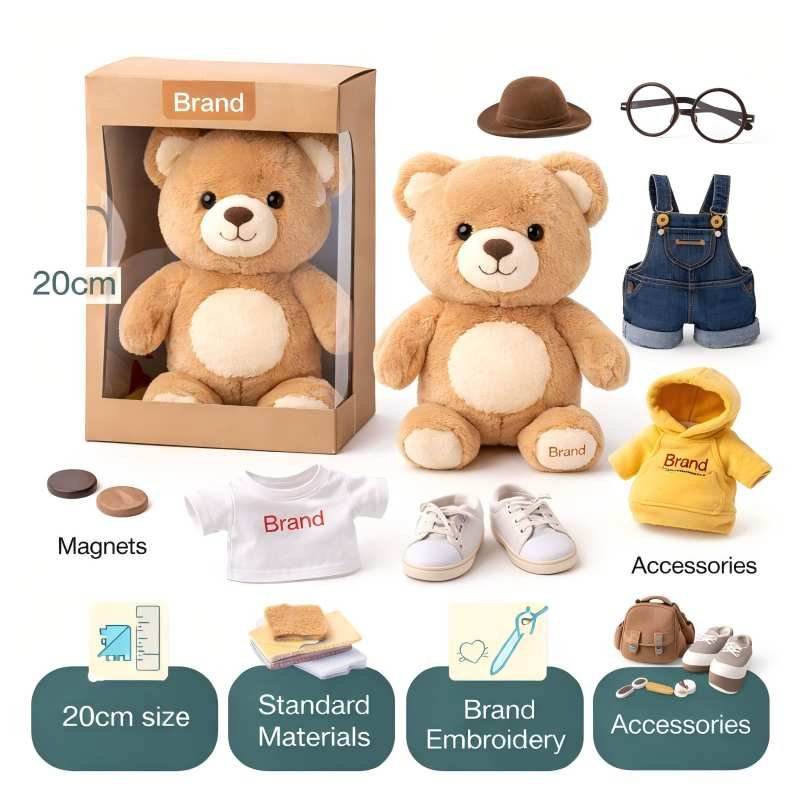
Typical tier behavior
Key advice (what prevents “cost creep” on complex programs)
This tier table shows a 20cm low-complexity plush bear with standard paper box packaging, then compares common accessory variables (magnets, canvas clothes, denim overalls, hat, glasses, canvas shoes).
Assumptions (example only — for budgeting, not a public price promise)
Base product: 20cm simple bear, low part count, standard plush fabric + standard stuffing
Packaging: standard paper box (no window, no special inserts)
Labor anchor: China minimum wage floor is referenced for budgeting (real factory “loaded labor” is higher than minimum wage).
Accessory price anchors: typical wholesale component ranges from market listings (varies by quality/spec/MOQ).
How the ranges are built (simple):
What each accessory variable assumes
All add-ons include component cost + added handling time + packing/QC impact (not just the part price).
Reduce time-per-unit and prevent rework—those are the real levers.
To improve custom plush pricing, focus on levers that reduce labor time per unit and stabilize production: simplify sewing steps, control variant count, choose decoration methods wisely, standardize packaging, optimize cartons, and lock specs early to prevent rework loops that erase tier savings.
MOQ starts production; best tier stabilizes unit cost and delivery rhythm.
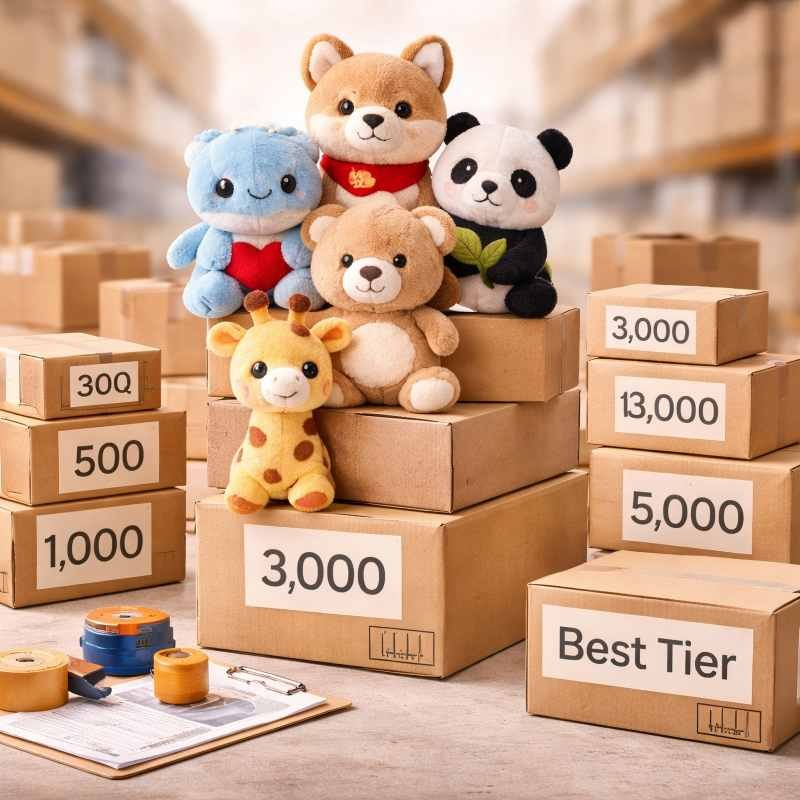
MOQ is the minimum quantity to start; “best tier” is where unit cost becomes stable and reorders become predictable. Choose quantity based on your launch plan, forecast, and risk tolerance—not only by chasing the lowest unit price. Plan tiers to match your selling reality.
A practical approach
Clear inputs produce a tier quote your team can approve internally.
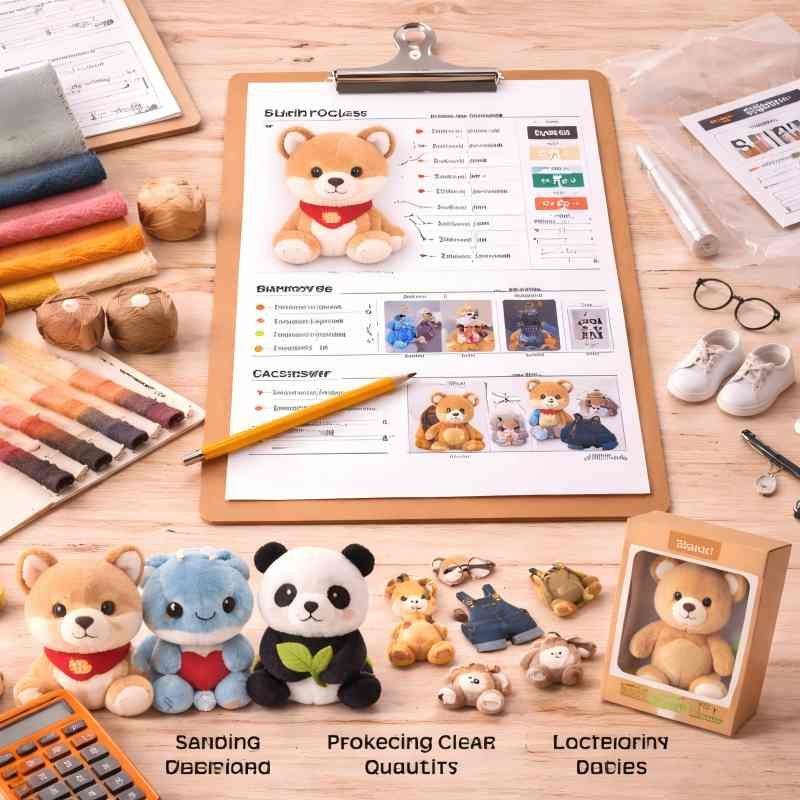
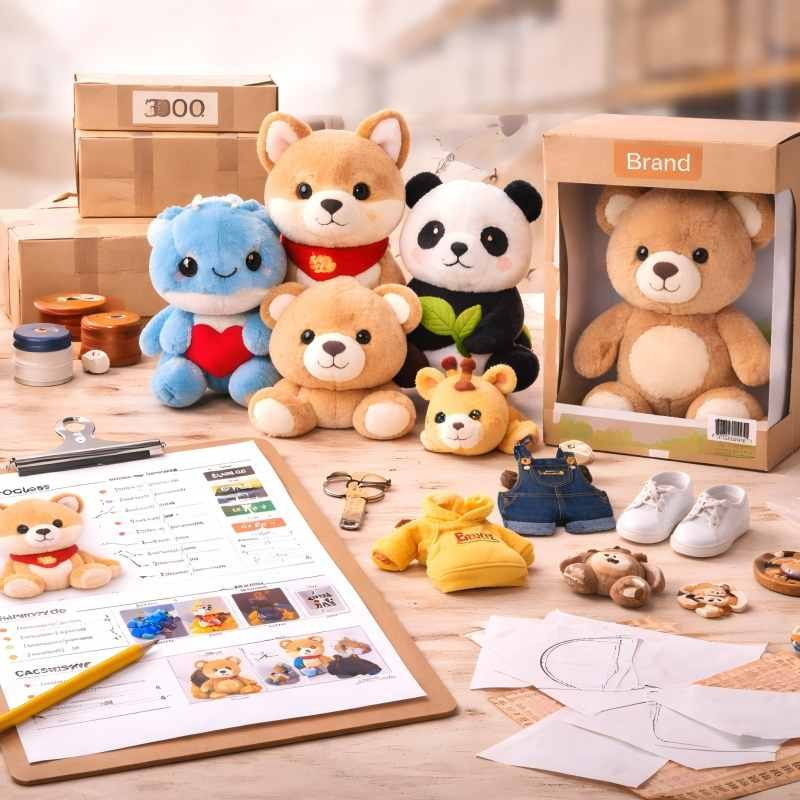
Tiered pricing quotes are fast when specs are clear. Send the essentials below and you’ll receive a tier table (e.g., 300/500/1000/3000 pcs) plus key cost drivers—so you can compare price breaks, align stakeholders, and decide without back-and-forth re-quotes.
Share the
Q1: Why is the first tier much higher?
Because fixed and semi-fixed costs are spread across fewer units, and early production has more variability and setup impact per unit.
Q2: Can I get the 1,000 pcs unit price at 300 pcs?
Usually not unless specs change (simpler materials/process/packaging). Tier behavior reflects real efficiency and fixed-cost spread.
Q3: What changes pricing the most—size or complexity?
Both matter. Size drives material usage; complexity drives labor time. For many plush programs, labor complexity is a bigger cost driver than expected.
Share your quantity tiers, SKU count, and packaging type. We’ll return a tiered quote structure plus the key levers to improve unit cost without sacrificing brand quality or triggering rework.

I am Lumi, our team would be happy to meet you and help to build your brand plush.